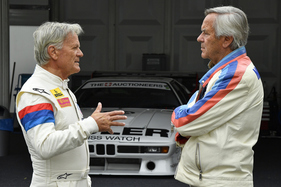
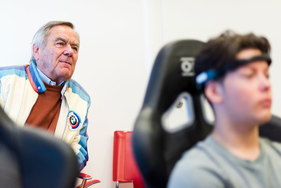
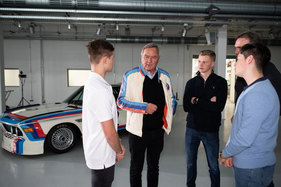
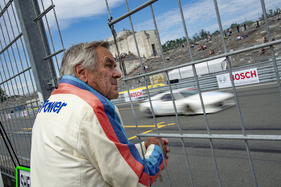
With the prospect of the planned start of the Nürburgring Endurance Series (NLS) season at the end of June, preparations for the BMW Junior Team's first race are picking up speed again. If the current situation allows, the juniors will complete their first race laps on the Nordschleife on June 27. They will be watched closely by Jochen Neerpasch.

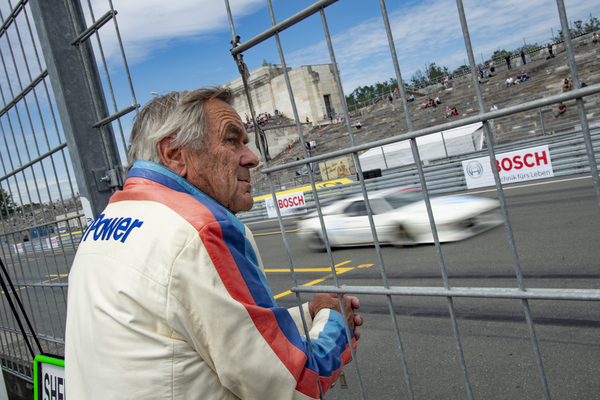
The first Managing Director of BMW Motorsport GmbH and the BMW Junior Team is also a mentor to current juniors Dan Harper (GBR), Max Hesse (GER) and Neil Verhagen (USA).
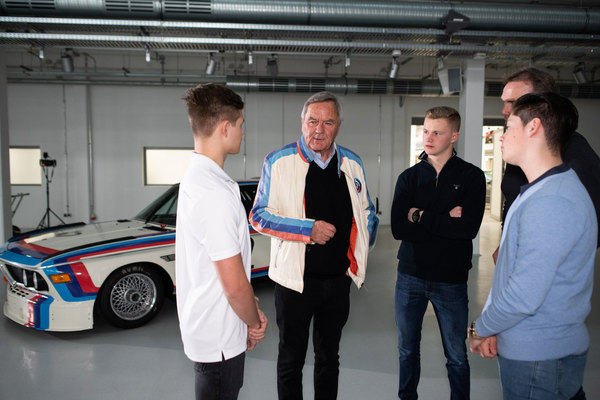
Support despite social distancing
During the current forced break, Neerpasch is in regular digital contact with the juniors as an advisor. Harper, Hesse and Verhagen also keep him up to date with weekly reports on their training. In the interview, Neerpasch compares the promotion of young talent today with the conditions that the legendary first BMW Junior Team had in 1977.
Interview with Jochen Neerpasch
Mr. Neerpasch, you have shaped the history of BMW Motorsport GmbH over the years since 1972. Now you have revived the idea of the BMW Junior Team. How did this come about?
Jochen Neerpasch: "BMW Motorsport approached me with the wish to help develop a new focus for the promotion of young talent. I then suggested that we return to promoting a BMW Junior Team. After all, BMW has been very successful in bringing young talent to the top in recent decades, but always individually."
Why does the team concept play such a crucial role for you?
Neerpasch: "As a team, you see more, learn more, exchange ideas and help each other. This was already evident in the first BMW Junior Team in 1977 and now plays an even greater role, as the juniors will share a car in the endurance races on the Nürburgring-Nordschleife. They have to learn together in order to improve together. That way, they will develop much faster than if they were each working on their own."
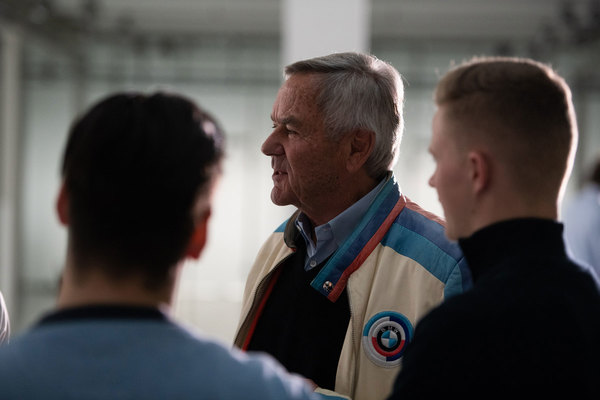
Why did you choose Dan Harper, Max Hesse and Neil Verhagen?
Neerpasch: "We were looking for riders who have continuously improved in their respective racing categories. They should have been in the top third in every category in which they competed. It was also important to us to put together a team of international riders with different cultural backgrounds and characters. They should complement each other and learn from each other."
How did the selection of the original BMW Junior Team in 1977 compare?
Neerpasch: "It was basically the same system back then. Eddie Cheever, Marc Surer and Manfred Winkelhock were among the most promising young drivers in various categories at the time - and they were also an international team with different characters. You could see how well they worked together as a team and how much faster they developed as a result. Based on this experience, we took a very similar approach when putting together the current BMW Junior Team."
Willingness to take risks
Cheever, Surer and Winkelhock were notorious for their aggressive driving style back then. They still didn't slow you down, why?
Neerpasch: "Because that was the philosophy. They were supposed to drive completely freely. Back then, we even let them compete directly against our experienced drivers in the German Racing Championship in order to first learn from them and then challenge them. Our aim was not to win the championship with the BMW Junior Team, but to promote young talent. We will continue to do this with the current BMW Junior Team."
Are you still in contact with Eddie Cheever and Marc Surer?
Neerpasch: "Yes, absolutely. And not only that: I'm sure that we'll meet up again more often as soon as it's possible again. Because they are both very curious to get to know their successors and watch them at the racetrack."

How did you come up with the idea of providing special support for young racing drivers?
Neerpasch: "When I was racing myself in the 1960s, motorsport was not considered a sport. Accordingly, a racing driver was not regarded as an athlete but as a car driver. The vehicle did the work. As a result, the drivers of the time were hardly physically prepared for the strain. This is where I started after my active career, when I became race director. It was important to me to focus on the man-machine system and to support the racing drivers in their preparation. Even back then, I was convinced that the best car is useless if the driver cannot exploit its potential. BMW was then the first manufacturer to prepare drivers professionally for the races."
How has racing changed from a driver's perspective over the past few decades?
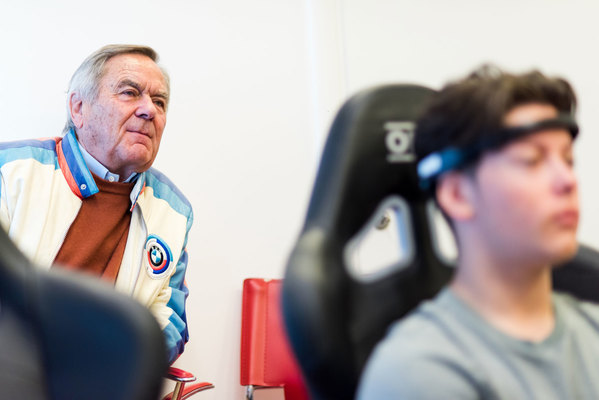
Jochen Neerpasch: "The demands placed on a racing driver today are completely different to those in my day. Back then, driving a racing car was more of an adventure because there were virtually no technical aids. The driver was on his own in the car and could only give the engineer feedback on the driving behavior after the fact. Today, the technology is sometimes more advanced than the driver and even tells the driver what to do in which situation. Correspondingly different skills are required of a racing driver today. The sensors with which they have to approach the situation in order to get the best out of themselves and their vehicle are completely different. To develop these skills, you naturally need suitable training methods - such as the holistic mental and fitness training concept of Formula Medicine."
"For me, it was the best time of my career"
At the time of the first BMW Junior Team, you were Head of BMW Motorsport GmbH. How do you remember this time?
Neerpasch: "From the end of the 1960s, I single-handedly set up my own racing department at Ford, and when we started to beat the BMW Coupés of the time with our Ford Capri, the BMW Sales Director made me an offer to come to Munich at the beginning of 1972. I signed my contract a few months later. BMW wanted to restructure its motorsport commitment, and from my experience at Ford I demanded a flexible organization right from the start. There had to be a separate motorsport department to build the racing cars and, based on this, to develop high-performance sports cars for the road that could earn money. We got started in May 1972 and were the first to develop the BMW 3.0 CSL, which became the most successful touring car in the following years. Overall, the development of BMW Motorsport GmbH was very rapid, and for me it was the best time of my career."
How do you look back today on the project that you started back then?
Neerpasch: "I am very proud to see what BMW M GmbH has become. It builds fantastic cars that you can drive both on the racetrack and on the road."
Spectator magnet BMW M1
An icon of BMW M GmbH and probably your biggest project was the BMW M1, right?
Neerpasch: "The BMW M1 was certainly the highlight of my time at BMW. The project was not only big, it was also difficult. The idea was not to make a racing car out of a road car as before, but to develop a racing car and then derive a road version from it. As the BMW M1 could not be built at the BMW plant, we at BMW Motorsport GmbH took on complete responsibility for development, production and sales. It was a very ambitious project at the time. Unfortunately, we were unable to homologate the BMW M1 for official motorsport racing series. So, together with Max Mosley and Bernie Ecclestone, we came up with the idea of creating our own M1 Procar Series as part of the Formula 1 supporting program. The clash between Formula 1 stars and established sports and touring car drivers in identical cars was legendary. These races in the BMW M1 were fantastic and a real crowd puller."
Do you still sometimes drive a BMW M1 yourself?
Neerpasch: "Yes, very much so. The BMW M1 is still great to drive. I had one myself, but sold it at some point. It's a shame really, because it would probably be worth a fortune today."