Lebenshilfe Gießen e.V. has been organizing a fundraising campaign for people with disabilities for 31 years. As a non-profit organization, we support over 3,000 people with and without disabilities in leading a self-determined life. With around 1,800 dedicated employees and nine subsidiaries, we are active in over 70 facilities and services in the city and district of Giessen. Our comprehensive services range from children's and family centers and youth welfare to educational, work and leisure opportunities as well as advice for people with and without disabilities.
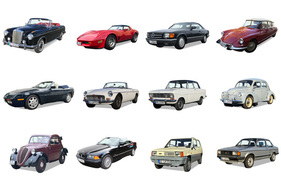
Our thanks go to the donors of the automotive gems. 15 attractive classic and vintage cars await lucky winners at the 31st classic car donation campaign, along with many other donated prizes:
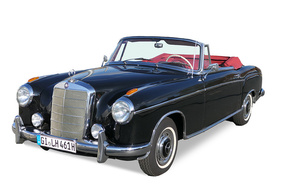
1st prize: Mercedes-Benz 220 S Cabriolet
The Mercedes Ponton has long since achieved legendary status. When the Cabriolet was also presented at the IAA in Frankfurt in 1955, Mercedes was in the technical fast lane in the luxury class with this model. The Ponton Cabriolet - the 220 S - was the first four-seater with a self-supporting body and an open superstructure, completely without roof struts, thanks to an exceptionally strong and torsion-resistant floor assembly. However, this design also took its toll: even empty, the 220 S weighs a hefty 1450 kilograms.
However, the weight is not really noticeable in everyday use thanks to the 2.2-liter 6-cylinder M180II engine with 100 horsepower. The driving performance is reminiscent of that of the touring cars of the time. The Ponton Cabrio accelerated from 0 to 90 km/h in around 15 seconds and only reached its top speed of 160 km/h.
The 220 S is rightly regarded as the forerunner of the S-Class Cabriolets and SLs that followed later. The base price of 21,500 Deutschmarks at the time leaves no doubt about this.
By way of comparison, a VW Beetle cost 3,750 Deutschmarks at the same time, while the Ponton saloon was available from 12,500 Deutschmarks.
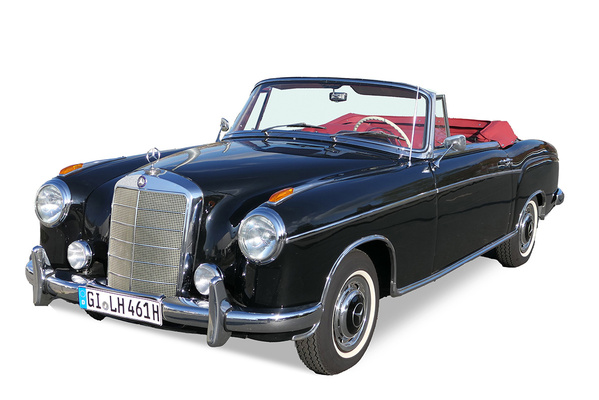
This example from 1956 impresses with its great color combination of glossy black paint and red leather interior and is waiting for many beautiful trips.
The Mercedes-Benz was donated by Manfred Langen.
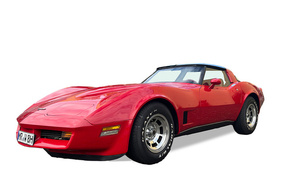
2nd prize: Chevrolet Corvette C3 Targa
The Chevrolet Corvette was the American answer to European sports cars in the 1950s. The Corvette C3 was introduced in the fall of 1967 as the third generation and was characterized throughout by a new design - the so-called Coke-bottle design. It is said that this design also inspired the German engineers in the development of the Opel GT, but it is debatable whether this was actually the case.
Our model from 1980 is even equipped with a targa roof, the so-called T-top with removable glass roof halves, which provide a convertible-like fresh air experience...
The red sports car is equipped with the classic 5.7-liter small-block V8 engine with 190 hp and an automatic transmission, which makes for excellent "cruising".
If you really want to, you can also accelerate the speedster to 100 km/h in a good 8 seconds, and the Corvette can even reach 200 km/h if required.
But in view of the handling (some car testers compared the handling to that of a kangaroo), relaxed cruising on country roads is more in keeping with the character of the Corvette C3. The red interior with its leather seats perfectly matches the Corvette's classic red paintwork. With the targa roof open in fine weather, simply listening to the beefy V8 sound is the best way to enjoy the classic "American way of drive" with this "sports car".
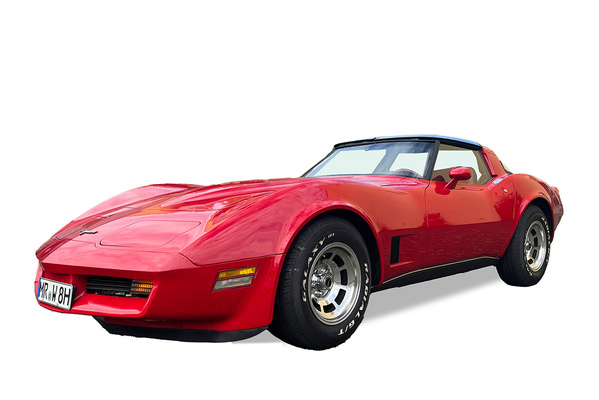
The Corvette was donated by Stefan Schranz.
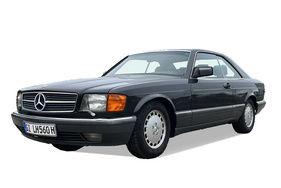
3rd prize: Mercedes 560 SEC
The Mercedes 560 SEC (C126) was the pinnacle of German automotive engineering when it was presented in 1981. Mercedes' slogan at the time was: The best or nothing.
In the period from 1981 to the end of 1991, over 76,000 Mercedes S-Class coupés were produced, all of which were available with V8 engines and automatic transmission. The entry-level model was the 380 SEC with 204 hp (later there was also the 420 SEC with up to 224 hp), followed by the 500 SEC with 231 hp. The 560 SEC was Mercedes' flagship model. A 5.6-liter V8 engine with up to 279 hp (with catalytic converter) provided an abundance of power and absolute supremacy when driving. Despite its kerb weight of 1760 kg, the 560 SEC accelerated to 100 km/h in 7.2 seconds and had a maximum speed of 240 km/h. The high torque of 430 Nm ensures superior driving performance in all situations. The entry-level price for the Mercedes 560 SEC in 1987 was just under 140,000 Deutschmarks.
It was a tradition in the Mercedes hierarchy that the coupés were positioned above the saloons and were also better equipped, but also more expensive. For example, there were only individual seats in the rear as well as numerous electric aids for windows, seats, mirrors and even seat belt retractors. Air conditioning, heated seats, leather upholstery and an electric sunroof are just some of the extras that our 560 has on board.
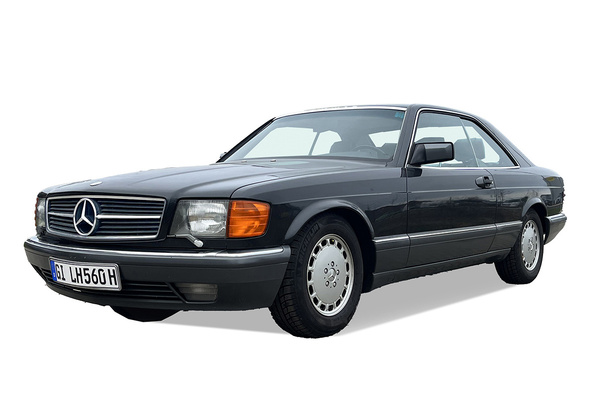
With just 169,000 kilometers on the clock, this car from 1989 has just been run in and is looking forward to more trips with its new owner. With its 510 liters of trunk space and 90-liter fuel tank, this sports coupé is also absolutely suitable for traveling. In discreet black metallic with gray leather upholstery, this model is an absolute understatement powerhouse.
The Mercedes coupé was donated by Hans-Peter Meyerhoff.
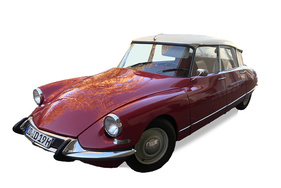
4th prize: Citroën ID 19
The ID19 is - to put it bluntly - a slimmed-down version of the DS. The ID is actually one of Citroen's most spectacular vehicles. The technology under the body still comes from the "Traction Avant", and Citroën had also had hydropneumatics in its range for some time. However, the fascination of the ID 19 lies in the combination of technology and looks. Such an exciting design paired with absolute driving comfort had never been seen before in this form. The suspension is so soft that it is often compared to a waterbed on wheels.
Added to this is the living room-like interior: once you've settled into the upholstery, you won't want to get out.
The ID 19 is also known as the "Fantomas" car... the French villain often drove this typical French car in his films of the same name - which could also fold out its wings and fly away if necessary. His pursuer - Louis de Funès - was then left astonished.
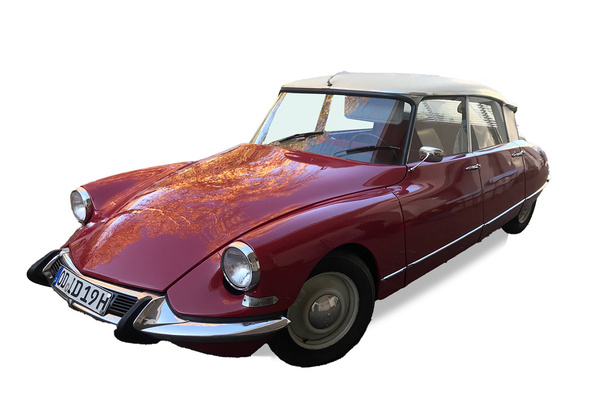
This model here dates back to 1965 and is equipped with the 1.9-liter engine. The 69 hp is enough to accelerate the 4.81 meter long sedan up to 150 km/h.
The Citroën was donated by Kai Gladigau.
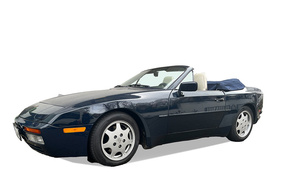
5th prize: Porsche 944 S2 Cabrio
The Porsche 944 was developed on the basis of the Porsche 924 and was launched on the German market in 1982. In terms of both price and performance, the 944 was positioned between the 924 as the "entry-level Porsche" and the classic 911. The basic engine in the 944 was a 2.5-liter four-cylinder engine with 150 hp.
Our 944 S2 Cabrio from 1990 originally came from the USA and is equipped with the large 3-liter four-cylinder engine with 211 hp, which, with its high torque of 280 Nm at 4000 rpm, has sufficient power reserves in all situations. At the time, this was the in-line four-cylinder engine with the largest displacement available in a production car.
A characteristic feature of this model is the so-called "transaxle design", with the engine located slightly behind the front axle and the gearbox and final drive at the rear of the vehicle. This made it possible to achieve a balanced weight distribution of 48:52 (front:rear), which ensures extremely neutral handling and good traction.
The Porsche 944 S2 Cabrio is therefore a genuine sports car that can be used for relaxed cruising on country roads with the roof open, but can also be driven in a sporty manner if required. Thanks to its 211 hp, the car accelerates to 100 km/h in a good 7 seconds, with propulsion only ending at 240 km/h. In 1989, it was definitely in the real sports car segment on German roads, even on winding roads.
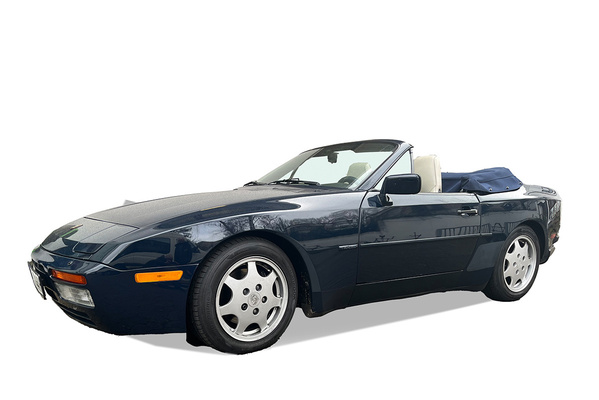
The color combination with the dark blue paint and beige leather interior is just as elegant and sporty today as it was in 1989.
Equipped with numerous extras such as cruise control, air conditioning, electric leather seats and an electric convertible top, this car leaves nothing to be desired in terms of comfort.
The Porsche was donated to the classic car fundraiser by Willibald Sehr.
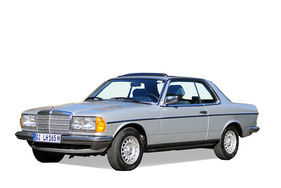
6th prize: Mercedes-Benz 230 C W123
The coupé version of the Mercedes W123 still impresses today with its dignified appearance and understated elegance. From the front and from a distance, it is easy to confuse the coupé with the saloon, so subtle are the visual changes. And this despite the fact that the B-pillar is missing and the wheelbase has been shortened, not to mention the rear doors.
The 230 C is a true classic. It combines elegance, utility value and a feeling of space, but at the same time impresses with its robustness, reliability and suitability for everyday use. This example from 1984 is painted in elegant silver metallic, which further emphasizes its understated appearance.
The M115 carburetor engine has a displacement of 2.3 liters and produces an impressive 109 hp from its 4 cylinders. Coupled to the 4-speed automatic transmission, this ensures powerful yet relaxed progress, up to a top speed of 175 km/h if need be.
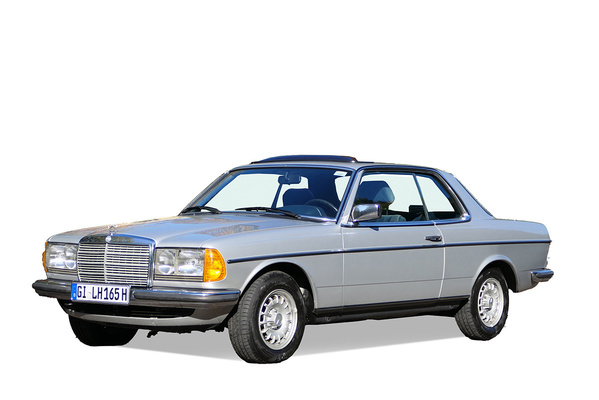
The Mercedes was donated by Rames Kussebi.
7th prize: MGB GT Roadster
Presented in 1962, the Roadster was the first model in the MGB series. The Roadster is a pure two-seater that was intended to compete with the Triumph TR4 or the Sunbeam Alpine in England. The Roadster impressed with its solid technology and, above all, its high fun factor.
The engine has a displacement of 1.8 liters and delivers 95 hp and is good for a top speed of 170 km/h.
This example dates back to 1965 and is painted in brilliant white with a black leather interior. And for Germany, it also has the steering wheel on the "right" side - namely the left.
The wire wheels are a perfect match for the chrome bumpers and door handles in the same look. Just as it should be for a British classic.
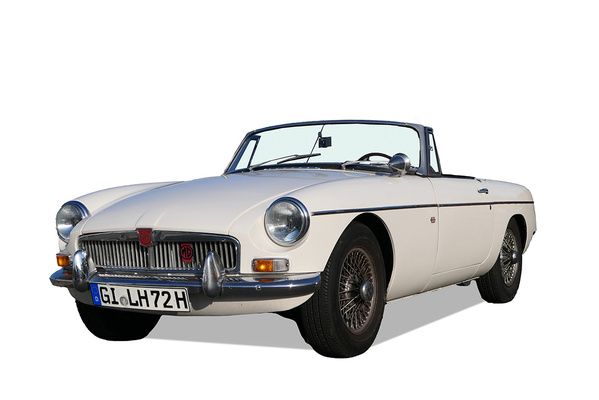
This car is just waiting for nice weather. This car is most fun on the right road with the top down.
The MGB was donated by Birgit Weiler.
8th prize: Opel Kadett AL Super
The Opel Kadett is the cornerstone of an automotive family tradition at Opel that extends right up to today's Astra. Without the Opel Kadett A, introduced in 1962, Opel would certainly not be as successful today. In 1957, the parent company GM commissioned Opel to design a "perfect anti-VW" to counter the success of the VW Beetle.
Compared to today's vehicles, the Kadett A looks like a very small car, but at the time it belonged to the lower middle class. However, there was plenty of room for four adults in the self-supporting body, which was less than 4 meters long.
The 1.0-liter four-cylinder engine with 47 horses had no trouble with the car, which weighed just 670 kilograms, although the "sporty pace" promised at the time should be seen in perspective. The narrow tires on the small 12-inch rims certainly contributed to this. The fully synchronized four-speed manual gearbox no longer had the gear lever on the steering wheel, but between the front seats on the floor of the car. The rear wheels, which were mounted on a rigid axle, were driven by drum brakes on all four wheels, even at the top speed of 130 km/h.
The basic price at the time was 5775 Deutschmarks for an Opel Kadett AL, so the "L version" cost a whole 450 Deutschmarks more than the basic model and spoiled the driver with more comfort.
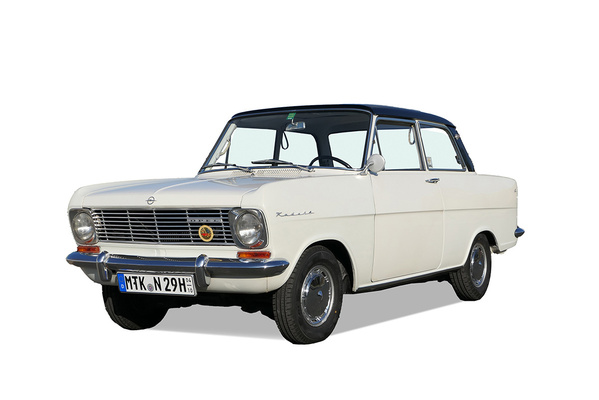
This example from 1965 has a two-tone paint finish in white with a black roof and is even equipped with a sunroof.
Our Kadett AL Super was the wedding car of the donor couple and was bought back on the occasion of their silver wedding anniversary in 2023 and then donated to Lebenshilfe-Gießen e.V.
The beautiful Kadett is thanks to Michael Noll.
9th prize: Renault 4 CV
The Renault 4 CV is a classic four-door car from France, which was built from 1946 to 1961 and was intended to be the French answer to the VW Beetle. As this model was built during and shortly after the Second World War, the carmakers used the leftover camouflage paint from the former German Afrika Korps. The special shape of the 4 CV in combination with this sand-beige camouflage color earned the car the nickname "Butterklumpen" in France. In Germany, the 4 VC is known as the "Cremeschnittchen". The term originated in the Saarland, where a customs union with France existed until 1959 and the 4 CV accounted for 75% of all new registrations. It also sounds much better than "lump of butter".
Like the VW Beetle, the 4VC also had a four-cylinder engine in the rear, but it was water-cooled and in-line. In contrast to the VW Beetle, the 4 VC has 4 doors, all of which are attached to the B-pillar. This means that the 4CV, like our Topolino, has front "suicide doors".
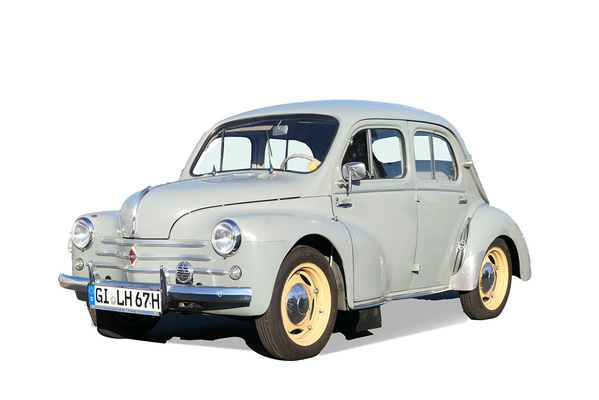
The four-cylinder engine in the rear of this 1957 model produces a full 21 horsepower from its 747 cc, allowing the car to accelerate up to 100 kilometers per hour.
Today, the 4 CV has become a rare vehicle on German roads and is often admired for its shape and suicide doors.
The "Crèmeschnittchen" was donated by Bernd Beierbach.
10th prize: Fiat Topolino 500 A from 1938
Built in 1938, this Fiat 500 A Topolino was the Italian answer to the DKW F1 and Morris Minor. At the beginning of the 1930s, Fiat was to develop a compact and economical car that would enable the spread of the automobile in Italy as a whole. Although the Fiat was called the "500", the four-cylinder engine had a displacement of 569 cc and mobilized a full 13 horsepower. With an unladen weight of 535 kilograms, this was enough to easily keep up with city traffic and - if you wanted to - roar along the roads at 85 kilometers per hour.
The engine had a special technical feature at the time: namely side valves, which were responsible for the low profile of the engine. The radiator, which was mounted raised behind the engine, did not require a pump to circulate the water, as it used the radiator principle in which warmer water was transported upwards.principle, in which warmer water was pumped upwards and cooled down again as it flowed through the radiator back into the engine.
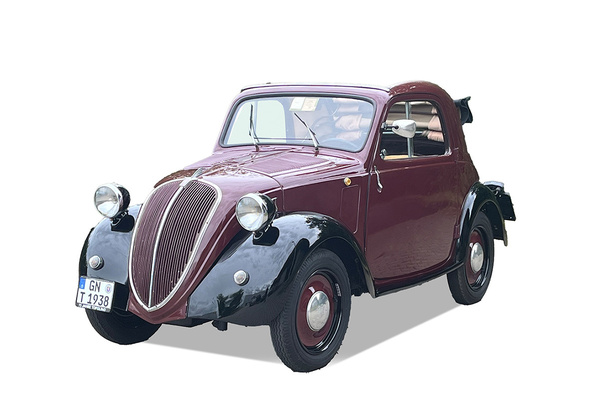
The name "Topolino" means "little mouse" in German, and the combination of the protruding side fenders with the attached headlights is indeed reminiscent of the classic "Mickey Mouse face" from the front. The rear-hinged "suicide doors" and the wheelbase of around 2 meters ensure a good feeling of space for 2 people, and it is better to sit on the rear bench only when the large folding roof is open.
With its wine-red and black paintwork, this small car is a prime example of early Italian automotive engineering and attracts attention wherever it stands and drives.
Thanks for the little Fiat go to Gottfried Lindenmayer.
11th prize: BMW 318i convertible
This BMW convertible from 1994 belongs to the popular E36 series. As the successor to the BMW E30, the BMW E36 had a completely new look and many technical innovations when it made its debut at the Geneva Motor Show in 1993. Later models were already equipped with airbags for the driver and front passenger, and thanks to ABS it also ensured driving safety in addition to the driving pleasure typical of the BMW slogan. Especially in convertibles, a rollover is very dangerous for the occupants, which is why BMW installed a new "rollover protection system" in the E36 Convertible, in which protective bars arranged behind the rear seats spring out within a few milliseconds. As a result, it was possible to dispense with a fixed bar while ensuring maximum safety.
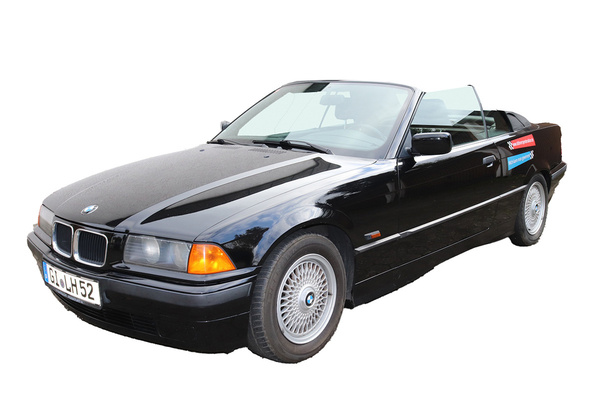
The 1.8-litre four-cylinder engine mobilizes 115 lively horses, with which the convertible is absolutely sufficiently motorized. A top speed of 194 km/h is already respectable.
With space for 4 people and 210 liters of trunk space, day trips are also easy to realize.
The equipment also leaves nothing to be desired: Leather seats, heated seats, electric windows, metallic paintwork, alloy wheels and even a retrofitted automatic air conditioning system are all on board. The BMW E36 Convertible is a timeless classic that looks very classy and exclusive, especially in the color combination of black metallic paint, black soft top and black leather seats. But above all because the car presents itself in its original condition and dispenses with the often installed "contemporary tuning" - especially visually.
The BMW was donated by Tobias Hoffrecht.
12th prize: Fiat Panda
The Fiat Panda is one of the coolest small cars from Italy. It was built in its original form from 1980 to 2003 and over 4 million units were sold. This makes it one of the most successful Fiat ever.
The design was created by Giorgetto Giugiaro and was affectionately characterized as a "household appliance on wheels". The Panda was intended to be like a pair of jeans: a practical item of clothing without any ornamentation. The Panda was only available as a three-door model with a large tailgate, and comfort extras were sought in vain.
The 847 cc engine produced 34 hp and was good for 125 km/h top speed. The only restrictions are that it must not go uphill and there must be no passengers on board. In the meantime, the Fiat Panda has also achieved cult status,
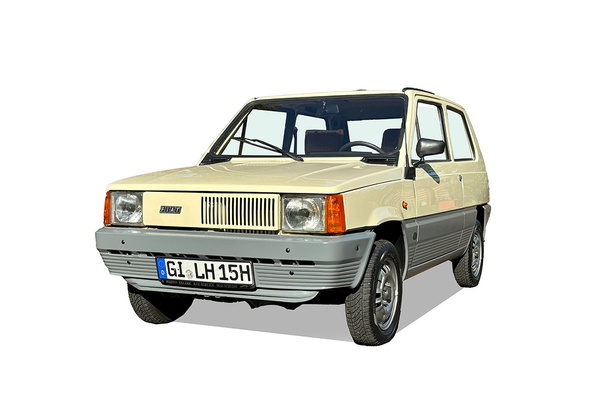
This example dates back to 1982 and presents itself in almost mint condition. It has everything you need to drive a car, and especially in this day and age, when modern cars almost take the driving out of the driver's hands, it is a refreshing experience to drive a purist car without electronic helpers or convenient extras.
This now rare "great car" was donated by Wolfgang Schwanke.
13th prize: VW Jetta I
In 1979, Volkswagen added another model to its range with the Jetta, because sedans were more in demand than hatchbacks, especially in North America. The Jetta was a compact saloon derived from the VW Golf, which very quickly earned the nickname "backpack Golf". The Jetta was available as both a 2- and 4-door model and had a generous trunk capacity of over 500 liters. As a result, the Jetta became the best-selling European car in the USA, Mexico and Canada.
As the Jetta was cavity-preserved from the factory right from the start, the car is well protected against rust. This can also be seen in this silver-metallic colored model from 1982, which is still rust-free after 43 years and with less than 120,000 kilometers has just been driven in. With the four-speed manual gearbox installed, a top speed of 147 km/h is possible, and this Jetta completes the standard sprint to 100 km/h in 15 seconds.
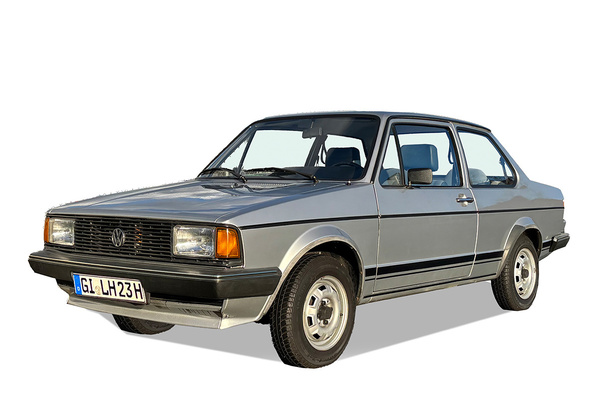
The 1.3-liter engine delivers 60 hp, with which you can still easily keep up with traffic today. Thanks to the large trunk and sufficient space for 4 adults, it is still an ideal touring car for everyday use.
The fundraising campaign owes the early Jetta to Michael Dams.
14th prize: Honda Goldwing GL 1100
"Why would you buy an old Gold Wing built in 1980 at around 55 years of age in 2019? At a time when there are much more modern motorcycles with ABS and more power? Or why not a modern, up-to-date Gold Wing with heated seats, 6 cylinders and lots of bells and whistles?
Let me explain:
In 1974, the first Gold Wing was presented in Germany by Honda. I was 9 years old at the time and far too young to even get a motorcycle license. But when the bike was presented in the main entrance of an exquisite department store in Stuttgart and you could sit on it and have your photo taken for 5 DM, that's when my love for this model series began. (see photo; me on a yellow GL1000).
From then on it was clear to me that I would get my motorcycle license and then buy a Gold Wing when I was 18. Of course, an original brochure from 1980 had to be part of the collection (see picture). Well then, at the age of 16 I got my first light motorcycle, but there was no Mini Gold Wing, so I ended up with a Suzuki GT80L (chopper with lots of chrome, almost a Gold Wing). But then I realized that a Gold Wing wasn't cheap after all. The purchase price and maintenance, especially the insurance back in 1982, were very high. So I bought smaller and cheaper machines to gain riding experience and save money.
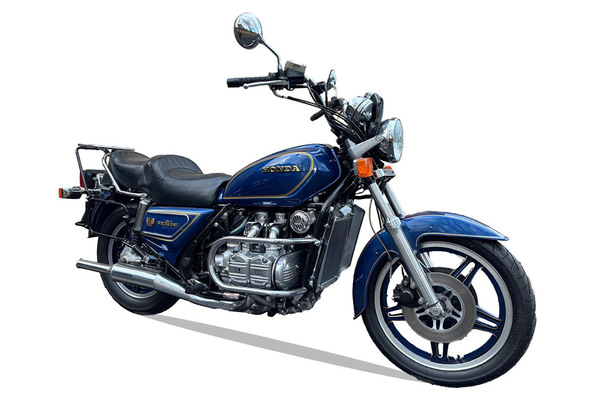
Due to work and family, the Gold Wing was somewhat forgotten. But somehow it always crossed my path. And one day there was a used bike at a Honda dealer. That's when it happened, I bought it. Not a GL1000, but a GL1100 with lots of chrome. And so it was polished and cleaned and ridden. Because a touring steamer like this needs to be moved. So there were many trips to the Black Forest, Swabian Alb and the Vosges (see picture). Driving 500 km at a stretch without any problems and without anything hurting. With air suspension, it rides like a Citroën DS!"
The Goldwing was donated by Matthias Wagner.
15th prize: BMW R 1100 GS
"30 years of the Spessartprinzessin or "A motorcycle life without an R 1100 GS is possible, but pointless"
In mid-March 1994, I stood in the BMW branch in Frankfurt and arranged a test ride with the sales manager at the time (there was only one salesman, Günter Bruder, with whom I still meet today).
An appointment was found relatively quickly and I was allowed a whole! day to test ride the bike. After six hours and approx. 280 km, it was clear to me that I had to have this bike, especially as it was still without a catalytic converter and was the first demonstration bike of the new four-valve GS motorcycles.
I registered it on May 10, 1994 and one day later I went on my first tour with a friend. The theme was the eastern border from Passau via Hof and Dresden to Rügen, with a few detours to the Czech Republic and Poland, which was still a bit of an "adventure" in 1994. We made the return journey from Rügen in one day, which went well with the GS.
This was followed in the following summers by countless trips across Europe, e.g. Provence (more than twenty times in total), the French Massif Central, Liguria, Liguria and the Italian Alps. Massif Central, Liguria, Pyrenees with Andorra, Spain to just before Portugal, Dolomites, Lozere, Livignio, Maritime Alps and Monaco, Corsica, England, Wales, Ireland, Northern Ireland, Scotland, BeNeLux, Denmark, Sweden, Italy, AlsaceTuscany with San Marino, up to just before Sicily, Slovenia, Greece, Corsica, Austria, Switzerland and Lichtenstein and, thanks to DENZEL's large Alpine road guide, countless passes and ridge roads, such as B. Assietta ridge road, Ligurian border ridge road, old Tende Pass, Brenner border ridge road, Col de Restefond, Col de Parpaillon, La Bonette, Col de I'lseran, Col des Champs, Col de Cayolle, Col de Vars, Flüela Pass, Timmelsjoch, Gavia Pass, Via Mala, Mont Ventoux, Furkajoch, Turracher Höhe, Splügen Pass, Great St. Bernard Pass and many more. Bernhard and many more.
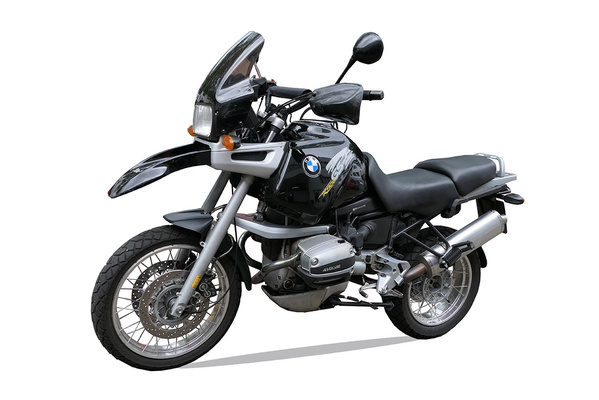
After twenty summers and 200,000 km, I bought a new used replacement bike in the fall of 2013, this time an R 1150 GS, and only took my Spessart princess out of the garage in good weather and took her on many more tours through the Spessart.
A few years ago, I finally decided to donate my Princess to the classic car charity, and after thirty years and one month, I did.
During the thirty years, I had to go to the workshop three times outside of the inspections, once a oil seal on the telelever was leaking, once a cylinder head gasket had to be replaced (goodwill after two years) and once the oil seal on the gearbox was leaking. I also had the clutch replaced, and all the work/inspections were carried out by one and the same "screwdriver god" (1,000 thanks to Tipi)."
Horst Haenlein donated the BMW motorcycle.
What else you need to know ...
Further information on the fundraising campaign can be found on the website. Anyone can take part; you can help with as little as EUR 5.00. You can also transfer the amount directly to the donation account at Sparkasse Gießen, IBAN DE38 5135 0025 0200 6260 00, BIC SKGIDE5FXXX, but please do not forget your name and address.
The proceeds from this year's donations will go towards setting up day care for senior citizens with intellectual disabilities, moving our inclusive art gallery Atelier23 to barrier-free premises, further expanding our PlusPunkt meeting place for people with high support needs and other inclusive projects of Lebenshilfe Gießen e.V.
All information can be found on the fundraising campaign website; the campaign ends on January 20, 2026.