

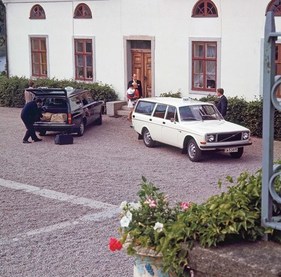
A 90th birthday that few would expect: Just three years after the launch of the very first Volvo passenger car, the Swedish premium manufacturer presented a specially developed cab range in March 1930. The new saloons of the Volvo TR 670 to TR 679 model family had a long wheelbase for luxurious comfort, but above all they set standards in terms of product quality and safety technology - just like all Volvo cabs that followed them: From the legendary Volvo PV831 from the 1950s to the Volvo 140/240 of the following two decades to today's current Swedish cabs, the premium SUV Volvo XC60 and the larger siblings of the Volvo 90 family.
The first Swedish cab car series
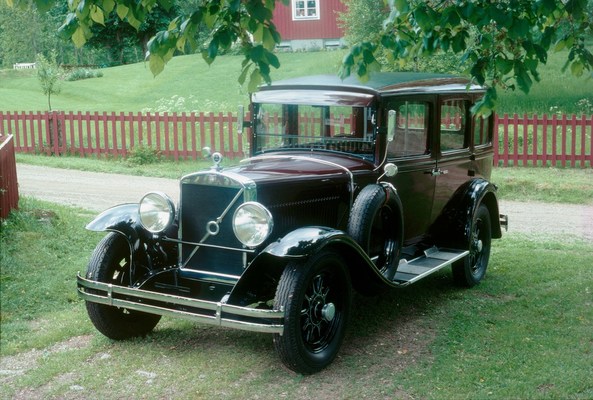
The established cab manufacturers had not expected this at the time: After initial success with an optional cab package for the luxurious six-cylinder Volvo PV 651 sedan launched in 1929, the young Scandinavian premium brand Volvo presented a complete cab model range as early as March 1930. The Volvo TR 671, TR 672 and TR 670 model family was the first Swedish car series to be specially developed to meet all the requirements of the demanding cab business. The Volvo models, with their prestigious design, had an exceptionally long wheelbase of 3.10 meters, providing ample space for up to seven passengers. While the Volvo TR 671 with windshield was designed as a city cab, the Volvo TR 672 offered the upscale comfort of a lounge for cross-country journeys. In contrast, the Volvo TR 670, designed as a chassis, made individual bodywork possible.
Pioneering safety technology and reliable comfort
Visionary safety systems and premium quality defined Volvo's automotive engineering from the very beginning, and the very first cabs were developed according to particularly strict quality specifications using particularly resistant materials for the best possible vehicle safety at the time. This included exceptionally powerful hydraulic four-wheel brakes as well as solid Swedish steel for particularly important components, while other manufacturers still preferred soft, inexpensive wood.
To protect the occupants in the event of an accident, the passengers' luggage was carried on a separate rear carrier. Wide-opening doors contributed to comfort, as did the high-quality seats and the cultivated, efficient and reliable 3.0-liter six-cylinder engine with 40 kW (55 hp) output. With this well thought-out concept in unmistakable Scandinavian design, the first Swedish cab already set standards in its segment, especially as Volvo quickly expanded the cab range. This was followed by the Volvo TR 673 to TR 679 with different bodies, wheelbases of up to 3.25 meters and more powerful engines, before the successor models Volvo TR 701 to TR 704 further accelerated the success story in 1935.
Innovative practitioners: the Volvo PV 800 series
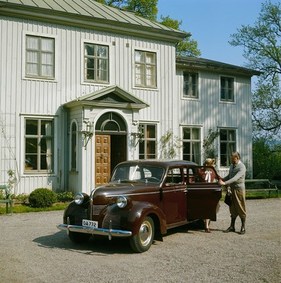
While the Volvo cabs had previously been identified as commercial vehicles by the letter code TR (traffikvagn or transport vehicle), the first eight-seater Volvo cab appeared in 1938 in a streamlined design and with the type designations Volvo PV 801/802. The abbreviation PV stood for personvagn (passenger car) and this was now heralded by a closed trunk and a powerful 3.7-liter six-cylinder engine with smooth running, which also achieved sensational mileages in the six-digit range.
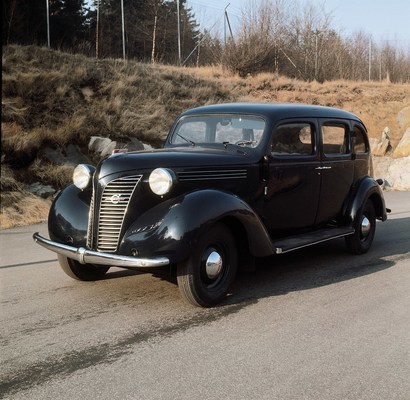
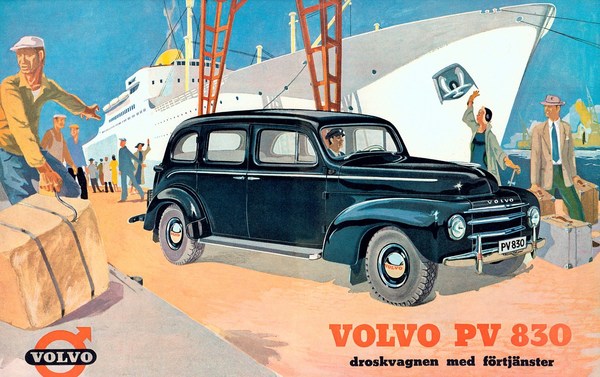
This Volvo remained in production for over ten years, after which the Volvo PV 60 saloon bridged a brief period until the next specially developed cab models of the Volvo PV 800 family made their debut in 1950. These Volvo PV 831 and Volvo PV 832, with their American aero design and the finest interior materials, shaped the post-war image of the typical Swedish cab with a record-breaking wheelbase of up to 3.55 meters. In fact, the elegant models with their elegant metallic paintwork were also used as representative limousines. Although only built until 1958, the 3.7-liter six-cylinder models, which became legendary as mileage millionaires, remained in use until the 1980s.
A cab concept car for the Museum of Modern Art
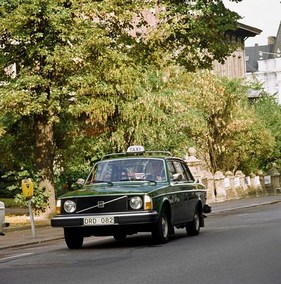
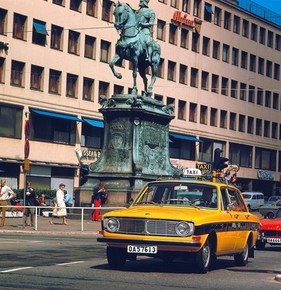
With the Volvo 140 presented in 1966 and the Volvo 240 launched in 1974, Swedish cabs conquered all continents for the first time. In addition to the classic sedans and station wagons, Volvo also introduced long-wheelbase sedans and high-roof station wagons; there was a suitable body concept for every cab customer.
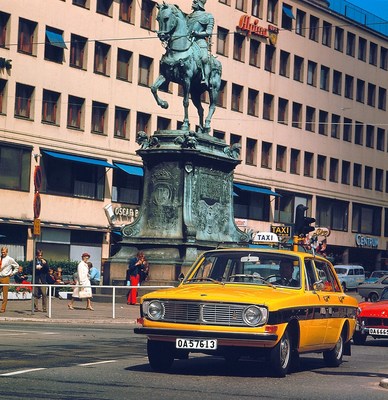
New standards in occupant protection were always included, as confirmed by the US National Highway Traffic Safety Administration (NHTSA), which used the Volvo 240 as a reference model series for its safety research from 1976 onwards. The Volvo 240 remained the benchmark for occupant protection for almost its entire production period until 1993. But the Volvo 700, 900 and 850 series, which shone with visionary safety features and durable and efficient drives, also continued the Swedish cab success story. In the 2000s, it was the large Volvo S80, V70, XC60 and XC90 that were particularly popular with cab customers.
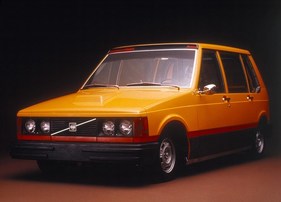
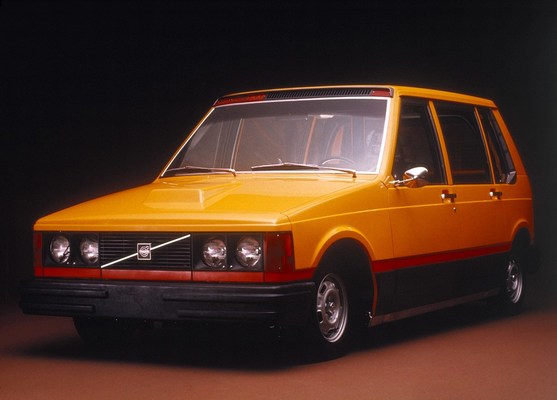
Even the Museum of Modern Art recognized Volvo's expertise in the development of cabs. In 1976, the New York institution announced a design competition to find a safe and functional cab. In response, Volvo developed a visionary cab concept car that inspired the development of new technologies for later production cabs.
Premium cabs of a new generation: XC60 and the 90s family
Today, it is the successful premium SUV Volvo XC60 and its larger siblings in the Volvo 90 series that can be converted for commercial passenger transportation with a Volvo cab package that can be ordered from all participating dealers. The cab conversion is possible with all known engines and equipment lines, so that customers enjoy maximum flexibility and benefit from the advantages of the Volvo models in terms of connectivity features, assistance systems, functionality, comfort and economy.