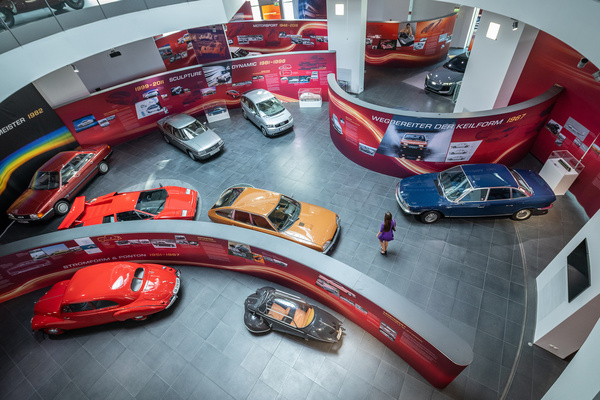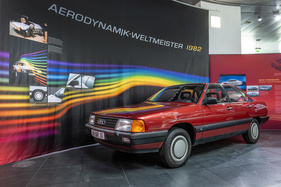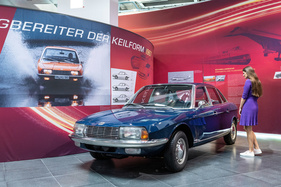
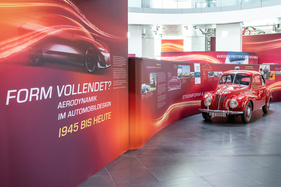
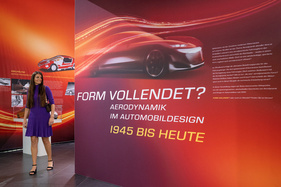
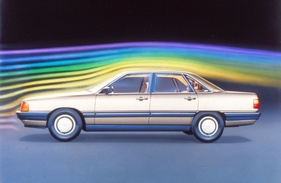
Audi wrote engineering history in 1982 with the Audi 100. With its drag coefficient of 0.30, the third-generation Audi 100 was the most aerodynamically efficient production saloon in the world at the time and is therefore an essential part of the new special exhibition "Form perfected". In it, Audi Tradition presents aerodynamic concepts from 1945 to the present day. The new special exhibition can be seen at the Audi museum mobile in Ingolstadt until March 2, 2025.
The aerodynamics research that flourished before the Second World War - Audi Tradition presented the exhibition "Windschnittig" until the end of June - initially received little attention after 1945: the automotive industry in Europe first had to get itself back on track. During this time, pre-war developments continued to be used and optimized. It was not until fuel costs rose during the oil price crisis in 1973 that a rethink began and automobile developers increasingly turned their attention to reducing fuel consumption. One of the factors in this is the air resistance of the car.
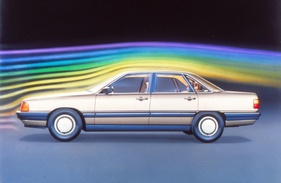
Audi sets an exclamation mark with the Audi 100 in 1982: its drag coefficient of 0.30 marks the world record for a production saloon - a value that has long been regarded as the benchmark.
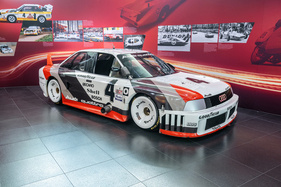
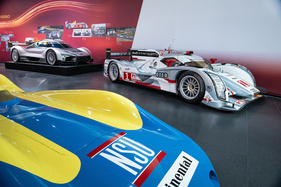
The new Audi Tradition special exhibition "Form perfected" features models such as this cW world champion Audi 100, the NSU Ro 80, the Porsche 356, the Lamborghini Countach and the Ducati Paso 950 as well as studies and racing cars from Audi's history: such as the Audi 90 IMSA GTO from 1989, the Audi R18 e-tron quattro Le Mans race car from 2012, the "Audi Scorpion" study from 2013 and the Audi 80 cW study from 1984. With it, the developers once again want to test the limits of what is possible: Based on an Audi 80, their goal is to achieve a cW value of less than 0.2 - which they ultimately succeed in doing.
The Audi A2 is also a milestone in aerodynamics. At its debut at the IAA in 1999, the design, which was geared towards optimum streamlining, and the then unusual proportions polarized the public. The basic model with Audi Space Frame bodywork in aluminum achieves a drag coefficient of 0.28.
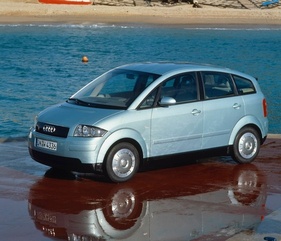
The Audi engineers continue to improve the aerodynamics of the Audi A2 1.2 TDI through a large number of individual measures and in this way manage to reduce the drag coefficient even further. The Audi A2 1.2 TDI is the world's first four-door three-liter car to be part of the special exhibition "Form perfected"; it has a drag coefficient of 0.25 and an average fuel consumption of 2.99 liters per 100 kilometers.
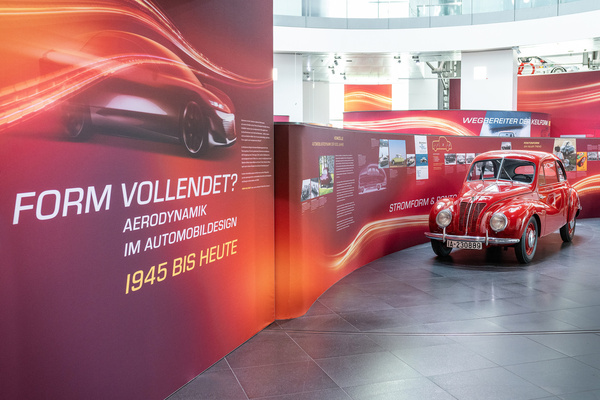
Curator Stefan Felber talks about his "favorite exhibit" in the exhibition: "For me, the DKW F9 has a special meaning - it is the link between the two parts of the exhibition 'Windschnittig' and 'Form vollendet'. In addition, this streamlined and at first glance rather inconspicuous automobile stands for the new beginning of Auto Union in West Germany and IFA in East Germany."
Further information about the exhibition and the museum can be found on the Audi website.