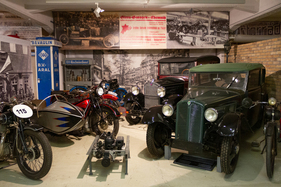
The Museum für sächsische Fahrzeuge Chemnitz e.V. has reopened its doors to visitors since May 5, 2020!
Of course, this is done in compliance with the hygiene regulations, distance rules and with a limited number of visitors.
Lectures and other events are not yet taking place again.
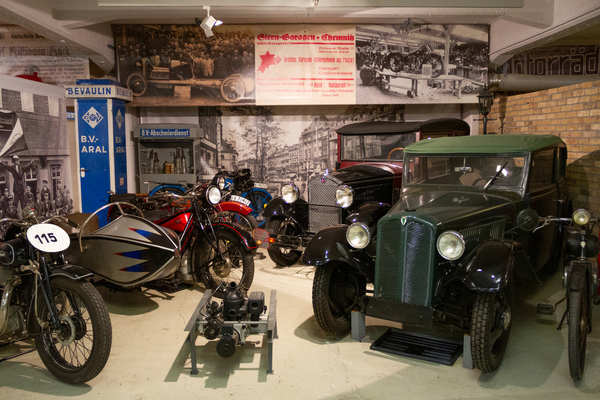
Opening hours are daily from 10 am to 5 pm. Mondays are closed.
Also: Special exhibition with DKW racing cars
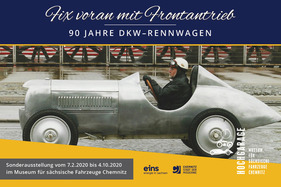
Visitors can also visit the special exhibition "Fix voran mit Frontantrieb - 90 Jahre DKW-Rennwagen".
"Connoisseurs drive DKWs" - every child used to know that. Racing drivers also liked to rely on the Zschopau brand and achieved impressive successes.
The special exhibition "Fix voran mit Frontantrieb - 90 Jahre DKW-Rennwagen" shows that the Saxon automobile and motorcycle manufacturer DKW not only used motorsport as a testing ground for new technologies, but also as a cleverly chosen marketing strategy.
In the 1920s, buyers first had to be convinced of the benefits of front-wheel drive and 2-stroke engines in cars. So why not prove how quickly and reliably this technology worked in car races?
From 1930 onwards, the factory and private drivers successfully took part in a wide variety of races. With special record-breaking cars from Freiherr von Koenig-Fachsenfeld, DKW achieved 12 world records in the same year. The series of successes continued even after the merger to form Auto Union. Many private drivers used the comparatively inexpensive small cars as the basis for their own builds.
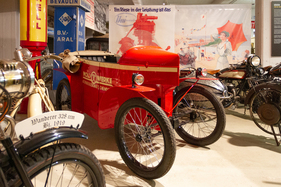
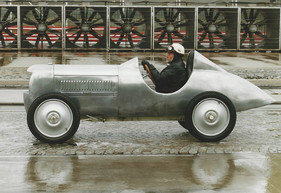
A selection of works racers, record-breaking cars, private sports cars and children's racing cars from three decades are on display in the special exhibition.
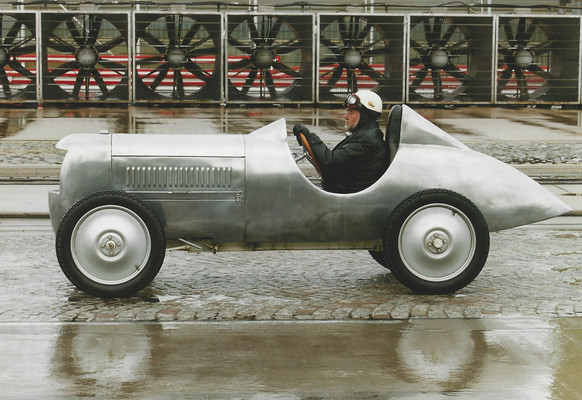
Included are for example:
- F1 Monoposto from 1931 - one of the first racing cars with front-wheel drive
- F1 from 1931 - world record car of Baron von Koenig-Fachsenfeld
- F8 Spezialbau from 1947 - the owner started racing again with this home-built car shortly after the Second World War
- IFA F9 from 1949 - after the Second World War, hopes were pinned on the rebirth of successful motor racing
A very special Silver Arrow
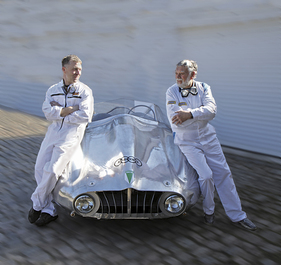
It all started with a drawing from 1940, which Frieder Bach found by chance while researching for an exhibition at the Museum für sächsische Fahrzeuge Chemnitz e.V.. This drawing stayed with the founder of the museum. After all, it was the sketch for the last sports car that DKW - then under the umbrella of Auto Union - wanted to build.
This car was to be used in the Berlin - Rome race in 1938. But the war prevented this from happening. The sports department of Auto Union was dissolved and armaments production moved into the premises.
More than 75 years later, Frieder Bach found the documents for the open-top two-seater. Its authenticity was revealed by the signature of Günther Mickwausch, who was the most important designer at Auto Union AG from 1932 to 1945. Inspired by the beauty of the car's design, the desire arose to build the car. By chance, contact was made with the Fraunhofer Institute IWU in Chemnitz, which produced the most important parts for the streamlined body using a special sheet metal forming process.

But there were difficulties that stood in the way of the realization of the vehicle. The sketches of the racing car, for example, had few details. It was only thanks to the theoretical and practical experience that Frieder Bach had gained over the years as a restorer of historic vehicles that the last DKW F9 racing car could be brought back to life.
The sports car will arrive at the Museum for Saxon Vehicles on May 19, 2020 at 11 am.
The sports car will be on display as part of the special exhibition "Fix voran mit Frontantrieb - 90 Jahre DKW-Rennwagen".
Further information can be found on the museum's website.