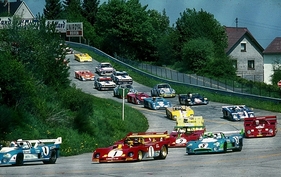
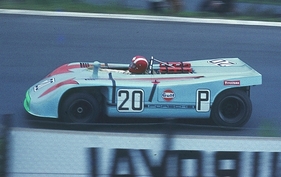
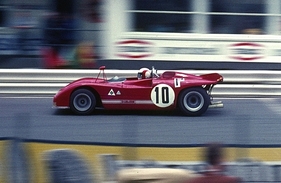
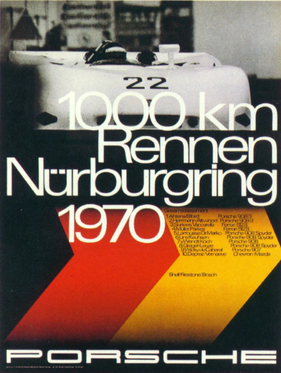
The ADAC 1000 km race, which has been held as the only historic endurance race on the entire Nürburgring circuit since 2021, will shine with a new highlight from September 19 to 21, 2025: The fascinating prototypes of the 1960s and 1970s will return to the Nürburgring Nordschleife.
From 1953 to 1983, the 1000 km race was held in the "Green Hell", then only on the Grand Prix circuit until 1991. The new edition started in 2004. In 2021, the ADAC 1000 km race was relaunched as a historic format.
Without timekeeping, but with a lot of enthusiasm
For safety reasons, racing sports cars/prototypes are no longer allowed to race on the Nordschleife after the DMSB track license. As part of the 1000 km race, the return of the racing cars/prototypes of this golden era is now possible as an untimed experience run.
To participate, the racing cars do not require a current FIA car pass (HTTP) and the drivers do not need a racing license or Nordschleife permit. The noise restriction of 130 dB must be observed on the Nordschleife.
With sports prototypes from 1966 to 1975/1983
The ADAC 1000 km race is organized and run by a well-coordinated and experienced team of enthusiasts under the direction of Henning Meyersrenken and Stefan Eckhardt, the managing directors of the event company.
The conceptual sponsor is the motorsport club DAMC 05 e.V. in the ADAC.
Tobias Aichele from Solitude GmbH was involved for the new main theme. The PR and event agency from Renningen near Stuttgart, which specializes in the organization of special themes and anniversaries, will be responsible for the starting field and attaches great importance to historically accurate time spans in the implementation.
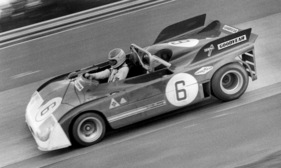
The two-seater cars from 1966 to 1971 are therefore registered, supplemented by the racing sports cars up to 1975 and the Group 5 vehicles up to 1983.
Vehicles from the Interseries, which was introduced in Europe in 1970 as a counterpart to the CanAm series, will be carefully added in order to be able to demonstrate McLaren, March and Lola on the Nordschleife, for example, as well as the exciting "Powered by Porsche" prototypes from Condor, Chanabée, KMW and Tecno.
Exciting history of the 1000 km race
The period of the 1960s can be described with conviction as the "golden age".
The crowds of spectators were enormous and the number of participating vehicles reached record levels. 60 to 70 cars were not uncommon. This was mainly due to the increasingly intensive involvement of Porsche, which not only entered numerous works cars, but also provided the majority of the privately registered vehicles.
However, the Italians dominated the first half of the decade. Maserati won in 1960 and 1961, while Ferrari took the victory laurels between 1962 and 1965. The winner twice was John Surtees (1963 and 1965), who was considered one of the fastest drivers on the Nürburgring in those years. He also achieved his two Formula 1 victories in the Eifel during this period.
Porsche, however, was determined to achieve overall victory - it was only in the second half of the decade that the company had the necessary vehicles to do so; the range of Stuttgart sports cars and prototypes in the 1960s extended from the 718RS to the 904, the 906, the 910 and the 907/908 versions through to the twelve-cylinder 917.
In 1967, four works cars of the 910 type finished the race in first place. The following year saw a double victory and in 1969, five Type 908 cars finished in the top positions.
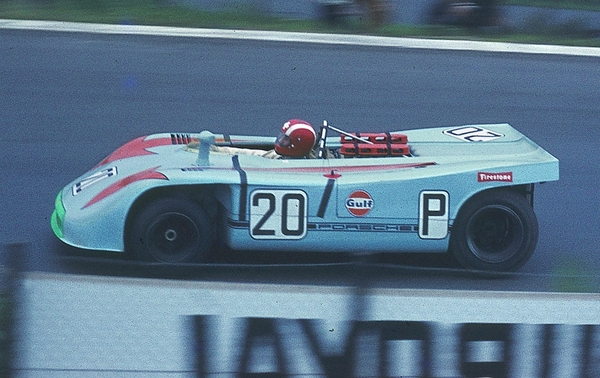
Porsche was unbeatable at the Nürburgring in those years. Many people will remember the names of the works drivers of the time: Jo Siffert, Vic Elford, Hans Herrmann, Rolf Stommelen, Gerhard Mitter, Kurt Ahrens, Brian Redman and many more.
In 1969, spectators experienced a so-called "Indianapolis start" for the first time, in which the field was sent on its way "flying" behind a lead car. The old "Le Mans start", in which the drivers had to run across the track to their cars lined up in front of the pits, had become obsolete for safety reasons.
Further information can be found on the 1000 km race website.