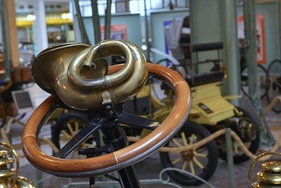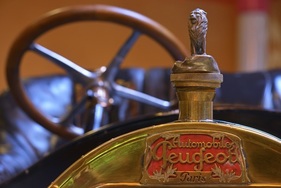


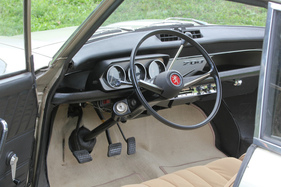
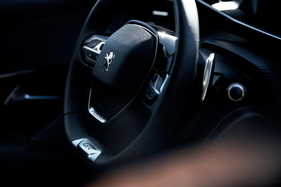
Since the birth of the car, the form and function of vehicle controls have also continued to evolve. A simple steering bar has now become a versatile multifunction steering wheel that can be used to operate the radio, telephone or gearshift. At Peugeot, the steering wheel is now part of the Peugeot i-Cockpit®, which has been part of the brand DNA since 2012. Peugeot steering wheels are characterized by their compact and flattened shape, which gives drivers more legroom and better handling.
The history of the steering wheel
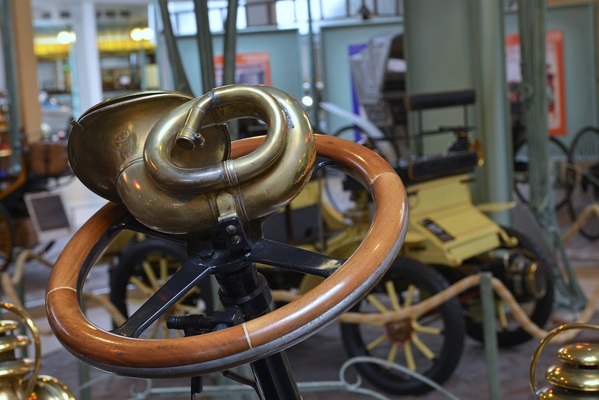
The round steering wheel first appeared in 1894: Alfred Vacheron installed it in his vehicle, a Panhard 4 PS, with which he took part in the Paris-Rouen race - a PR event designed to publicize the then still new invention of the automobile.
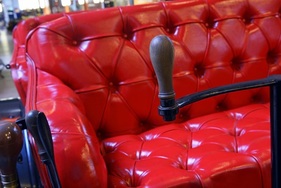
Peugeot vehicles also took part in this race. The models from the lion brand were still equipped with a simple handlebar, two speeds and four cylinders. Visually, they were very reminiscent of motorized carriages. Other manufacturers were also still based on conventional horse-drawn carriages, with passengers often sitting opposite each other.
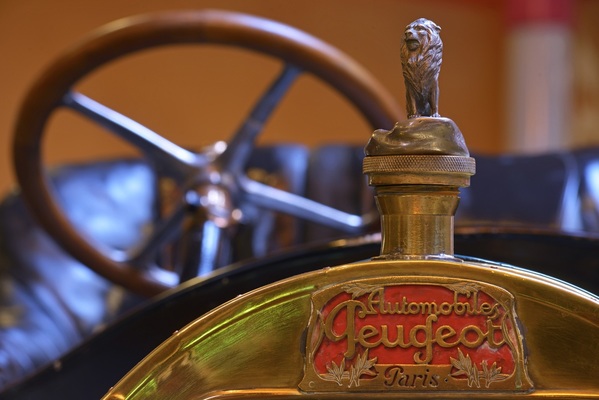
Despite the technological innovation represented by Alfred Vacheron's steering wheel, he only took fourth place in his Panhard 4 PS. The victory was shared by the automobile pioneers Panhard and Levassor and the sons of the Peugeot brothers, each in cars with steering racks.
Nevertheless, the steering wheel gradually replaced the previous handlebars, which also meant that the handling of the automobile moved further away from the horse-drawn carriage. Peugeot presented the first vehicle with a steering wheel in 1901: the Peugeot Type 36, which was also the first model of the lion brand with a hood at the front.
The steering wheel as the basis for new innovations at Peugeot
Car designers around the world quickly realized that it was easier for the driver to steer a car with a circular steering wheel rather than a bar. The round shape made it easier to control the wheels, for example when turning or maneuvering.
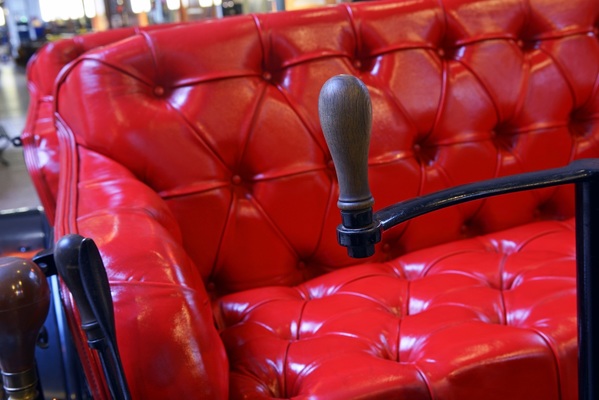
Nevertheless, the steering wheel always presented car manufacturers with challenges during its development, as certain factors had to be taken into account. For example, the steering wheel had to be easy to use and the controls had to be clearly visible. However, the automotive industry grew with its tasks, so the steering wheel also served as a springboard for many other innovations.
With the integration of the airbag, among other things, the steering wheel was given a new function at the beginning of the 1990s, which no longer had anything to do with directional control.
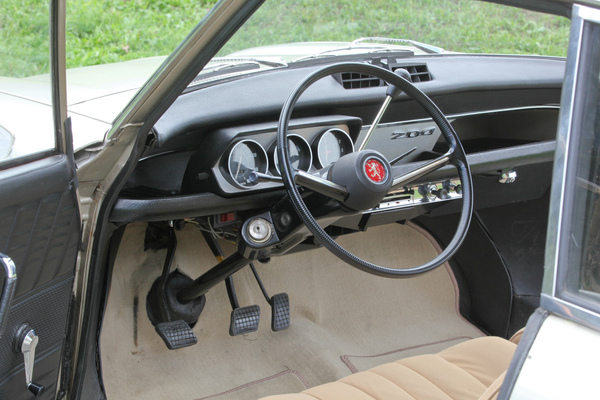
These and other innovations also changed the material of the steering wheels. At Peugeot, they are now made of foam in the entry-level models and leather in the higher trim levels.
The further development of the steering wheel also offered additional design options: at Peugeot, special thumb rests, perforated, colored seams and the flattened shape of the steering wheel at the top and bottom make for pleasant handling. Depending on the equipment, the steering wheel can also be used to control the radio, cruise control or smartphone, among other things. Inspired by racing, the steering wheels on Peugeot's highest equipment levels, such as GTi or GT-Line, have sporty paddle shifters.
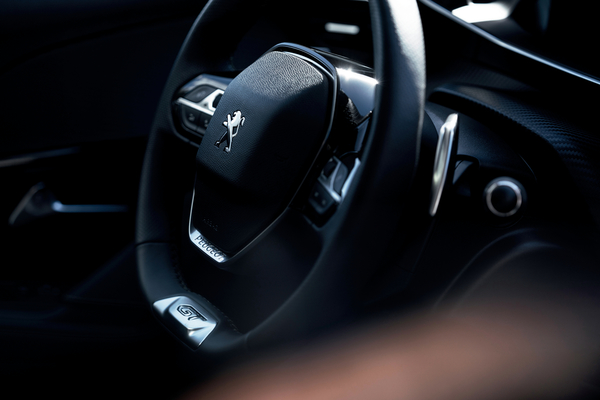
The interior of the current Peugeot models is characterized above all by the modern Peugeot i-Cockpit®. It consists of a touchscreen, a higher-positioned instrument cluster and a compact steering wheel. Its smaller dimensions ensure a comfortable seating and arm position as well as more legroom. The Peugeot i-Cockpit® has been a trademark of the lion brand since its introduction in 2012 and is integrated in all newer models: from the Peugeot 208 compact car to the Peugeot 3008 SUV and the Peugeot Partner light commercial vehicle.
Will the steering wheel disappear in autonomous vehicles?
In 2014, the trend towards autonomous vehicles that have neither a steering wheel nor an accelerator or brake pedal began. Groupe PSA also launched a program in July 2015 with the aim of designing a self-driving car for the masses. It is gradually developing new functions that should lead to partially and fully autonomous driving.
The OICA (International Organization of Motor Vehicle Manufacturers) distinguishes between five stages for autonomous driving:
- Level 1 "Hands on": the driver must keep their hands on the steering wheel
- Level 2 "Hands off": The driver can do something else, but must monitor the driving at all times so that they can take control again immediately
- Level 3 "Eyes off": The driver no longer needs to supervise the driving at all times, but must be able to take control at any time
- Level 4 "Mind Off": The driver no longer needs to be able to take control of the vehicle at all times
- Level 5 "Driverless": 100 percent autonomous, driverless driving
The functions of levels 1 and 2 are already integrated as driver assistance systems in many Peugeot models. These include, for example:
- Active Lane Keeping Assist with steering intervention, which corrects the lane to keep the vehicle in its lane
- Full Park Assist, which automatically performs the parking and reversing maneuvers, controlling the steering, accelerator and brakes
- Drowsiness Alert, which assesses the driver's condition by recognizing when the hands leave the steering wheel and the car's lane deviates from the lane markings
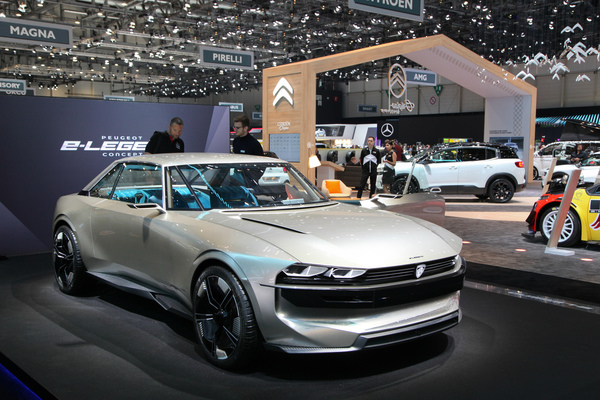
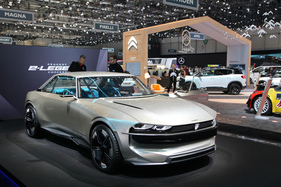
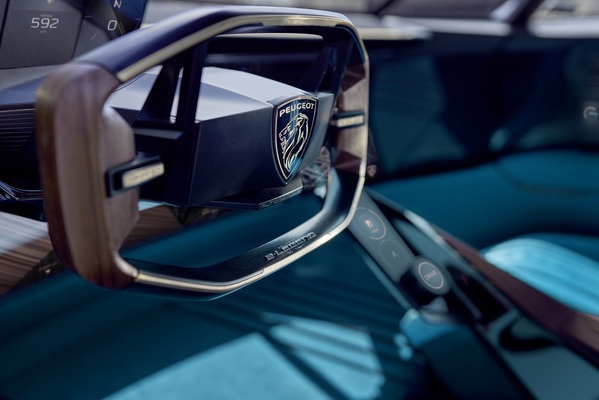
At the 2018 Paris Motor Show, Peugeot presented the Peugeot e-Legend concept car, which reflects the lion brand's vision of the future of autonomous driving. The driver operates the study in the "Responsive i-Cockpit", which consists of a head-up display with three dials and a very compact steering wheel. When the vehicle switches to autonomous driving mode, the steering wheel disappears under the dashboard. The occupants can then watch films or play video games on the fully visible 49-inch (125 centimeter) screen.