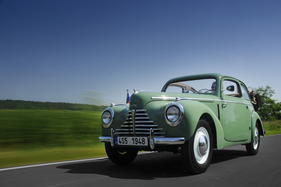


Škoda is celebrating a special anniversary: production of the first post-war model began exactly 70 years ago. The& Škoda 1101 "Tudor", the first example of which was completed on May 7, 1946, marked the start of a new stage in the development of the Czech car manufacturer. An exhibition starting on May 10 at the Škoda Museum in Mladá Boleslav commemorates the successful model.
Strengths from several generations
"The Škoda 1101 incorporates the strengths of several generations of the Popular and Rapid model series, thanks to which Škoda had already become the largest car manufacturer in Czechoslovakia in 1936," says Andrea Frydlová, Director of the Škoda Museum, adding: "The "Tudor" still clearly surpassed its predecessors." From May 10 to August 30, 2016, the new exhibition at the Škoda Museum in Mladá Boleslav commemorates the seventieth anniversary of the start of production.
At the time, the Škoda 1101 model series impressed with its attractive design and modern technical concept. It included a forked central tubular frame, independent suspension all round, powerful hydraulic brakes and a powerful and economical four-cylinder in-line engine. It developed 23.5 kW (32 hp) of power from a displacement of 1,089 cc.
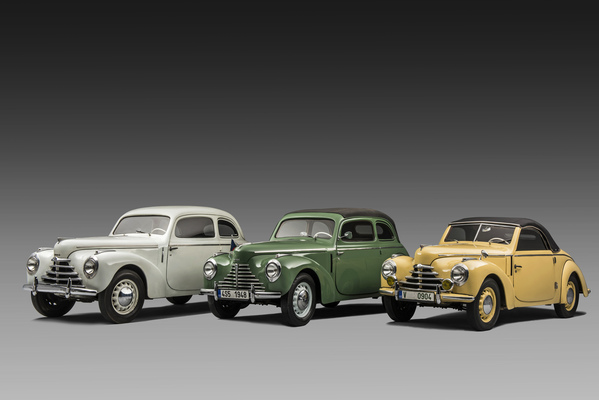
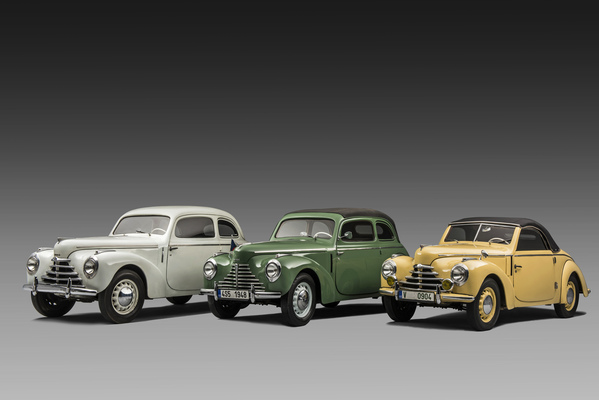
From 1946 onwards, the closed two-door model formed the basis of the broadly diversified model range. In English, it was called a "two-door", from which the popular name "Tudor" originated. To meet the needs of customers at home and abroad, a four-door sedan was initially added. This was soon used by the Czechoslovak ministries and the diplomatic corps as an official vehicle and was the most frequently built variant from 1949 onwards.
The range of open bodies included the popular "Tudor" cabriolets with doors in rigid frames and a folding part of the roof made of fabric. There were also elegant roadsters. The delivery vans with two side windows and the station wagons, which were known as STWs at the time, offered particularly high everyday utility. Even back then, they had a folding rear bench, which allowed the loading area to be increased to 1,490 mm in length and 1,380 mm in width.
Škoda 1101
The Škoda 1101 VO (vojenský otevřený, open military version) and 1101 P (pohotovostní, standby) versions with their bucket truck body wrote a special chapter in the history of the "Tudor". They were used by the armed forces of several countries, including Portugal, Saudi Arabia and Egypt.

Production of the Škoda model series 1101 (called 1102 after modernization) took place in a state-owned company with the official designation AZNP (Automobilové závody, národní podnik). The chassis with all the technology was produced in Mladá Boleslav, while the bodywork was built in the newly integrated plants in Kvasiny and Vrchlabí - these three sites still form Škoda's production network in the Czech Republic today. At the launch in May 1946, the Škoda 1101 was sold on the domestic market for 67,700 crowns; due to the difficult economic situation, customers had to present a purchase receipt.
Between 1946 and 1952, 66,904 Škoda "Tudors" were produced in civilian versions and 4,237 vehicles in special versions for the armed forces. Almost two thirds of the total production of the Škoda 1101/1102 was exported - in 1947 to 36 countries around the world, four years later already to 76 countries. The most important sales markets included Poland, the Netherlands, Belgium and the Federal Republic of Germany. However, the model was also firmly established in Australia, Brazil, India, the South African Union and Canada.
Success in motorsport
The Škoda 1101/1102 also enjoyed significant success in motorsport. At the 24-hour race in Spa, Belgium, in 1948, three "Tudors" crossed the finish line victorious in the class up to 1,100 cc - side by side in accordance with the previous agreement. The special Škoda Sport and Supersport vehicles had performance-enhanced engines in various versions, including a version with a displacement of 1490 cc, which was supercharged with a Roots supercharger and reached a top speed of more than 200 km/h with up to 132 kW (180 hp). The successful motorsport commitment proved to be extremely helpful in promoting the Škoda 1101/1102 on export markets. At the same time, it made it possible to continuously improve production - even the supercharged cars used many standard parts.
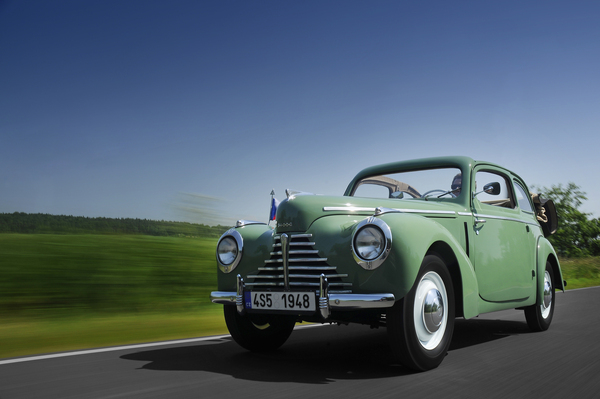
The Škoda 1101/1102 occupies a place of honor in the traditional history of the brand from Mladá Boleslav. The successor model series successfully continued its technical concept until 1964, when production of the completely new Škoda 1000 MB vehicle generation with rear engine and self-supporting all-metal body began.