


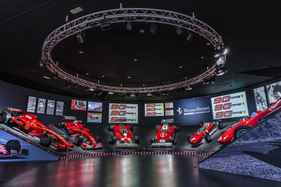
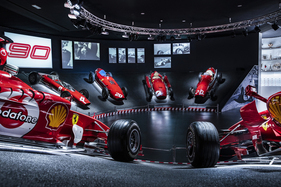
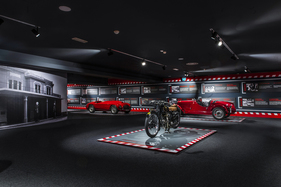
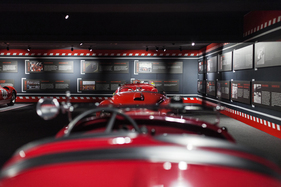
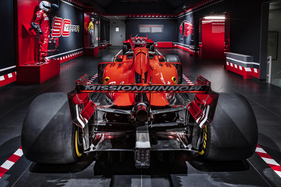
Scuderia Ferrari, one of the icons of motorsport that unites an entire country and millions of fans around the world, and the racing team with the most Formula 1 victories, is celebrating its 90th birthday in 2019. The Ferrari Museum in Maranello is organizing a major anniversary exhibition to mark the occasion.
Scuderia Ferrari was founded on 16 November 1929 in Modena by Enzo Ferrari after he recognized the potential of gentleman drivers for great performances on the racetrack. Since then, Scuderia Ferrari has written many of the most memorable chapters in the history of motorsport. Even in its early days, the then Società Anonima Scuderia Ferrari, initially with Alfa Romeos and soon with the best drivers of the day, attracted attention in the Italian and international world of motorsport in a wide variety of categories: the very first competition in which the team took part was the Mille Miglia in 1930. This was followed by the Targa Florio, the Trieste-Opicina hill climb, in which Tazio Nuvolari took the first victory, and legendary endurance races such as the 24 Hours of Le Mans, Daytona and Spa, as well as the 12 Hours of Sebring
90 Anni - 90 years of Scuderia Ferrari
The "90 anni" exhibition shows the cars that were witnesses and protagonists of this glorious history, from the Alfa Romeo 8C 2300 Spider, which had the Cavallino Rampante emblazoned on its bodywork for the first time at Le Mans in 1932, to the single-seater SF71H, in which Sebastian Vettel and Kimi Räikkönen drove their races last year.
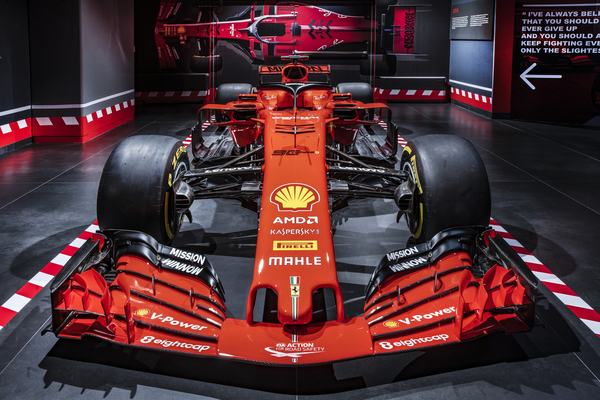
For the period in between, the exhibition shows a large number of unforgettable single-seaters that were the stars of hard-fought races, historic victories and sometimes painful defeats. These include the Ferrari 500, with which Alberto Ascari won two consecutive world championship titles in 1952 and 1953. Or the Ferrari D50, with which Juan Manuel Fangio won the fourth of his five world championship titles in 1956. The Ferrari Dino 246 F1, in which Mike Hawthorn snatched the world championship from Stirling Moss by just one point, is also included. The exhibition continues with the Ferrari 156 F1, in which John Surtees, the only person ever to win world championships on two and four wheels, won his first Formula 1 race in 1963.
Also on display is the 312 T from 1975 with its revolutionary transverse gearbox, in which the young Niki Lauda won his first world championship title, and the 312 T4, in which Jody Scheckter won the drivers' world championship in 1979. Not forgetting, of course, the Ferrari F2004, in which Michael Schumacher won his last world championship title in 2004 with 13 victories (including six in a row). A little further down this long list is the F2007, in which Kimi Räikkönen won the Brazilian Grand Prix in an unprecedented chase to bring the drivers' title back to Maranello by just one point.
These cars are an expression of Enzo Ferrari's dream and the commitment, determination and absolute will to innovate of the most successful team in the history of Formula 1. 31 world championship titles (15 drivers' and 16 constructors' titles) remain an unparalleled record, which the Maranello team defends and cherishes every year with the same passion as 90 years ago.
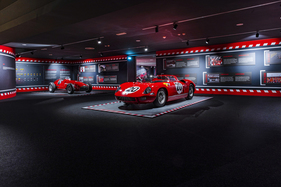
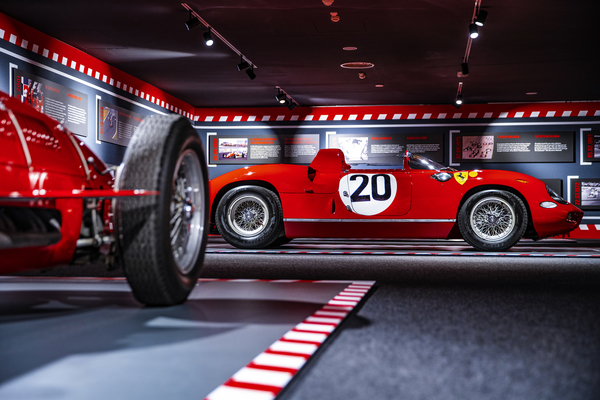
The exhibition is of course also a tribute to the victories in sports car races. The 166 MM, for example, with which Ferrari achieved its first victory at Le Mans 70 years ago, followed by triumphs at the 24 Hours of Spa and the Mille Miglia, will be on display. The 275 P in turn dominated the 12 Hours of Sebring in 1964 and went on to win the 1000 km race at the Nürburgring and the 24 Hours of Le Mans.
"Hypercars" - milestones in the history of motorsport.
With the "Hypercars" exhibition, the museum in Maranello pays tribute to the Ferraris that marked important advances in the technological evolution of the company.
Every Ferrari is special and is reserved for only a few select customers. Many models of the Cavallino Rampante became catalysts for the constant pursuit of innovation and faster technological progress, setting new standards. Maranello thus created its "hypercars" - cars that represent milestones in the history of the automobile. They were all produced in limited series and are an expression of Enzo Ferrari's personal guiding principle: to make each new model the best car of its time. Each further development is therefore the result of highly developed research and sets new standards in the world of automobiles. The exhibition now offers visitors the opportunity to admire examples of these technological masterpieces from the Ferrari brand.
The exhibition begins with the GTO from 1984, an iconic vehicle with aggressive yet elegant lines that was developed with the aim of reviving the Gran Turismo Omologato myth of the legendary 250 GTO.
Just three years later, Ferrari produced the "mother" and reference point of all modern hypercars: the F40, with which Enzo Ferrari celebrated the company's 40th anniversary. It is a true racing car with astonishing power and performance, also thanks to the turbo engine and the use of composite materials, which dominated F1 at the time.
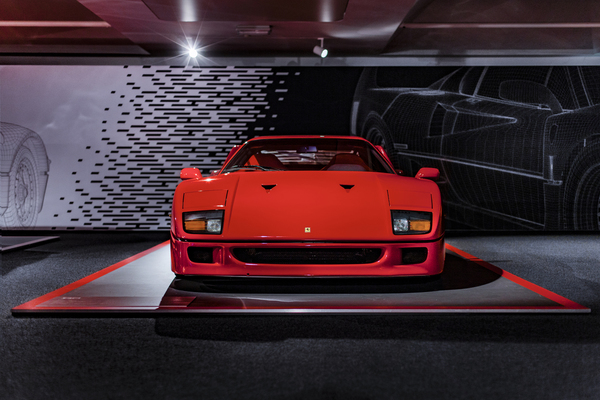
In 1995, Ferrari ushered in a new era with the F50, essentially a Formula 1 racing car disguised as a Gran Turismo. For the first time, the engine, a descendant of the 1990 F1 engine, was mounted directly on the monocoque frame and assumed a load-bearing function. An awe-inspiring vehicle with the ground effect of a real racing car, which it owes to over 2000 hours of work in the wind tunnel.
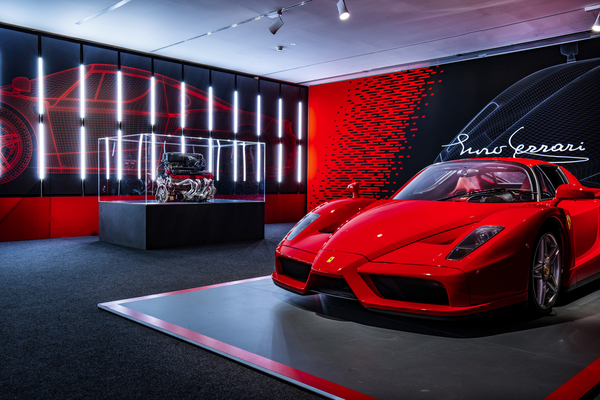
The Ferrari Enzo of 2002, a hypercar dedicated to the founder, in the development of which Michael Schuhmacher played an advisory role, once again delivered the maximum of what a car manufacturer could put on the road at the time. It was again inspired by the Ferrari single-seater and featured a particularly innovative human-machine interface, in which a number of controls were moved to the steering wheel at the request of the great champion. These included the forerunner of the "Manettino", which was later used in all vehicles in the model range.
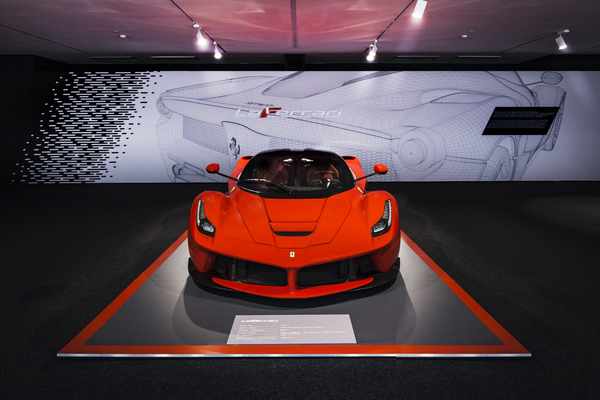
The name of the LaFerrari, which was launched in 2013, already contains the quintessence of a car from the car manufacturer in Maranello. It was the first Ferrari to be equipped with the HY-KERS hybrid drive, inspired by the new generation of Formula 1 cars, and put almost 1000 hp on the road. The version with a targa roof, the LaFerrari Aperta, was launched in 2016 and is no less efficient than the coupé when the windows are closed thanks to brilliant aerodynamic development work.
The exhibition also features the construction model of the Ferrari P80/C, the last representative of the One-Off program, which enables the production of truly unique versions of existing models according to the customer's wishes. The P80/C, which was presented last April after four years of development, is the only One-Off in Maranello's history to be approved exclusively for race tracks. It is based on the Ferrari 488 GT3 and is the highly developed new version of the concept behind the sports prototypes, which has proved particularly successful in the competitions of recent years.
While touring the exclusive history of the Ferrari brand, visitors will also discover the "Tailor Made" program, the highest expression of luxury the company has to offer. One of the museum's showrooms has been recreated as Ferrari's Centro Stile, where the most discerning customers can have their cars personalized. Color palettes, fabric and leather samples and numerous other materials offer endless possibilities to make one's Ferrari as unique and distinctive as the customer's taste and personality.
The "90 anni" and "Hypercars" exhibitions will run until May 2020.
