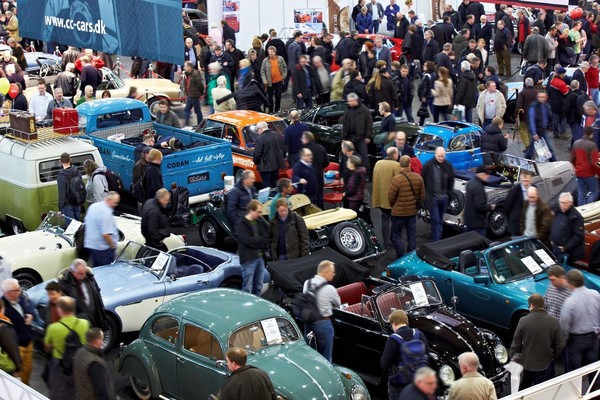
Two plus two makes four - according to mathematical logic. "In automotive terms, however, it results in a seating arrangement that stands for the fascinating Gran Turismo vehicle class - and for the corresponding lifestyle," explains Frank Ruge, project manager of the Bremen Classic Motorshow, which will open the 2018 classic car year from Friday to Sunday, February 2 to 4, at Messe Bremen. The noble, unrivaled fast 2+2-seaters of the Gran Turismo culture, which were considered the dream cars of entire generations in the 1950s to 1970s, form the theme of the special exhibition "Gran Turismo 2+2: Jetset for the road".
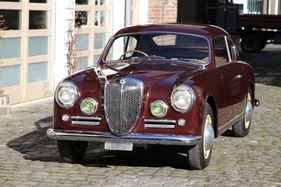
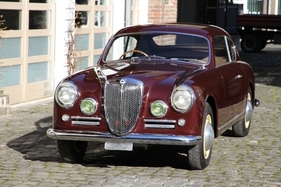
Western Europe, ten years after the end of the Second World War. Wide, still empty highways are emerging everywhere, inspiring longings for new horizons. The fulfillment of these longings is the great journey in one's own car. A car that has grown into a genre of its own for this purpose: solidly designed, racy, superiorly motorized, solidly equipped - and equipped with the makeshift of a second row of seats that articulates the preferred togetherness. As comfortable as a limousine, but faster than a hard, noisy sports car: that's the simple formula. In Italy, the generic term Gran Turismo was born - and the Aurelia coupé from Lancia as the forefather of the new species. In 1953, the elegant hatchback touring car, which had the abbreviation GT in its name for the first time, was boosted to 118 hp. This gave it a top speed of 185 kilometers per hour; a Porsche 356/1500 Super, the fastest German production car of the day, ran out of steam at 175 kilometers per hour.
But the Aurelia GT was just the beginning. Around 1960, an arms race for the prestigious top speed crown began among the manufacturers of fine Gran Turismo models. 250, 270, 280 kilometers per hour - constant new records define the hierarchy of automotive dreams among young car enthusiasts, for whom looking at the speedometer through the side window becomes a popular sport. At the same time, a war of faith broke out over whether the 350 to 400 hp now available should escape the displacement of cast-iron US eight-cylinder engines - or the crazy revs of filigree four-camshaft works of art from northern Italy.
Shortly after the peak of the Gran Turismo culture, it begins to die out. Not because of petrol prices, which exploded in 1973 in the wake of the oil crisis. Rather, it was mainly due to social change, which socially condemned the once admired dolce vita as contemptible decadence. While Maserati and Ferrari drivers are practising the new modesty by switching to less exposed high-performance four-door cars à la Mercedes-Benz 450 SEL 6.9, the GT abbreviation is experiencing an astonishing democratization; first on the hot VW Golf GTI, then on countless small cars with rev counters instead of hubcaps. The once so fascinating aura of the sinfully expensive high-speed coupés is thus finally sealed. What remains is the transfigured memory of an era in which the personal best time between Hamburg and Munich still sparked a genuine, innocent fascination.
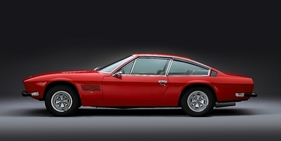
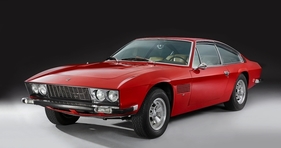
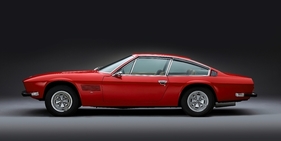
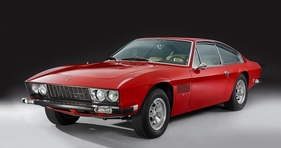
The Bremen Classic Motorshow is bringing back a good part of this fascination with its traditional special exhibition. As a live experience of ten exhibits of classic Gran Turismo dream cars such as the Lancia Aurelia GT - and above all those that some eternal admirers have only ever seen in the car quartet. For example, the 7.2-liter Monteverdi High Speed 375 L from Switzerland. Until February 2, 2018, when the next Bremen Classic Motorshow opens its doors. And thus once again not only marks the start of the new 2018 classic car season. But also its first real highlight.
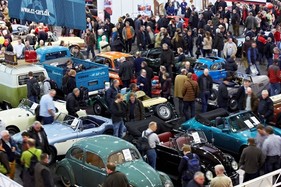
The Bremen Classic Motorshow takes place from Friday to Sunday, February 2 to 4, 2018, in all halls of Messe Bremen as well as the mobile Hall 8. The halls are open from 9 am to 6 pm. The day ticket costs 16 euros.
Further information can be found on the website.