


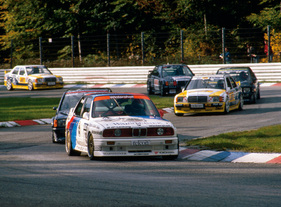
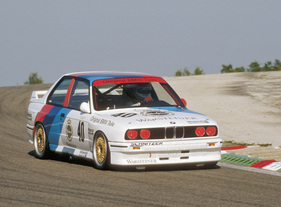
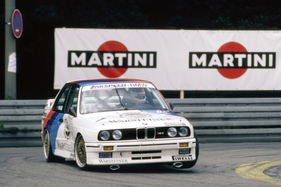
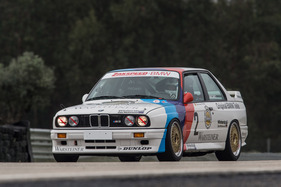
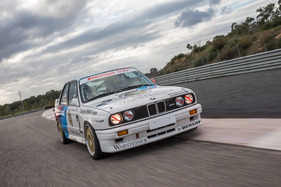
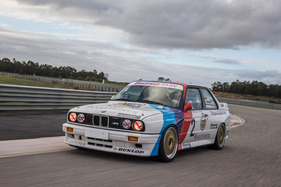
With the market launch of the first generation of the BMW M3 in 1986, BMW M GmbH, at that time operating as BMW Motorsport GmbH, revolutionized the sporty mid-size segment. No other manufacturer had ever before used genuine motorsport technology so consistently to transform a mass-produced model such as the BMW 3 Series into a thoroughbred high-performance sports car that was also suitable for everyday use without restrictions. The first BMW M3 of the E30 series marked the new reference against which other manufacturers had to be measured.
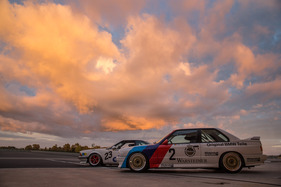
A 3 Series with big cheeks - and a lot behind it
After BMW had astonished the experts with the world premiere of the new BMW M3 at the International Motor Show in Frankfurt in the fall of 1985, the time had finally come around six months later: In the spring of 1986, the first motoring journalists had the opportunity on the Mugello racetrack to get to grips with the "Über-Dreier", which had an extremely spectacular appearance, and not just because of its strikingly flared wheel arches.
The 2.3-liter four-cylinder engine with four-valve technology produced 200 hp. Thanks to its lightweight construction - the front and rear bumpers, the side sills and the trunk lid including spoiler were made of plastic - the engine literally had an easy time with the two-door car, which weighed just 1,200 kilograms. Acceleration from zero to 100 km/h in 6.7 seconds and a top speed of 235 km/h are still impressive figures today.
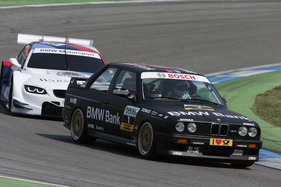
The Evo version of the BMW M3, which could reach speeds of up to 243 km/h with 220 hp, was even more powerful from 1988. And in 1990, the maximum expansion stage of the first model generation came onto the market: the BMW M3 Sport Evolution, limited to 600 units, with a 238 hp 2.5-liter engine.
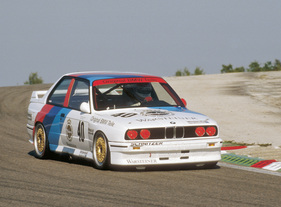
The catalytic converter versions of the sports car offered from as early as 1986 provided impressive proof of the engineers' achievements in the development of the BMW M3. Because the engineers had taken the use of exhaust gas purification technology into account right from the start of the development phase, the "catalytic converter" only cost 5 hp of engine power in all model versions; driving performance suffered only marginally as a result.
From thoroughbred motorsport machine to elegant coupé
Unlike its predecessor, the second generation of the BMW M3, which celebrated its market debut in 1992 as part of the E36 series, was not developed specifically for use in motorsport. The much more discreet, elegant coupé had a three-liter six-cylinder engine with 286 hp and a maximum torque of 320 Nm. Equipped with the innovative VANOS camshaft control system, the engine provided impressive proof of the highest level of engineering skill, as its liter output (97 hp/l) and specific torque (108 Nm/l) set two world records for large-scale production naturally aspirated engines. The BMW M3 Coupé sped to 100 km/h in exactly six seconds, with electronically limited acceleration ending at 250 km/h.

In 1994, BMW M expanded the model range of the BMW M3 to include two body variants. In addition to a convertible version, the BMW M3 was also available as a four-door saloon for the first time. What particularly pleased customers was that the performance of the saloon was identical to that of the coupé.
As part of an extensive model upgrade in 1995, the displacement of the in-line six-cylinder engine was increased from 2,990 to 3,201 cubic centimeters and the power output rose to 321 hp. The new engine had double VANOS, i.e. in addition to a continuously variable intake camshaft, it also had a synchronized exhaust camshaft. The result: despite significantly increased power reserves and noticeably improved driving performance (e.g. 0-100 km/h in 5.5 s), the modified BMW M3 used fuel efficiently.
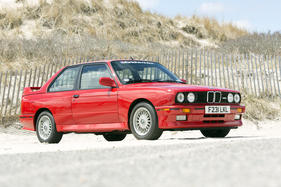
From summer 1996, the BMW M3 was the first mass-produced vehicle in the world to be equipped with an automated manual gearbox. The sequential M gearbox was based on racing technology: to shift up, the driver pulled the gear lever backwards, to shift down, he simply pushed it forwards. The system enjoyed great popularity among customers, and in the meantime almost every second BMW M3 rolled off the production line at the BMW plant in Regensburg with one of these SMG gearboxes.
Anniversary edition in Macao Blue metallic
Over five model generations, BMW has continued to refine its automotive icon. And over all these years, the BMW M3 has retained its original character. Probably no other car combines distinctive motorsport genes and unrestricted suitability for everyday use in such a highly emotional overall concept. To celebrate the 30th anniversary of this automotive icon, BMW is launching the exclusive special edition BMW M3 "30 Jahre M3" this summer, limited to 500 units worldwide.
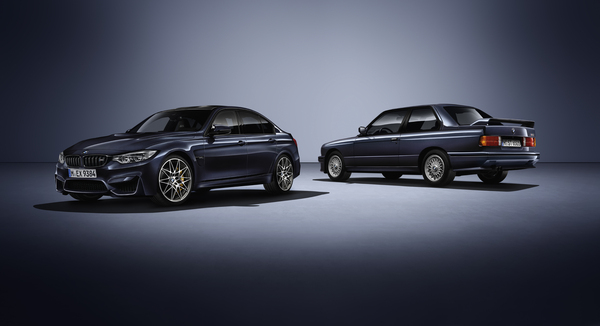
As a tribute to the first generation of the BMW M3, the "30 Jahre M3" anniversary edition is painted exclusively in the exclusive Macao Blue metallic exterior color, which once celebrated its premiere in the BMW color palette as an optional extra for the first generation of the BMW M3.

