







The 300 series models from Peugeot were and are compact vehicles that are positioned between the small saloon and the family car. For 90 years, they have been produced in whole or in part at the historic site in Sochaux - with the exception of the Peugeot 309, which was manufactured at the Poissy plant, and the new generation, which is produced in Mulhouse.
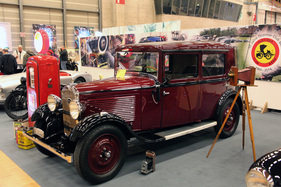
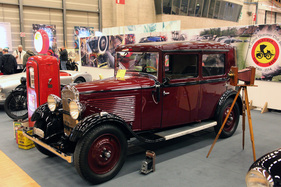
At the beginning of the 1930s, in the midst of the economic crisis, Peugeot met the demands of its discerning clientele with the launch of the Peugeot 301, which was sold from 1932 to 1936 as a saloon, coupé, convertible and roadster. The Peugeot 301 was powered by a 1,465 cc engine with 25 kW (35 hp) and 70,500 units were produced.
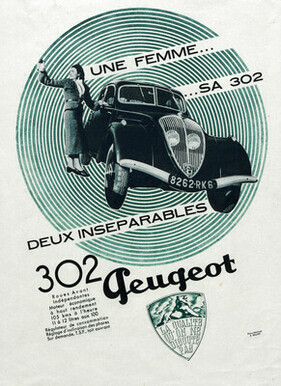
This was followed in 1936 by the Peugeot 302, of which 25,100 units were produced by 1938. The second member of the three-car series is a good example of how car manufacturers were increasingly discovering the importance of aerodynamics at the time. With its integrated headlights behind the radiator grille, it had a streamlined front end that continued the "spindle of Sochaux" style introduced with the Peugeot 402. As the 402 was a great success, the lion brand decided to use the same line for its mid-range, which was embodied by the Peugeot 302. This model reached a speed of 100 km/h.

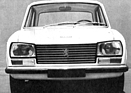
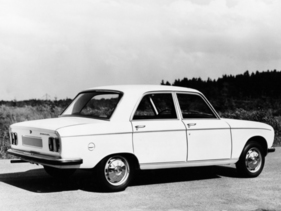
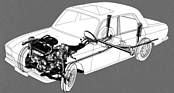
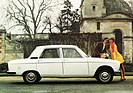
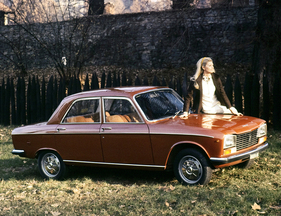
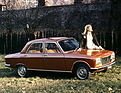
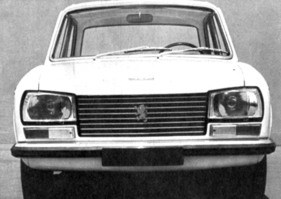
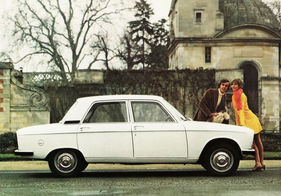
The war interrupted the development of the 300 series - the Peugeot 303 was never built. The series was put on ice for three decades until the Peugeot 304 was presented at the Paris Motor Show in 1969. It was available as a saloon, coupé, convertible and estate with or without a glass roof. The 304 aimed to occupy the mid-range segment and retained the technical basis of the Peugeot 204. However, the 304 differed from this model in that it had a vertical radiator grille and was 15 centimetres longer in the saloon (4.14 meters instead of 3.99 meters), while the estate version was only two centimetres longer.
The fourth model of the "300 series" took over the wheelbase and the middle section of the body from the Peugeot 204, while the rear was longer. The modernized front end with its trapezoidal headlights was similar to that of the Peugeot 504. The 304 was spacious and thus fulfilled an essential requirement for a family saloon.
Between 1969 and 1979, almost 1,200,000 units of the Peugeot 304 were produced. Between 1970 and 1972, the lion brand also launched the 304 in the United States. However, it was probably too small for the American market and only 4,000 units were sold. In 1973, the Peugeot 304 was redesigned, and two years later the coupé and cabriolet versions disappeared. The saloon remained on sale until 1979.

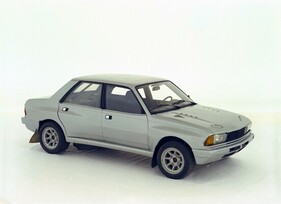
Its successor, the Peugeot 305, was launched in Europe in 1977 and was available in two body variants: either as a four-door saloon or as a five-door estate, which was also equipped with a half-folding rear seat. This estate, designed in collaboration with Pininfarina, was also available in a commercial version.
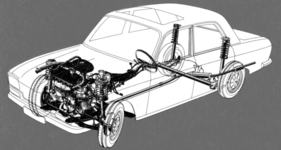
The platform and the 1.3-liter engine of its predecessor had been further developed for the Peugeot 305. It stood out from its foreign competitors with its front-wheel drive, transverse engine and four individually suspended wheels. With its roadholding, spacious interior and good comfort, the Peugeot 305 quickly established itself on the market and more than 1.6 million units were produced across all variants.

The saloon version of the 305 served as the basis for the VERA test program, which aimed to improve the fuel efficiency of future vehicle generations. The first VERA 01 prototype, which was presented in 1981, had a 20 percent reduction in mass and a 30 percent reduction in drag. The VERA program, which lasted five years and also included the engines, had a significant influence on the development of the Peugeot 405 and 605 models.
The introduction of the 309 in 1985 slowed sales of the 305, production of which ended in 1989. It had already been inherited by the 405 two years earlier.
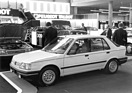
The Peugeot 309, which was produced in Poissy, Spain and Great Britain between 1985 and 1994, was the first real small car in the modern sense: it was no longer a classic four-door notchback like the 304 and the 305, but a hatchback, and with a length of 4.05 meters it was 19 centimeters shorter than the latter (4.24 meters in the saloon version). Inspired by the Talbot Horizon but with its own style, it recalled the platform and doors of the Peugeot 205, with an elongated front and rear end and a glass dome that characterized its hatchback.

Originally offered as a five-door model, the 309 was also available as a three-door model from 1987. The Peugeot 309 GTi, powered by the same 1.9-liter engine with 95 kW (130 hp) as the 205 GTi, was launched. It accelerated from 0 to 100 km/h in 8 seconds and reached a top speed of 205 km/h. In 1989, the Peugeot 309 GTi received the MI16 engine with 117 kW (160 hp) from the 405, making it an even more powerful compact sports car. The 309 again sold over 1.6 million units before production of the model was discontinued in 1994.
The lion brand had already launched the Peugeot 306 on the market in February 1993. It replaced both the top-of-the-range 205 and the 309, became a bestseller in its category and was produced and assembled at no fewer than nine locations around the world until 2002.
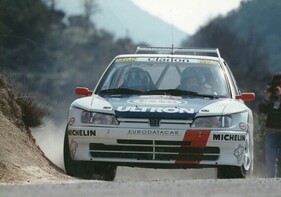
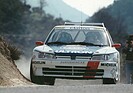
Available as a three- and five-door model from 1993, the model range was supplemented by a four-door model and an attractive convertible in 1994. The open-top version designed and built by Pininfarina was named the most beautiful convertible of the year at the Geneva Motor Show in 1994 and the convertible of the year in 1998. The sporty 306 XSI and 306 S16 versions were particularly impressive with their formidable roadholding. A special 209 kW (285 hp) Maxi version marked Peugeot's return to rallying in 1996 after a ten-year break.
The 306 Maxi won the highly competitive French rally championship in 1996 and 1997 with Gilles Panizzi. It then went on to win several World Rally Championship tarmac races, such as Corsica in 1997 and 1998, and was not much slower than the more powerful World Rally Cars.

The Peugeot 306 was redesigned in 1997 and a station wagon version also appeared in the same year. Production of the three- and five-door versions of the 306 was discontinued in 2001 when its successor, called the 307 with rediscovered consistency, was introduced. The estate car's career came to an end in 2002, although Pininfarina continued to produce the convertible until 2003.
The Peugeot 307, launched in 2001 and voted "Car of the Year" in 2002, was once again a global sales success, with over 3.5 million models produced. It stood for a new design that offered better space and had a large, sloping windshield. Available as a three-door, five-door and estate, it received a new addition to the family in summer 2003: the Coupé Cabriolet (CC). It transferred the modern concept successfully introduced in the Peugeot 206 CC to the compact segment.
With its retractable hardtop and four comfortable seats, the Peugeot 307 CC was one of the most spacious convertibles of its time. It was also the basis for the sports version that took part in the World Championship in 2004 and 2005, winning three times and finishing on the podium 26 times.
The first generation of the Peugeot 308 replaced the 307 in 2007, and the 308 was already renewed in 2013. This was followed by a third generation and finally the current Peugeot 308, which was launched in 2021.