








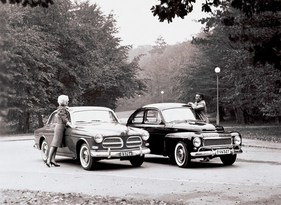


Volvo is celebrating a milestone anniversary in Germany: 60 years ago, the Swedish premium manufacturer, which was founded in Sweden in 1927, opened its first sales center for the demanding European market in Frankfurt am Main. Two legendary models were launched in Germany during the economic miracle: With the Volvo PV444, affectionately known by its fans as the "humpback Volvo", and the Volvo P120 Amazon.
Both shaped the image of safe, stylish and durable models from Scandinavia and laid the foundation for Volvo's lasting success story in Germany.

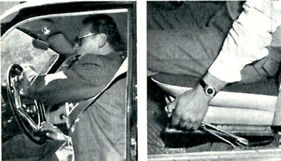
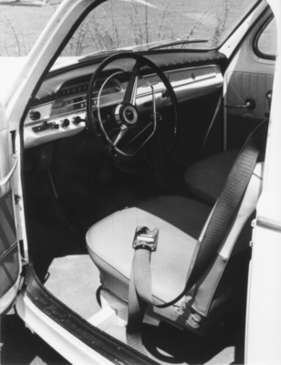
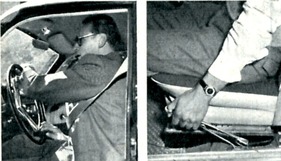
Volvo proved its early leadership in vehicle safety when the Volvo PV544 and Volvo P120 Amazon models became the world's first passenger cars to be fitted with three-point safety belts as standard back in 1959.
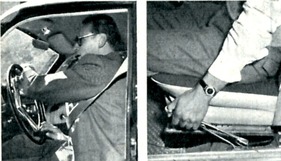
No other safety equipment is as important to this day. It is estimated that the three-point safety belt has already saved the lives of over one million people.
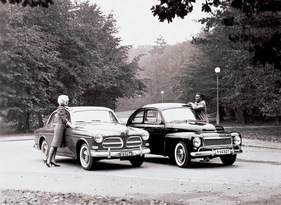
The Swedish brand also positioned itself as an alternative to traditional premium manufacturers with trend-setting models in style-defining shapes. The Volvo P120 Amazon, for example, demonstrated timeless elegance in an era of fast-moving fashion. In contrast, the Volvo 140 presented itself in 1966 in a completely unagitated manner with clear, angular lines. In Germany, the Volvo model advertised under the slogan "Safety from Swedish steel" was able to multiply Volvo sales figures. The then Volvo GmbH had already had the foresight to move its headquarters from Frankfurt to a new import center in neighboring Dietzenbach in 1965. While only 1,168 Volvos were registered in 1965, the Swedes succeeded in surpassing the 10,000 new registrations mark for the first time with the Volvo 140 and the flagship Volvo 164 launched in 1968.
Volvo in the 1970s: Scandinavian style for new segments
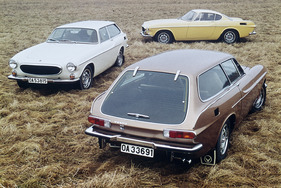
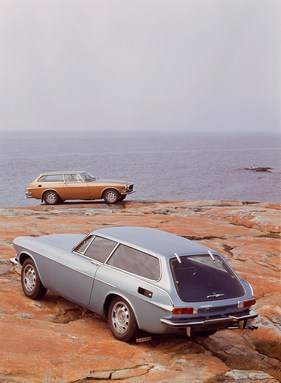
Whether fashion, music or design - Sweden was regarded as a center of creativity in the 1970s and Volvo as one of the most innovative car manufacturers in the premium segment. In 1971, Volvo surprised the sports car scene with the Volvo 1800 ES with its extravagant station wagon tailgate and glass tailgate, while the Volvo 343 caused a sensation in the compact class from 1976.
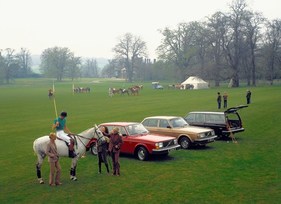
The portfolio of the large Volvo with its angular contours for family, leisure and business was more diverse and, above all, safer than ever before. At the beginning of the decade, the safety features of the Volvo 140 served as a model for the Federal Ministry of Transport to develop a specification for the safety vehicles of tomorrow, and the further development of the Volvo 240, launched in 1974, even became an international reference vehicle for safety research. With almost 25,000 registrations, Volvo achieved a new record in the Federal Republic of Germany in 1978, and the Volvo 240 was now also offered in the GDR.
Volvo in the 1980s: Firmly anchored in the premium segment
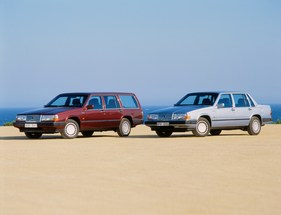
Neither the first standard three-way catalytic converters with lambda sensors nor powerful turbocharged petrol engines were able to prevent Volvo sales figures from falling in Germany at the beginning of the decade. Only the final positioning as a premium brand led Volvo back to success. To this end, the Swedes launched completely new representative flagship models, consisting of the six-cylinder Volvo 760 and the Volvo 740 presented in 1984. In the compact premium class, the Volvo 440 scored points at the end of the 1980s as the first five-door Volvo with front-wheel drive and a sporty chassis layout.
Volvo in the 1990s: Versatility at its most dynamic

From Dietzenbach, Volvo quickly built up a sales network in the new federal states, moved to Brühl in 1994 and less than a year later, the German headquarters were relocated to the automobile city of Cologne in 1995. Just three years later, Volvo recorded its best result to date with 42,267 new registrations and a market share of 1.1 percent. Volvo owed its leap forward primarily to a new model series, the revolutionary Volvo 850. The Volvo 850 was the first model from the Swedish premium brand to combine a dynamic front-wheel drive layout with transversely mounted five-cylinder engines for sporty driving performance. It also featured new safety technologies such as SIPS side impact protection and side airbags.
Volvo in the 21st century: Perfectly shaped and safe on the road into the world of tomorrow

Until the turn of the millennium, estate cars were Volvo's trademark, but now the Swedes are also taking a leading role in premium SUVs. As trendsetters for versatility, safety and efficiency, the Volvo XC90 (from 2002) and the Volvo XC60 (from 2008) wrote a success story in the growing SUV segment. Today, with the new Volvo XC40, there are already three SUV series in Scandinavian design with which the premium brand is demonstrating its SUV expertise. But the premium manufacturer is also underlining its leading role in safety, quality, design and environmental protection with the Volvo 90 series models presented in 2016 and the new generation of the Volvo 60 series that will follow this year.

