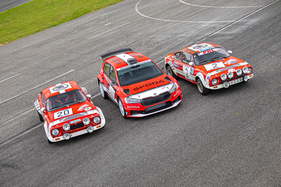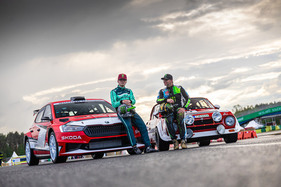
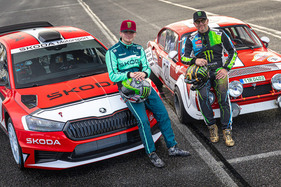
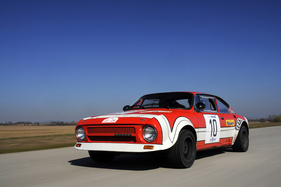
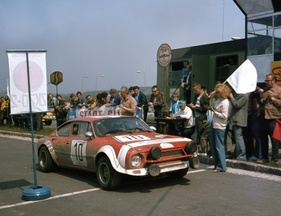
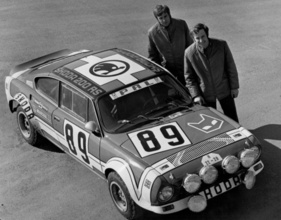
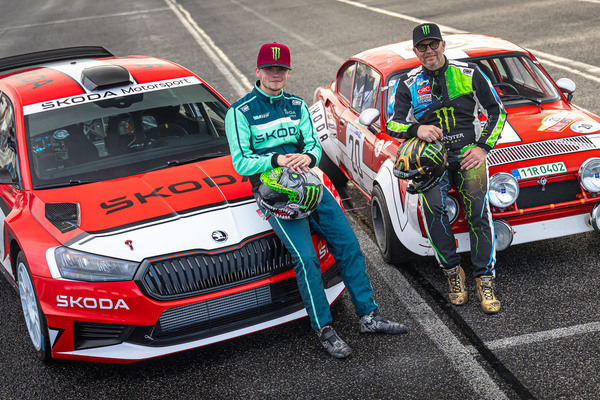
The Škoda 200 RS and Petter Solberg, 2003 FIA World Rally Champion, have a lot in common: both were born in 1974, are still in top form today and - as their current encounter showed - are still really fast. Petter Solberg also invited his 22-year-old son Oliver, who drives a Škoda Fabia RS Rally2 in the WRC2 category of the FIA World Rally Championship and leads the overall standings with the agile four-wheel drive car, to the track test.
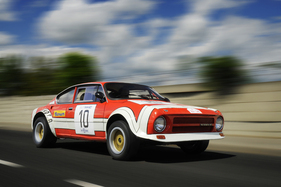
In its day, the Škoda 200 RS was considered extremely innovative. Thanks to its lightweight construction - including a roof and hood made of aluminum and a hood made of fiberglass-reinforced plastic - it had an unladen weight of only around 800 kilograms and featured disc brakes all round. The 2.0-litre four-cylinder engine at the rear mobilized more than 170 hp peak power, which was transmitted to the rear wheels. Depending on the gear ratio, this allowed the vehicle to reach a top speed of up to 240 km/h.
"It must have felt extraordinary to drive this car in competition," explained Petter Solberg after his drive in the 50-year-old racer. "The torque of the engine makes it very easy to control the car when drifting," analyzed the former world rally champion after a few hot laps. "With the weight of the engine on the rear axle, you get excellent traction. The car is well balanced and therefore easy to drive."
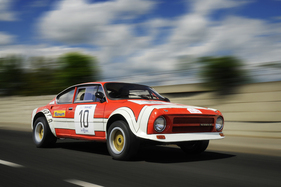
The Škoda 200 RS made its debut in May 1974 at the IDA Rally in what was then Czechoslovakia. A few weeks later, Škoda entered two examples in the Barum Rally and the Škoda Rally held in Mladá Boleslav. There, the two red and white Škoda 200 RS met their sister car, the Škoda 180 RS.
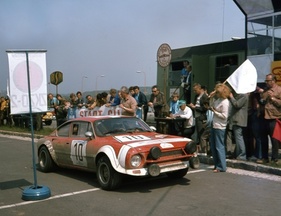
The engineers at Škoda had developed a first-class rally car that was a match for even the strongest competition. However, the first RS models were not really able to show their potential, as a change in the regulations ended the careers of the 180 RS and 200 RS prematurely: specially built prototypes were no longer eligible to compete in rallies; instead, the competition vehicles had to be based on production models from then on. This restriction meant that only two Škoda 200 RS and one Škoda 180 RS were built.
However, the experience gained during their construction benefited the brand in the development of a new rally car based on the Škoda 110 R: the Škoda 130 RS. Škoda drivers achieved numerous national and international rally successes with this model until 1983. Today, Škoda also uses the designation 'RS' as a feature of the brand's sportiest production models.