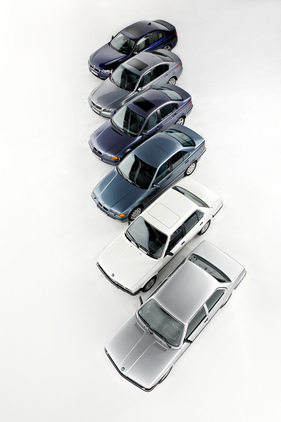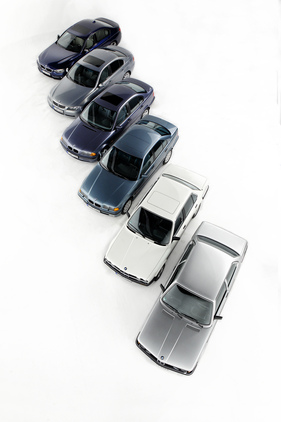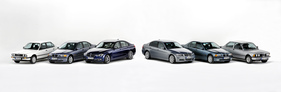
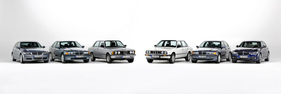
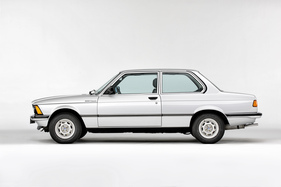
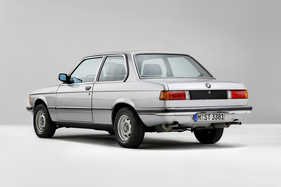
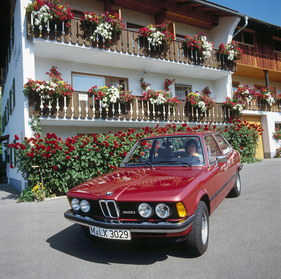
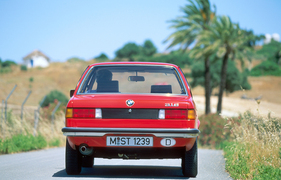
When BMW presented the new 3 Series, internally known as the E21, at the International Motor Show in Frankfurt in the fall of 1975, many of those responsible probably had a queasy feeling. After all, the new saloon was to replace the very popular BMW 2002, the German sports saloon par excellence in the middle class at the time.
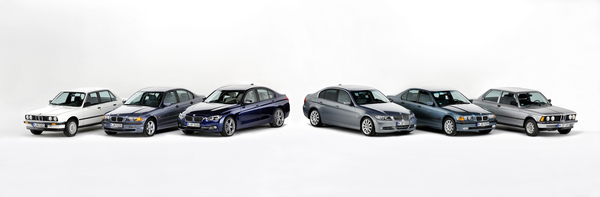
In terms of design, the two-door saloon was based on the 5 Series presented three years earlier. At first glance, Paul Bracq's design appeared significantly larger than its predecessor. In reality, the 4355 millimetre long, 1610 millimetre wide and 1380 millimetre high two-door model was only a few centimetres taller than the BMW 02 Series. The distinctive BMW kidney grille dominated at the front, while the top models were fitted with twin headlights from the outset. From the side, the 3 Series was more reminiscent of a coupé, which was due to the exclusively two-door design and the design of the rear side window. Inside, sportiness dominated and, for the first time, BMW tilted the middle section of the dashboard clearly towards the driver to ensure better visibility and operability.
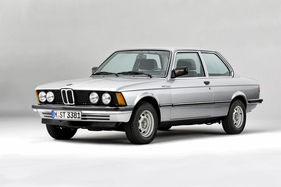
At the official presentation of the BMW 3 Series on the day before the opening of the 1975 International Motor Show (IAA) in Frankfurt, the Chairman of the Board of Management of BMW AG, Eberhard von Kuenheim, particularly emphasized the BMW 320i. "For us, this car is the worthy and contemporary successor to the famous BMW 2002 tii."
Thanks to fuel injection technology, its four-cylinder engine provided 92 kW/125 hp. As a result, the BMW 320i was not only at the top of the new model series, but also in the favor of car fans. In the year following its debut, readers of Europe's largest automotive trade magazine voted the top model the "best saloon in the world" in the up to two-liter displacement class.
The BMW 316, BMW 318 and BMW 320 models were also available at market launch. Their model designations were also derived from the size of the displacement: 1573, 1766 and 1990 cubic centimeters. The elaborately designed four-cylinder carburetor engines combined sporty performance characteristics with moderate fuel consumption. Even the 66 kW/90 hp base engine helped the 1010-kilogram BMW 316 to achieve inspiring agility and a top speed of 160 km/h, even though the 3 Series had gained considerably in weight compared to its predecessor.
From four to six cylinders
In 1977, the engine selection was expanded in a spectacular way. For the first time, six-cylinder engines were now available in lower mid-range vehicles. The drive units with a displacement of 2.0 liters for the BMW 320 and 2.3 liters for the BMW 323i, which was enthusiastically received by sports drivers, were specially designed for the BMW 3 Series.
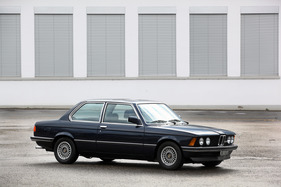
The six-cylinder in-line engine in the BMW 323i featured, among other things, electronically controlled engine management and transistorized ignition, produced 105 kW/143 hp and accelerated the two-door from zero to 100 km/h in just 9.0 seconds.
The chassis with independent suspension with wishbones and spring struts at the front and semi-trailing arms and spring struts at the rear also contributed to the models quickly achieving a unique sporty position in the mid-size segment. The wishbones of the front axle were guided by stabilizers according to the McPherson principle. The new front axle design offered ideal conditions for high steering precision. The BMW 3 Series also saw the premiere of a completely new design feature at BMW: the elastically mounted rack-and-pinion steering. The first 3 Series thus manifested the reputation it still enjoys today of offering maximum driving dynamics and agility.
Successful changing of the guard - 3 Series becomes a bestseller
The BMW 315 was introduced as the new entry-level model in 1981, powered by a 1.6 liter four-cylinder engine with 55 kW/75 hp. In the same year, one million BMW 3 Series vehicles were sold. After just six years, the new model series had overtaken its predecessor to become the most successful model in the company's history.
Customer satisfaction was also exceptionally high. According to a survey conducted in 1980, 80 percent of BMW 3 Series drivers thought that "nothing could be improved" about their car.
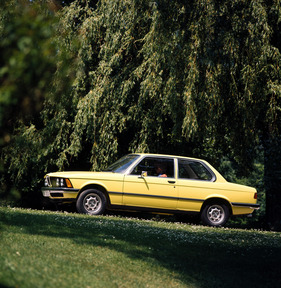
By 1983, a total of 1,364,039 units of the BMW 3 Series had been sold, 4,595 of them as Topcabriolets. This variant was created by coachbuilding specialist Baur in Stuttgart, who redesigned the BMW 3 Series in all available engine variants into an open four-seater with a massive roll bar.
Convincing second edition
In 1982, the second generation of the BMW 3 Series, the E30 series, presented itself as a worthy successor to the trendsetter and bestseller. The new model embodied progress and diversity in every respect: a new design, optimized aerodynamics, more space and comfort, more power, additional body and engine variants.
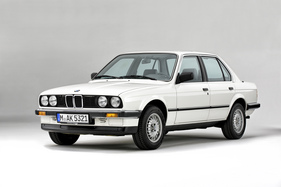
Compared to its predecessor, the lines appeared much tighter and smoother. The drag coefficient had been reduced by almost 15 percent. Regardless of the engine, all models were now fitted with twin headlights as standard. Although the new model offered four centimetres more space inside, the body was even three centimetres shorter. The front indicators had been moved from the tip of the fenders to the bumpers. The characteristic side view was reinterpreted, and in the middle was a wider, more stable-looking B-pillar painted matt black. The 35 millimeter wider track gave the new BMW 3 Series a powerful appearance. On top of this, the BMW developers had saved around 30 kilograms of weight per vehicle - despite the increased equipment.
Further developed engines
The new BMW 3 Series was launched with further developed four and six-cylinder engines. The BMW 316 with 66 kW/90 hp and now electronically controlled carburetor reached a top speed of 175 km/h. With 77 kW/105 hp from the four-cylinder engine equipped with mechanical injection, the BMW 318i now reached a top speed of 184 km/h. The six-cylinder engines already had an electronically controlled fuel injection system. The 102 kW/139 hp BMW 323i reached a top speed of 202 km/h. Thanks to a five-speed gearbox with a low gear characteristic in the highest gear, it was content with an average fuel consumption of 8.9 liters per 100 kilometers.
In 1984, a new engine concept consistently geared towards torque and economy ensured even greater efficiency. The eta in-line six-cylinder engine produced 90 kW/122 hp from a displacement of 2.7 liters. The BMW 325e thus achieved an average fuel consumption of just 8.4 liters of regular gasoline per 100 kilometers. The BMW 325e was the first model in the BMW 3 Series to be supplied exclusively with a catalytic converter.
Furthermore, the BMW 3 Series had the widest range of catalytic converter vehicles in its segment in the 1980s. A further new development was also introduced in the BMW 325e and, one year later, in the BMW 325i with a 126 kW/171 hp six-cylinder engine. The digital engine electronics optimized injection and mixture preparation.
More technology for the 3 Series
In the mid-eighties, the diesel engine also found its way into the BMW Bug. ABS was offered as an option for the six-cylinder models, and from 1992 it was standard equipment on all BMW 3 Series models.
The 325ix, the first four-wheel drive 3 Series, was launched in 1985.
Wide range of variants
The 3 Series with four doors had already been presented in 1983, followed in 1985 by the Cabriolet, which shone with elegance and dynamism as an open-top car with no bows and made it possible to fully enjoy the in-line six-cylinder sound.
In 1987, a station wagon was added to the range in the form of the Touring. The real high-flyer, however, was the BMW M3, which, as an evolutionary model with four cylinders and lots of racing technology, heralded an unparalleled triumph in touring car motorsport from 1985.
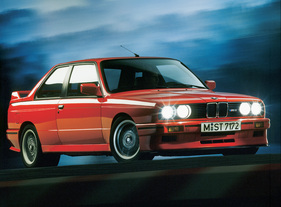
No wonder the second generation of the 3 Series also shone in sales. A total of 2,339,251 units were sold, easily outselling its predecessor by a million.
Well-rounded third generation
The third generation of the BMW 3 Series appeared as the E36 in 1990 with an extraordinarily elegant contour and thoroughly updated technology. And it debuted for the first time (and exclusively) as a four-door model. The exterior dimensions of the body had increased significantly for the benefit of an even more comfortable and safer passenger cell. It offered the occupants noticeably more space. Rear passengers could look forward to 30 millimetres more knee room. Nevertheless, the basic shape was clearly sporty.
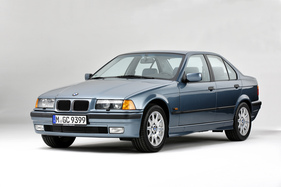
In addition to the slim silhouette, the smooth front end of the new model immediately caught the eye: The twin headlights each sat behind a shared cover glass. This design, which is still common today, was used to optimize pedestrian protection, among other things. In general, great importance was attached to safety. All variants of the new BMW 3 Series received new door reinforcements for better protection in the event of side collisions.
Strengthened
The engines available at market launch all produced at least 100 hp. The 1.6-liter base engine of the new BMW 316i was launched with 74 kW/100 hp, the BMW 318i with 83 kW/113 hp. The two innovative in-line six-cylinder engines now had two camshafts and four valves per combustion chamber and produced 110 kW/150 hp in the BMW 320i and 141 kW/192 hp in the BMW 325i.
The VANOS variable camshaft control system was presented as an innovative technology for increasing performance and reducing fuel consumption. It was first introduced in 1992 in the 210 kW/286 hp six-cylinder engine of the second-generation BMW M3 and subsequently also in the other six-cylinder models.
The new generation of in-line six-cylinder petrol engines followed in 1995 - significantly lighter than before thanks to the aluminum crankcase and not only more powerful, but also more efficient. In addition, the displacement of the top-of-the-range engine was increased from 2.5 to 2.8 liters. The new top model was called the BMW 328i, with 142 kW/193 hp and a maximum torque of 280 Newton meters under the hood.
Coupé for the first time
The four-door saloon was joined in 1992 by a two-door coupé, which, although visually similar in design, only had a handful of identical body parts to the saloon. This coupé was also the basis for the second M3.
The Cabriolet appeared in 1993, again with a very elegant appearance thanks to its low shoulder line.
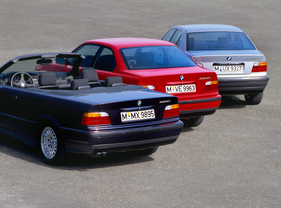
In 1994, BMW presented the 3 Series compact, a 4.21 m version with two doors and a tailgate. The Touring completed the range in 1995.
The third edition was also a complete success, with a total of 2,745,780 units sold.
Continuity to the fourth
With stylistic continuity and consistent technical progress, the fourth generation E46 BMW 3 Series set off into the next century in spring 1998. The proportions, lines and styling elements expressed elegant sportiness and made it clear that the BMW 3 Series had finally matured into the unmistakable original in its segment. The length and width of the new BMW 3 Series, which once again made its debut as a four-door sedan, were both four centimeters longer than its predecessor. The BMW kidney grille was now integrated into the hood and, together with the twin round headlights behind clear cover lenses, gave the front end its expressive character. The dynamism of the new saloon was emphasized by the stretched lines and the more curved roofline. The L-shaped rear lights were added as a further design feature typical of the brand. The interior had grown in line with the exterior dimensions. Both the front and rear seats offered more freedom of movement. Knee room in the rear was increased by 20 millimetres and headroom by 10 millimetres.
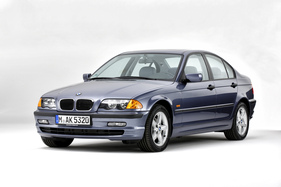
The BMW 3 Series benefited more than ever from the know-how gained from the development of models in higher segments. The tuning of the body and chassis, the interior appointments and the safety concept were based on the BMW 7 Series. The redesigned instrument panel had a modern, spacious and high-quality appearance, while features such as the multifunction steering wheel, side airbags in the rear, rain sensor and navigation system set new standards in the segment. "The essence of BMW is concentrated in the 3 Series", stated the testers of the specialist magazine "Autorevue" immediately after their first encounter with the new model.
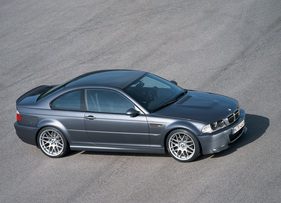
Once again, the M3 presented in 2000 had six cylinders that were good for 343 hp. Later, a CSL version was added, which cut an even better figure on the racetrack as a lightweight version.
There were also coupé, convertible and estate versions of the E46. The engines became more powerful and more economical, for the first time there was a 330i with 2979 cc and 231 hp and the diesel was now also available with six cylinders.
Customers rewarded the progress and the elegant look with 3,266,885 vehicles sold.
Growth for the fifth time
The fifth generation of the BMW 3 Series celebrated its world premiere as the E90 at the 2005 Geneva International Motor Show. As is now customary, the four-door saloon was launched first. Its striking appearance with short body overhangs, dynamic lines and a progressive design language immediately gave it an unmistakable character. The new symbiosis of powerful and efficient engines, dynamic yet cultivated driving characteristics, the striking design with typical BMW design language, a torsionally rigid, spacious body and innovative equipment features met with great approval worldwide. In the first year after its market launch, the new BMW 3 Series received the "World Car of the Year" award in New York.
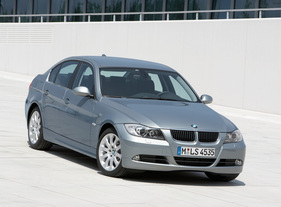
The significantly more present and powerful appearance of the BMW 3 Series Sedan compared to the predecessor model was the result of a more striking design and increased dimensions. The new edition had grown by 49 millimeters in length, 78 millimeters in width and 10 millimeters in height. This growth benefited both passenger comfort and safety. Thanks to intelligent lightweight construction, however, the increase in size and equipment could be made weight-neutral.
There were also coupé, estate and convertible versions of the E90. The M3 now drew its power from a newly developed V8 engine with 420 hp. With "EfficientDynamics" technology, fuel consumption was steadily reduced despite the increase in weight due to safety and comfort.
With the 335i, BMW increased the output of the now legendary in-line six-cylinder engine with twin turbo to 286 hp.
The fifth 3 Series was also popular, with 3,102,345 units sold.
Modern times with downsizing
At the beginning of 2012, the sixth generation of the 3 Series was launched as the F30. In view of ever stricter environmental legislation, the eight-cylinder engine disappeared from the engine compartment of the mid-range BMW, and the six-cylinder engine was also increasingly replaced by four-cylinders. For the 2016 model year, a three-cylinder with turbo even replaced the four-cylinder engine. More interior space with only slightly larger exterior dimensions and the lowest possible weight increase was the aim of the developers for the current three-cylinder model.
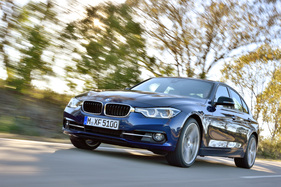
The coupé, estate and other variants were given their own model series codes, and the two-door version was henceforth listed in the price lists as the 4-series.
However, the success story is far from over after around 15 million.
A comparison of the 3-series
| Model series | E6/E10/E20 | E21 | E30 | E36 | E46 | E90 | F30/F80 |
|---|---|---|---|---|---|---|---|
| Typical model | 2002 | 320 | 325i | 328i | 330i | 328i | 328i |
| Built from | 1966 | 1975 | 1982 | 1990 | 1998 | 2005 | 2012 |
| Construction time until | 1977 | 1983 | 1994 | 2000 | 2007 | 2013 | |
| Length mm | 4220 | 4355 | 4325 | 4433 | 4492 | 4580 | 4624 |
| Width mm | 1590 | 1610 | 1645 | 1698 | 1739 | 1782 | 1811 |
| Height mm | 1360 | 1380 | 1365 | 1335 | 1434 | 1395 | 1429 |
| Weight (from) kg | 940 | 1010 | 990 | 1140 | 1360 | 1425 | 1490 |
| Displacement l from | 1.6 | 1.6 | 1.6 | 1.6 | 1.8 | 1.6 | 1.5 |
| Displacement l to | 2 | 2.3 | 2.7 | 3.2 | 3.2 | 4 | 3 |
| Power kW from | 55 | 55 | 55 | 60 | 77 | 90 | 100 |
| Power kW up to | 125 | 105 | 175 | 245 | 265 | 309 | 317 |
| Quantity | 1364039 | 2339251 | 2745780 | 3266885 | 3102345 | ||
| Price CHF (approx.) | 14100 | 15850 | 19250 | 29850 | 35800 | 39900 | 44600 |
| As model | 1602 (1973) | 316 (1976) | 318i (1984) | 316i (1992) | 316i (2000) | 318i (2006) | 320i (2015) |