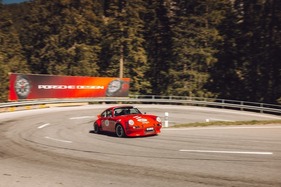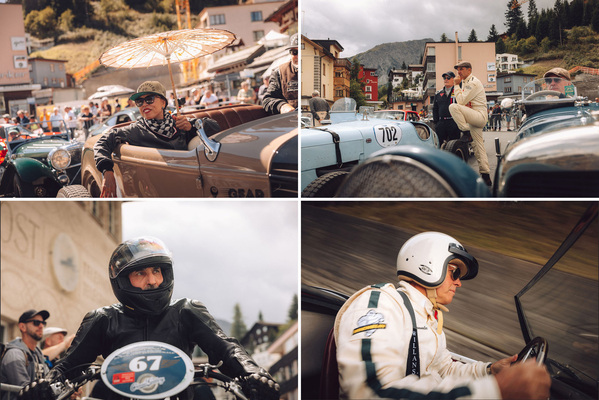

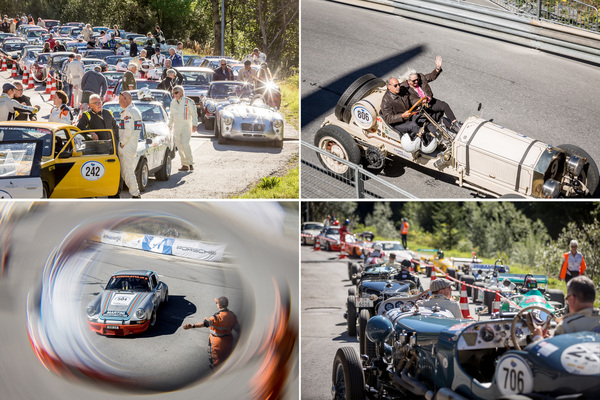
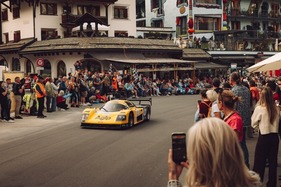
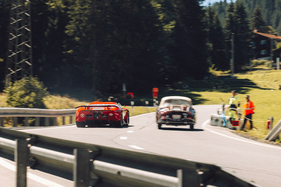
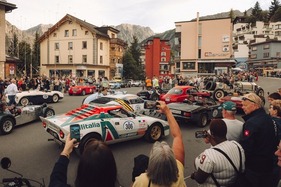
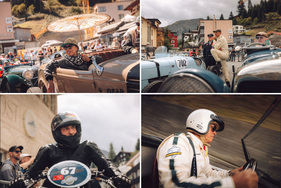
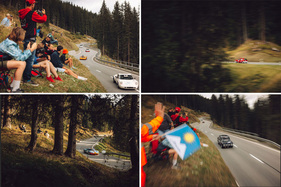
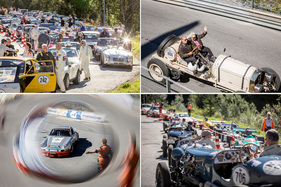
76 turns, around 180 historic vehicles, and an entire valley gripped by motorsports fever: From September 3 to 6, the Arosa ClassicCar once again transformed Schanfigg into a unique racing venue. When the last car crossed the finish line on Sunday afternoon, one thing was certain: this 22nd edition will be remembered.

Over the four days of the event, an estimated 25,000 visitors followed the action in Arosa, at the starting line in Langwies, and along the 7.3-kilometer race course. Thomas Amweg secured the “Arosa Grand Prix” in the Amweg F2 AW76 with a best time of 4:10.46. At the same time, a new record was set for ticket sales. The event proceeded without any major incidents.
Together with HIF Global and Porsche Switzerland, Arosa ClassicCar also turned its attention to the future of historic motorsports and the use of synthetic eFuels.
An Overview of the Racing Results
The final racing results were determined on Sunday. The winners of the various categories were then honored during the awards ceremony.
- Arosa Grand Prix and fastest lap time: Thomas Amweg, Amweg F2 AW76, 4:10.46
- Arosa Classic Trophy: Rolf Senti, Fiat Abarth Rally
- Arosa Sport Trophy: Heinz Vogt, Sylva Fisher Fury
- Competition Formula: Thomas Amweg, Amweg F2 AW76
- Competition: Markus Jörg, Lotus 23B
- Fastest Female Driver: Bea Gabathuler, Mini Cooper S 1275
Kickoff in the Heart of Arosa
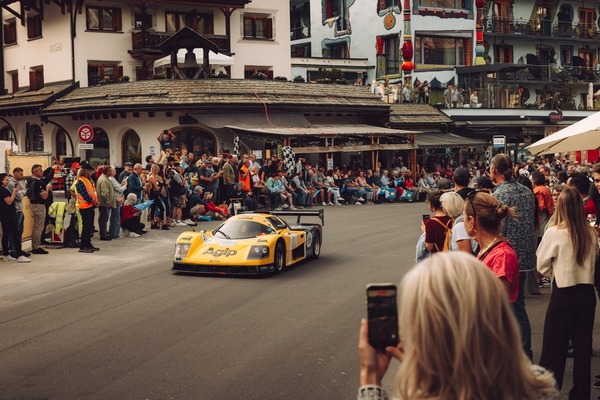
As early as Thursday evening, the special energy of the Arosa ClassicCar was palpable throughout the village. During the traditional village parade, the drivers showcased their vehicles right in the heart of Arosa, sparking great enthusiasm among locals and visitors alike.
Ten young boys and girls from Arosa made a special appearance. They joined the parade on their own mopeds and were celebrated in style along the route. This successful kickoff already showcased what sets the Arosa ClassicCar apart: historic racing culture, genuine passion, and a family-friendly atmosphere.
Ideal Conditions for People and Machines
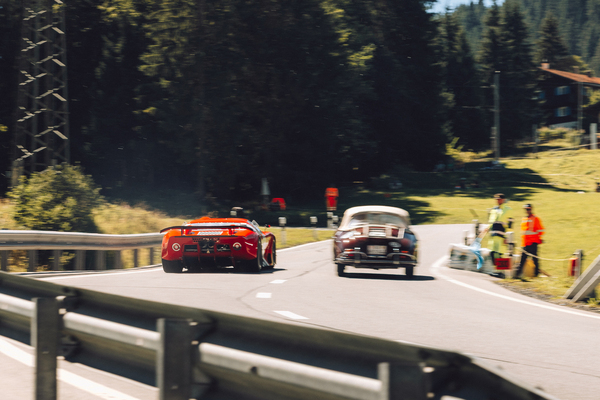
On Friday, the legendary route from Langwies to Arosa was opened for practice sessions for the first time. Bright sunshine, ideal asphalt temperatures, and a perfectly prepared track provided drivers with the best possible conditions.
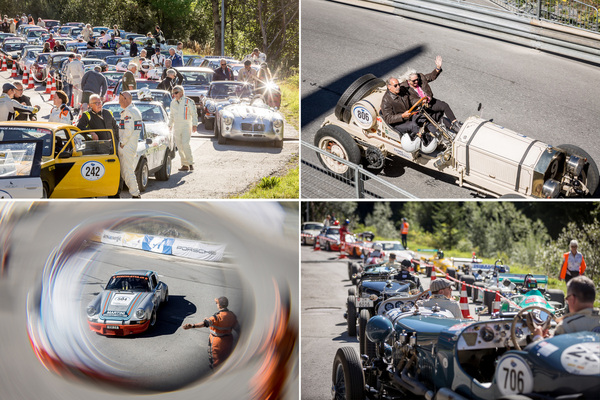
About 140 marshals were on duty along the race track. Together with the other volunteers, they ensured that everything ran safely and smoothly. With the first official races on Saturday, the sporting portion of the weekend really picked up steam.
The Arosa ClassicCar was also enjoyed to the fullest off the track. In the paddocks, in the grandstands, at the starting line in Langwies, and in the village, drivers, teams, and motorsport fans gathered for countless conversations about cars. In the evening, the celebrations continued in Arosa amid a lively atmosphere.
Motorsport History Within Reach
The starting grid offered an impressive journey through nearly a century of motorsport history. Among the special vehicle highlights were the Sauber C3, Dario Pergolini’s Lancia Stratos, and Walter Lais’s Ferrari 512 M.
A particular eye-catcher was Ruedi Schawalder’s La France Type 12. Built in 1917, it was the oldest car at this year’s Arosa ClassicCar and provided a striking contrast to the race cars of later generations.
This year, the pre-war vehicles also had their own section within the third grid, giving them a particularly prominent stage.
The world premiere of the Porsche GT3 Bergsport, with Jörg Bergmeister at the wheel, drew additional attention. The 15 historic motorcycles also thrilled the audience with their unmistakable sound.
The popular Porsche race taxi rides were completely sold out. A waiting list is already being maintained for the next event.
Tradition Meets the Future: eFuels in Racing
In addition to automotive history, the future of historic motorsports was also given a prominent platform. In collaboration with HIF Global and Porsche Switzerland, the approximately 180 drivers were offered the opportunity to refuel their race cars with synthetic eFuels free of charge. A mobile eFuel station in the paddock made it possible to refuel directly at the event.
eFuels are produced from hydrogen and captured CO₂ using renewable energy. Since they can be used in existing internal combustion engines without technical modifications, they offer an interesting prospect, particularly for historic vehicles.
The Arosa ClassicCar thus deliberately bridged the gap between automotive history and new technologies. The goal is not to relegate historic vehicles to museums, but to show ways in which this automotive cultural heritage can remain drivable, audible, and tangible for future generations.
New Race Directorate with a Successful Debut
With the new race management team, numerous procedures were reviewed and optimized in the run-up to the event. Particular focus was placed on the sequence of the race fields, track clearances for general traffic, and numerous small- and medium-scale behind-the-scenes processes.
The adjustments paid off: All planned road openings took place right on schedule—and in some cases even earlier than planned. Race management is therefore very pleased with the results
Martin Brudermann and Thomas Kohler of the ACS Race Direction commented:
“Our top priority was safe and reliable race operations. The fact that we were able to open all sections of the track right on schedule—and in some cases even earlier—shows just how well the new procedures worked . The collaboration among all those involved—and especially the roughly 140 marshals along the track—was crucial.”
The entire event proceeded without any major incidents. Occasional minor fender benders are simply part of historic motorsports. A motorcycle that briefly came to a stop due to an empty fuel tank provided a lighthearted side note. As we all know, that can happen even to the best of us.
A motorsports festival for all of Schanfigg
The high number of visitors was evident along the entire route. From Langwies through the various spectator zones to the finish area in Arosa, numerous motorsports fans watched the historic vehicles up close.

Roland Schuler, Director of Tourism for Arosa, explained:
“The Arosa ClassicCar is far more than just a race. It’s where history, innovation, and great passion come together. The fact that up to 25,000 visitors attended demonstrates the enormous appeal of this event for Arosa and the entire Schanfigg region. My sincere thanks go to everyone who made this weekend possible.”
Information Directly from Race Control
For the first time, the Arosa ClassicCar was accompanied by its own WhatsApp channel. Nearly 2,000 subscribers received up-to-date, first-hand information from race organizers, updates on track openings and program changes, as well as exclusive photos and videos produced and shared by the marketing team directly on-site.
Marc Gooch, Head of Marketing and Communications at Arosa Tourism, commented:
“At an event like this, communication has to be just as fast and reliable as the operations on the track. With the new WhatsApp channel, we were able to combine up-to-date information directly from race organizers with emotion, background stories, and genuine behind-the-scenes insights. The fact that nearly 2,000 people followed us right from the premiere—and that we simultaneously set a new record for ticket sales—shows just how much enthusiasm there is surrounding the Arosa ClassicCar.”
The awards ceremony marked the end of a race weekend full of speed, passion, and great excitement. The Arosa ClassicCar Association would like to thank all the drivers, marshals, volunteers, partner organizations, emergency responders, and visitors who contributed to the success of the 22nd edition.
The complete results are available on the Arosa ClassicCar Hill Climb website.