In the beginning there was prejudice. DAF? Wasn't there once an unusual-sounding small car with an automatic transmission? That could drive forwards and backwards at the same speed? In one book, the author finds the typical sentence: (DAF)..." caused a sensation with a transmission that was suitable for bench drills and disabled vehicles. DAF did not build bench drills." Yes, that was the thinking of the young men of yesteryear, who would probably be called "automotive natives" today. Back then, sportiness was the order of the day. And a sporty small car was a "souped-up" Beetle, Mini Cooper or NSU TT, period.

A DAF? That was for grannies! And even our Dutch neighbors had stupid sayings about the DAF, according to reports. What is true, however: It drives as fast backwards as forwards. Which is why reverse races ("Achteruitrijden") were held - not exactly good for the image. Let's put an end to this and approach the subject without prejudice!
Back to the beginnings
To do this, we head to the DAF Museum in Eindhoven, just over an hour away from Aachen. Originally, the name DAF stood for "Van Doorne's Aanhangwagenfabriek N.V." (trailer factory).
The company was founded in 1928 by the brothers Wim and Hub van Doorne, with a borrowed starting capital of 10,000 guilders. Initially, the company was based in a forge, which is now part of the museum and gives visitors an authentic impression of how trailers were made back then.
During the Second World War, the company built military equipment and from 1949, trucks were manufactured in Eindhoven, after the word "Automobiel" had become part of the company name.
In the 1950s, the company began building engines, initially under license. And from 1958, passenger cars were also produced, all of which were equipped with the aforementioned continuously variable automatic transmission, the Variomatic.

In 1975, the passenger car division was taken over by Volvo. The model 77 already developed by DAF was therefore launched on the market as the Volvo 343 (which stands for: Series 3, 4 cylinders, 3 doors) and was produced until 1991. DAF then went bankrupt in 1993. And in 1996, the remaining truck division was taken over by the US group Paccar, which produces heavy trucks.
Discover something new
But now to the museum and its exhibits. What can visitors expect? To put it simply: a lot of unexpected and largely unknown things. Let's start the tour on the lower level, which is dominated by commercial vehicles. A bizarre tricycle greets visitors right at the checkout: the "moving umbrella", a tiny single-seater.

It was created in 1943 and remained a one-off. The first trailer produced can then be seen, still with a drawbar for horses (for the poor farmers) or attached to a tractor (for the not-so-poor farmers). Truck fans in particular will get their money's worth on this level, as more than 40 commercial vehicles for civilian, military and fire department purposes are on display. Remarkable: the rally trucks with up to 1200 hp, which were used in the Paris-Dakar Rally.

Unexpected: The "DAF-Kini" beach car of the Dutch royal family. Easy to guess, with the words "Willem Alexander" on the side.

The shipowner Onassis liked this vehicle so much that he had a similar one built for himself and carried it on his yacht.

There is also a workshop on the lower level where you can see how old DAFs are restored. This is done by volunteers, as is the case throughout the museum. There are also restaurants ("DAFfetaria"), model cars, a museum store, a children's corner and a movie theater.
From the Daffodil to the Formula 1
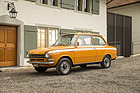
The upper floor is dominated by passenger cars. Anyone who previously thought that DAF only produced one car model will soon be proven wrong. It all began with the DAF 600, which came onto the market in 1958. This car was intended to be inexpensive to maintain and easy to operate. The goal was achieved: the car was compact, offered space for 4 people and had a large trunk. Its design was clear and straightforward. From today's perspective, it was a stylistically successful small car when compared with its competitors at the time. Actually.

The crux of the matter, however, was that the DAF was really quite simple to operate, as it was only available with the Variomatic. And that didn't really fit in with the times, at least in Central Europe. As I mentioned at the beginning, it was considered unsportsmanlike.
Today you can see it differently; the drive was ingenious. With the Variomatic, each rear wheel is driven continuously via a belt, which prevents one wheel from spinning on slippery roads, for example - as with a differential lock. Today, this type of automatic transmission is commonly used by high-volume manufacturers. In the current so-called CVT transmissions, however, a slatted chain made of steel links is used instead of a V-belt made of coated fabric.

This automatic transmission was even installed in the 1992 Williams FW 15 C Formula 1 racing car on display. It accelerated from 0 to 300 km/h in just 12 seconds and reached a top speed of 369 km/h. However, it was never used in a Grand Prix because the regulations were quickly changed for fear of the screeching monoposto ...
Variety
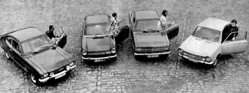
Back to the everyday cars: the original DAF 600 was soon followed by the 33, 44, 55 and 66 model series.

And now a riddle: a compact coupé, designed by a famous Italian designer and successfully tested in rallies. What does that make you think of? Probably not DAF. But it's true, because the Eindhoven-based company made an effort to shed its "granny image" and successfully took part in motorsport. And the aforementioned coupé still looks good today. Italian design by Giovanni Michelotti (1921 to 1980), who worked for many well-known automobile companies such as Alfa Romeo, BMW and Maserati. He also created a design from 1965: a racy coupé that was not realized for capacity reasons.

Michelotti also designed the star of the museum: the DAF Siluro (Italian: Torpedo) from 1968, a wedge-shaped sculpture of a car based on the DAF 55 coupé, which appears different from every angle. Unfortunately, this design was not followed by a series.

Instead, DAF built 1000 units of the "Kalmar" for the Swedish postal service. The right-hand drive small truck with sliding door is the counterpart to the German VW "Fridolin".

Also on display in the museum are a small military vehicle, various small trucks and the "Porter", a special floating vehicle. The "BATU" project, a simple transport vehicle for emerging countries, failed due to the oil crisis of 1972. The design of a city car is also on display.
A worthwhile visit
Let's stop there. If you make your way to the amazing DAF Museum in Eindhoven, you will be richly rewarded: you get a lesson in Dutch industrial culture and pay for it with the loss of a prejudice.

Further information (including admission prices and opening times) can be found on the DAF Museum website.
This article was published on March 29, 2014 in the Aachener Zeitung/Aachener Nachrichten.