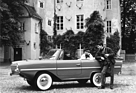
Amphicar 1961-1964 - for captains on land and at sea

Summary
There were around 10,000 car brands and designers - most of them have disappeared. One of these vanished brands is Amphicar. Between 1961 and 1964, 3,878 floating cars were sold, i.e. cars that could drive both on water and on land. Not least for regulatory reasons, these "hybrid" vehicles remained a marginal phenomenon
Estimated reading time: 3min
Preview (beginning of the article)
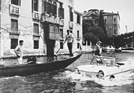
On the occasion of the 1964 Geneva Motor Show, AR editors "set sail" aboard an amphicar on the Quai du Mont-Blanc in the city on the Rhone. The waterfowl hurriedly made way, and the equally perplexed audience pondered this new dimension of automotive locomotion. Hanns Trippel had made a name for himself with his amphibious designs, so much so that the German Wehrmacht entrusted him with the Bugatti factory in Molsheim in 1941. After the war and three years in captivity, Trippel designed a tiny gullwing coupé and built this small car design under his own brand in 1951/52, which mutated into the French Marathon in 1953/54, followed by the German Condor brand in 1957/58. The Amphicar, developed on behalf of the US, was manufactured by Deutsche Waggon- und Maschinenfabriken GmbH in Berlin, a branch of the Quandt Group, from the end of 1961. The self-supporting convertible body rested on a tubular longitudinal beam frame, and the engine from the Triumph Herald installed in the rear drove two optional water propellers (top speed 110/10 km/h). By 1964, 3878 Amphicars had allegedly been built; they were still available from stock later.
Continue reading this article for free?

_RM.jpg)