

When I was nine years old, I sat in front of the television and watched Senna walk across the water at Estoril. That was it: The fascination of motorsport had gripped me. It wasn't until a few years later that I found out - through the relevant issues of "Auto, Motor und Sport" that I had picked out of the waste paper container - that I had missed the best days of Formula 1. The magazines told of drivers like Ronnie Peterson, Gilles Villeneuve, Jochen Rindt, Jim Clark and Jo Siffert. The stories about these drivers were incredibly exciting. And their cars looked fantastic.

As an adult, I used to come across the cars from earlier times from time to time. Eddie Cheever's 1983 Renault in the Museum of Transport, Niki Lauda's world champion Ferrari in Basel, the old Silver Arrows in the Mercedes Museum in Stuttgart. But in exhibitions, these art objects of speed do what they were not designed for: They stand around, robbed of their power, like stuffed tigers. But I wanted to observe these racing machines in their natural habitat - and photograph them.

That's exactly why I found myself at the entrance to the Zandvoort circuit on the morning of August 28, 2015 - the first day of the three-day Historic Grand Prix, my first ever circuit race. Good things come to those who wait, I thought to myself. I had all the photographic equipment I could muster with me: An analog Pentax MZ-5N with a half-broken lens, which is at least a wide-angle and telephoto lens in one, and a forty-year-old Yashica FR-I with a 50mm fixed focal length, which I always have to count the photos with because the frame counter no longer works. Plus ten rolls of film, black and white and color.

Zandvoort was not a random choice. The circuit is really old school. If you turn away from the circuit, you mostly see dunes, dunes and more dunes. For the most part, these are still the actual grandstands of the circuit. The loudspeaker system looks like a relic from the days when James Hunt rode through the "Tarzan Bocht" starting bend in the Hesketh. The crash barriers sometimes line the course closely and rest unpainted in stoic safety behavior. The course layout is compact, so that the route around the track is not like a marathon distance à la Nordschleife.
The best conditions, therefore, to really let off steam for two days.

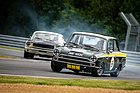
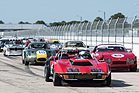
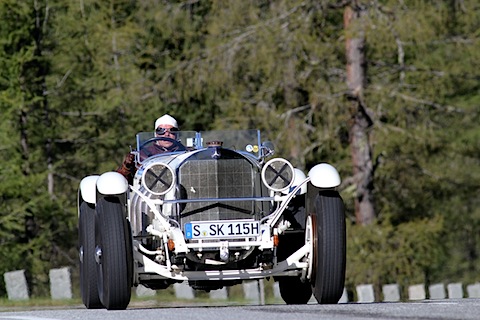
In fact, a Historic Grand Prix like this is like a child's trip to the candy store. You get to see cars from a wide range of formula classes from four decades. Plus endurance sports cars, touring cars, GT cars and much more. Sometimes you have to rub your eyes in amazement: are three AC Cobras really sniffing each other's exhaust pipes? In the paddock, you can find all the racing cars again, as well as some classic car treasures. It doesn't get any better than this? Yes, the paddock is open to all visitors at these events - something that would be unthinkable in practically all racing series today.

So I did what I had come to do: I took picture after picture after picture. Analog photography helped to moderate my nervous right index finger. Think first and then take pictures was my motto for the weekend. Concentrate on each motif, get the best out of it. After all, I had a pretty clear idea of what kind of pictures I wanted to take.
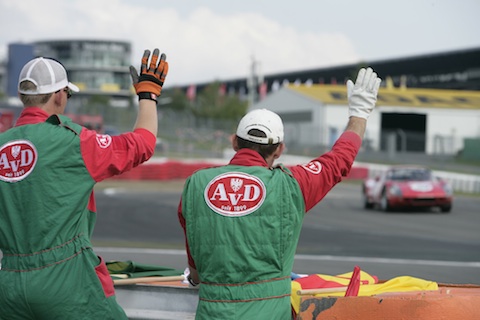
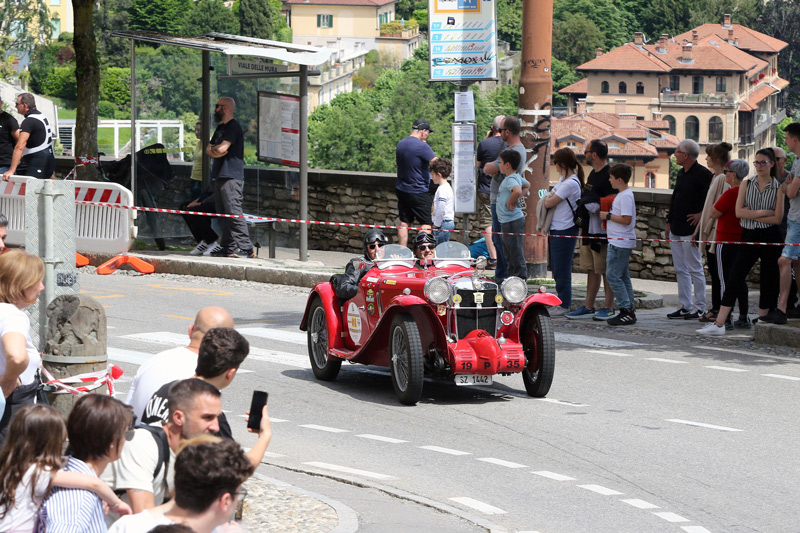
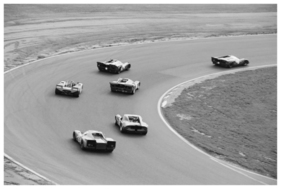
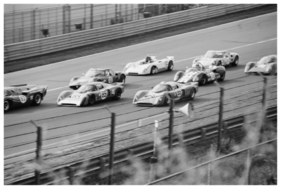
Basically, as I mentioned, I wanted to capture cars in racing mode, but for the most part I wanted to avoid conventional cropping. It was important for me to always include the surroundings of the track in these racing shots. Of course, this also includes the spectators, who I sometimes photographed completely detached from the racing action.

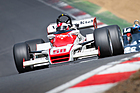
The overriding theme I was aiming for was timelessness. These pictures should look as if they were not taken in 2015, but at some point between the 1980s and 2015. An aspiration that was sometimes difficult to achieve. In the case of single-seaters, the modern helmets are the latest thing to break up the timelessness. However, I came very close to my idea in numerous shots. In other pictures, I decided to deliberately include a detail from the present in order to emphasize the anachronism.

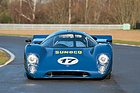
I also concentrated on what I call "car still lifes": Photographing cars just standing there. In this category, it was important to me to almost completely hide the surroundings so that nothing distracted from the car. That said, I usually only photographed part of the car. A design aspect that I found particularly interesting. Or a cockpit. And of course, in addition to all these quirky shots, I also wanted to capture mosaic pieces of a GP weekend; the details you come across when you're at an event like this.

How many times might I have driven around the Zandvoort circuit? It must have been five or six laps. The first one was right after arriving. Up the stairs to the grandstand, earplugs in and off in the direction of Tarzan Bocht. There was a lot to find out. Which positions allow which settings? Which section of the route is the most attractive? How do I manage to capture a 200 km/h racing car in sharp focus? The bright sun filled me with skepticism, I was afraid of too many reflections on the cars. And anyway, would I be able to capture everything I set out to do?

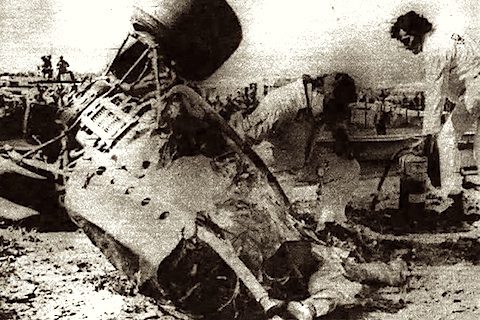
I felt incredibly restless, climbed on top of garbage containers, pressed myself against wire mesh fences and it wasn't until I was eating my Dutch fries that I realized how long I had actually gone without food. I even thought I could empathize with the job of a racing photographer. Someone who worked at a time when he could still walk into the pits and photograph racing drivers, cars and mechanics with complete freedom. How great that must have been. And how terrible when another driver, who had perhaps become a friend, was caught.
The smell of gasoline, the deafening noise, the rubber abrasion on the track, the flowing champagne: the fascination of motorsport physically gripped me here. I was finally experiencing everything first hand. It was great! And yet: when I made myself comfortable on the main grandstand, put the camera aside, lowered my heart rate and watched the cars hammering through for half an hour, from right to left, over and over again, I felt a little disillusioned. All the authenticity and atmosphere was all well and good, but I quickly missed the overall view that the TV broadcast gives you. Watching an F1 race for an hour and a half in a fixed grandstand is probably not going to happen again in this lifetime.

And so I got up and set off on another walk around the circuit. Until I took the final photo with a final "click". The film rewound with a strained, scratching sound and fell silent. Engine off. I left the racetrack, sat down by the sea and silently rejoiced that I had at least experienced a bit of racing from the 50s, 60s and 70s. With pictures to prove it.