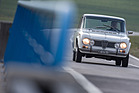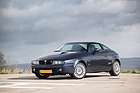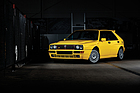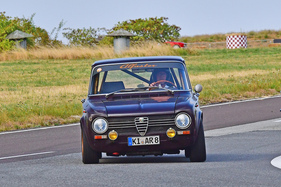
Many series or individual events are now complaining about a loss of participants. Not so the Pista & Piloti! "We could have had a lot more cars racing, but 210 is enough. With the best will in the world, we can't have more," said organizer Marco Wimmer. And that's a good thing, because otherwise the unique event would lose its family character and possibly degenerate into a soulless mass event. On August 27 and 28, 2022, the owners of the predominantly Italian classics met on the Triwo test track in Pferdsfeld in the Hunsrück region for a communal speed race.

K(l)one changes
The class division with the names "Giro D'Italia", "Gran Premio Alfa Romeo", "Trofeo Alfasud Revival", "Coppa Veloce", "Campionato Formula & Prototipi" and "Gran Premio Tazio Nuvolari" was left unchanged. This also applied to the four-kilometre-long track, which was used for the first time last year and features racing sections, banked turns and runway passages, with only visual improvements made to the construction of the chicanes. Traditionally, there is no race for victory or best time. Everyone laps the course as fast as they like and can. There was one innovation, however, as spectators were allowed on the track again for the first time after a two-year coronavirus break.

Alfa Romeo supremacy
The Alfa Romeo brand not only lends its name to a class, but also made up more than half of the entire event field with 106 vehicles. Starting with the modern 4C model series, which was unfortunately built far too briefly, sporty models with the cloverleaf were presented, right through to the pre-war 8C Monza Grand Prix racer. In its "Gran Premio Tazio Nuvolari" class, this was indeed a lone fighter, as the British brands Wolsley, Riley, MG and Bentley clearly made up the lion's share of the select field.

Exceptional vehicles
In addition to the pre-war vehicles, there were many extremely rare vehicles to admire, such as two modern Sakers, the first New Stratos by Michael Stoschek and a 1969 Astra RNR 1 brought along by Hans Günther Stellwagen. The brand was initially founded under the label "Costin-Nathan" by British amateur pilot Roger Nathan and aerodynamicist Frank Costin. Nathan had driven Marcos and had been inspired by their concept of using wood in racing cars. The two began building racing cars in 1966. Three years later, Costin left the company and Nathan chose the name "Astra" - long before General Motors had this idea. Instead of aluminum panels, he used thin layers of veneer-thick hardwood glued together with epoxy resin and 90-degree offsets to build the chassis. "The underbody is three inches high and yet extremely light and stable," explained the current vehicle owner.

Replica parts inadequate
In keeping with the family nature of the event, there were no major accidents to report, although there was a lengthy interruption in the third round because a Giulia had left a long oil slick on the new section of the track just before the steep bend. Luckily for the driver and car owner Olli Greisel, it was not a major engine failure. Rather, the thread on the oil filter was no good. "I had a bad feeling about the thing right from the start. Replicas from China are not Made in Germany or Made in Italy," the Bavarian was annoyed.

Two races have been held in Frankfurt and Michelstadt, and now for the third time in Pferdsfeld. The weather has always remained true to itself: From the beginning, rain and sunshine alternated. This year, sunshine was the order of the day again. So it will probably rain again in 2023...