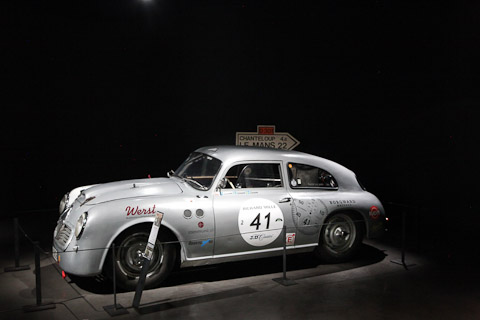
Le Mans Classic has been a permanent fixture on the season calendar since 2011 and has since become a real force to be reckoned with in international classic car motorsport. With the active participation of numerous manufacturers - BMW, Porsche, Alpine and McLaren are among the official partners - and sponsors, the festival organized by Peterauto to celebrate over 100 years of motorsport at the Sarthe has become one of the most important events in historic motorsport on the continent.
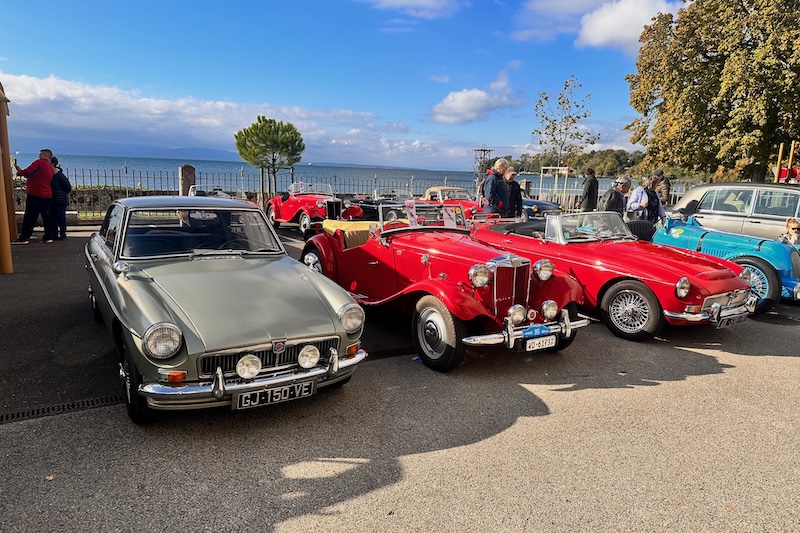
However, Le Mans promises great things not only on the track, but also off it. The more than 220 clubs and the 80 brands they represent are an attraction in themselves. With more than 9200 historic and remarkable vehicles, this part alone would have been worth a trip to Le Mans.
As with the "real" 24-hour races, the Classic Village also offers a wide range of entertainment for all those for whom motorsport alone is not enough or for those who want to take a breather from the abundance of action on offer. Attractions such as the daredevil riders on their motorcycles - the "Wall of Death Gipsys" - who defy gravity in their wooden wall of death accompanied by a rock band, have hardly caused less excitement.

Blow by blow
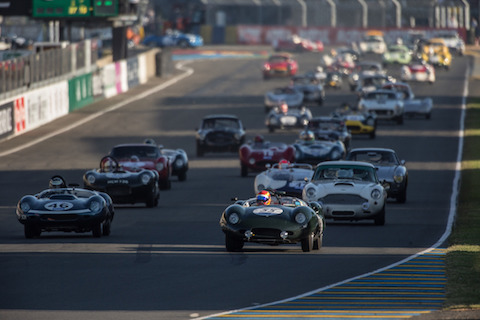
With six starting fields, divided into eras, one qualifying session during the day and one at night, three races per field and additional support races for the Group C sports cars, the cars from recent Le Mans history - the Endurance Race Legends - and the Porsche classics, there was plenty of action on the race track. Practice and qualifying got underway on Friday. The sports cars of the former Group C made the start.

This was a reunion with the heroes at the Sarthe in the 1980s, when they were the first (and only) to reach speeds approaching 400 km/h on the Hunaudières straight. However, crashes ensured that a chicane was added in 1990, while Group C was dropped by the big teams at the beginning of the 1990s due to the ever-increasing technical complexity (and growing costs) while maintaining the same level of media attention. 1994 was the last year that Group C sports cars were allowed to compete at Le Mans. They were back at Le Mans Classic - and provided good action and even better memories!

After a Friday evening of concerts and entertainment for the spectators and work in the pits after the first laps on the track, the teams also had the opportunity to test the conditions at night and in the dark during the second qualifying session, one of the special features of this event and part of the magic of Le Mans. Rain was also forecast for the weekend, so it was all the better to be well prepared.
Kick-off with Felipe Massa at 16:00 on the dot
Saturday morning was dominated by the support races and demonstration drives. The fields of the Endurance Racing Legends, the Le Mans Legends of the noughties.


This was followed by the Porsche Classic Race. This field featured all the legends from Zuffenhausen that shaped Le Mans in the 1960s and 1970s - from the 917K to the Porsche 935.

The Group C sports cars also made an appearance on Saturday morning. Even the kids didn't miss out, with "Little Big Mans", a race for the youngest with mini racing cars with electric or gasoline engines.
And while some spectators still had a hangover from the previous evening, the teams in the six main fields were extremely active and preparations were in full swing to be ready for the races at 4 p.m. sharp.
24 hours according to a precise schedule
The race started with field 4, the cars from the 1962 to 1965 era, in classic Le Mans style with the drivers running across the track to their racing cars. This was reserved for field 4, but all the others started rolling, which was also due to the tight times.

With 43 minutes of driving time for each race field, there was plenty of action on the track. Towards midnight the rain came, for some the biggest stress factor in such a race, or as one observer put it: "The conditions separated the wheat from the chaff between professional racers and enthusiasts". Nevertheless, it was a pleasure to experience vehicle control in a class of its own. After the start of field 4, the race then proceeded through the individual categories one after the other.

Field 1: cars from 1923 to 1939, field 2: cars from 1949 to 1956, field 3: cars from 1957 to 1961, the aforementioned field 4: cars from 1962 to 1965, field 5 for racing cars from 1963 to 1971 and field 6 with racing cars from 1972 to 1981.


In between, the second race of Group C was held on Sunday morning shortly before six, with a 30-minute sprint. However, the weather left a lot to be desired, so that this starting field was waved off again after one lap.

The races of the six competitive starting fields ended at 3 p.m., while the youngest representatives, the Endurance Racing Legends, took part in a final race/chaos run before the engines fell silent again from 4 p.m. in the best Le Mans tradition. A total of around 800 vehicles took part in 2025 and an impressive crowd of 238,000 spectators enjoyed the event. Organized with French flair, the overall impression for 2025 remains positive despite bad weather phases!
The results
Most laps driven:
Field 1
Stephen SKIPWORTH/Nigel ARMSTRONG, Aston Martin Speed Model 1939 #9 with 13 laps
Field 2
Thomas WARD, Jaguar XK120 Roadster 1951 #9 > 21 laps
Field 3
Didier VEST/Antoine BLANC, Lotus Elite 1961 #9 > 19 laps
Field 4
Jean François COGET/Jean Pierre GAGICK Ford Shelby 350 GT R 1965 #9 > 16 laps
Field 5
Alexander BRUNDLE/Gary PEARSON, Ford GT40 1965 #9 > 16 laps
Field 6
Russell BUSST, Chevron B31 1975 #9 > 18 laps
The Performance Index:
The Performance Index rates the car that has covered the greatest distance in relation to its engine capacity, age and type: prototype, GT, GTS, etc.
Field 1
Mark MANTON, Bentley Speed Six Vanden Plas 1930 #43 with 43:23.325
Field 2
Jean - Michel SAVARY/Dominique LEROUX, Peugeot 203 Constantin 1951 #43 with 1:22:12.171
Field 3
Anthony BINNINGTON/Mark DANIELL/Neil BURNSIDE, MG A 1600 Twin Cam Coupe 1961
#43 with 1:45:18.835
Field 4
Mark DRAIN, Lotus Elan 26R 1965 #43 with 2:19:49.326
Field 5
Mathieu CHATEAUX/Jean-Baptiste CHATEAUX, Chevron B16 1971 #43 with 3:19:52.096
Field 6
Andreas ROLNER/Lars KERN, Porsche 935 K3 1980 #43 with 2:28:18.281