
Summit assault on the Grossglockner mountain race 1935 to 1939


You have only
1 out of 10
images seen in high resolution



Summary
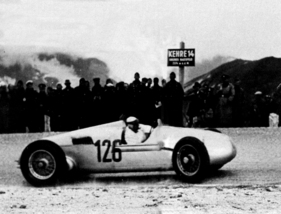
August 1985 marked the 50th anniversary of the ceremonial opening of the most magnificent of all Austrian Alpine roads, the crossing of the central massif of the Hohe Tauern between the Salzach Valley and the Carinthian Möll Valley, known as the Grossglockner High Alpine Road for short. The very next day, on August 4, 1935, the 1st Intern. A number of well-known Swiss motorists also took part with great success.
This article contains the following chapters
- The motorcycles opened the race
- Sports cars on sand
- Highlight of the race cars
- Great event - despite absences
- The duel of the giants at the 1938 event
- Fog at the 1939 hill climb
- The great era of hill climbs was finally over
Estimated reading time: 9min
Preview (beginning of the article)
August 1985 marked the 50th anniversary of the ceremonial opening of the most magnificent of all Austrian Alpine roads, the crossing of the central massif of the Hohe Tauern between the Salzach Valley and the Carinthian Möll Valley, known as the Grossglockner High Alpine Road for short. The very next day, on August 4, 1935, the 1st Intern. A number of well-known Swiss motorists also took part with great success. When this north-south connection from the province of Salzburg to Carinthia to the south was completed between 1930 and 1935 after five years of construction with the simplest of means, the celebrities of Central European motorsport came together for the 1st International Grossglockner Mountain Race, which led from the small village of Fusch near Bruck in the Salzach Valley over a 19.5 km long route, consisting mainly of rolled sand road , up to the Fuschertörl at 2428 m above sea level.
Continue reading this article for free?
Images of this article



_RM.jpg)