The "Historic Zweibrücken Airfield Race" got its public start at the Retro Classics in Stuttgart in March, where the new event (on the last weekend of September) was presented to a smaller trade fair audience than usual due to the coronavirus. Shortly afterwards, as is well known, the lockdown began and with it the great orgy of cancelations of numerous histo events.
Organizer Wolfgang Heinz did not have this problem, at least with this event (and in contrast to his cancelled Histo Rally), because over the months there were not only relaxations, but the field continued to fill up steadily. Initially heavily weighted towards motorcycles, the number of cars then increased significantly. After entries closed with over 250 starters, both groups were roughly equal.

Venue with tradition
At the end of the 1990s, the track at the airfield in Zweibrücken was the scene of racing action three times in one year with the Pro Superbike, the STW and the Top 10. After a very moderately successful intermezzo of several years as a commercial airport, the track fell into a motorsport slumber. Although it was used as a test track, it was not fully available for motorsport again until this year. But then, as in the past, three times and with three different track variants for completely different event concepts.

However, all of them were run in a clockwise direction, i.e. against the previous racing direction. All organizers also had the same problem: they could only actually set up their respective chicanes on the runway on race day, as the runway is still used as a regional landing area and there were also several shorter slots for take-offs and landings, where the chicanes on the runway had to be repeatedly dismantled and set up on race days.
The racing action
Autumn arrived in the West Palatinate just in time for the race, bringing temperatures in the mid-single digits, garnished with a fresh westerly wind and plenty of rain. For the first race on Saturday at 08:15, only a small group of five upright motorcycle riders ventured onto the track.
The car group had a much easier time with a roof and drove with a much fuller field. There were ten classes in total, each of which was allowed to complete two 15-minute heats on both days. From the second round on Saturday, the weather got a little better and it stopped raining, apart from a few small showers.
Everyone, including the numerous two- and three-wheeled riders, now had fun and got plenty of riding in on the 2 km short but still quite flowing track. Organizationally, everything worked perfectly at the premiere.

The first day of racing ended just one minute behind schedule, while Sunday was right on schedule. Despite the frosty temperatures, nobody had to freeze at night, as the large diesel generator in the motorcyclists' camp supplied plenty of power, so that the radiant heaters could hum in all the tents. This is truly not standard at airfield races, and the same applied to the six showers, which provided a constant supply of hot water.
Accordingly, the pilots' approval was not only for the runway, but also for the organization and the whole surrounding area. This was especially true of the clever caterer, who spontaneously brought his last supplies of mulled wine to Zweibrücken, which promptly sold like hot cakes.
The most spectacular cars
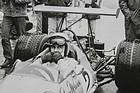
The absolute star on the track was undoubtedly the 1965 McLaren M 1 B of Ulrich Weber. The man from the Palatinate did not miss the opportunity to take part in his home race. Incidentally, with the original CanAm sound from back then, as the car was allowed to run without a silencer.

Also formerly made for North American tracks was the Triumph TR 8 IMSA GTO (1977) of Christian Marx from Saarbrücken, who delivered another highlight with a rich V8 sound and fast laps. Not even as loud, but extremely spectacular and "super fast" was the Schweinfurt mountain specialist Alexander Hin in his eight-year-old Osella PA 30. Otherwise, the youngtimers in particular provided some really good racing action.

What happens next?
Corona or not, organizer Heinz has already fixed his date for 2021 (again at the end of September). And that's a good thing! Both the Histo Race Cup and the IG Rennsport (from the Berg DM) want to race again. As does a local motorcycle dealer, who had been given a separate class for his customers. "We will have to work a bit on the class divisions so that the fields are better distributed," explained Heinz. There is also the option of extending the route in small steps between the runway and taxiway due to the numerous cross-connections, so that it doesn't get too crowded even with more starters.

A successful start. Let's hope that in year 2 after or with Corona, the "Historic Zweibrücken Airfield Race" and motorsport in general will continue on the airfield circuit in the Western Palatinate.