Technology in race cars (16): Chaparral 2E Can-Am from 1966 - High-Decker


You have only
1 out of 19
images seen in high resolution


Summary
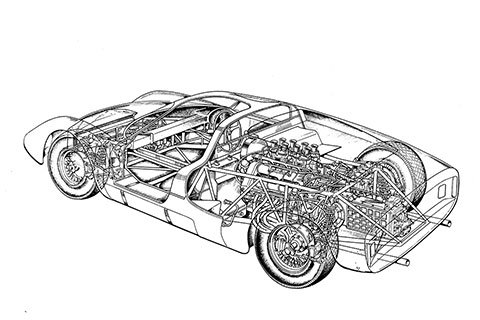
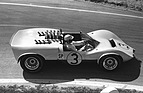
In 1966, it was Chaparral, not Red Bull, that gave it wings. In that year, the Texan racing car manufacturer unleashed the Can-Am 2E onto North America's race tracks. The experimental team led by engineer and racing driver Jim Hall had already caused a stir with the predecessor models 2A to 2C, but the automotive alchemists literally went one better with the 2E. Episode 16 of the series "Technology in a racing car" deals with the Chaparral 2E and shows the winged racing car in many historic pictures.
This article contains the following chapters
- The airbenders from Midland, Texas
- The 2E, a unique innovative achievement
- The proof of the pudding is in the eating
- Fragile wing miracle
Estimated reading time: 5min
Preview (beginning of the article)
The years 1958 to 1978 were the two most creative decades in the history of racing technology. This series portrays the most innovative, pioneering and exotic designs of Formula 1, Indy cars, sports cars and Can-Am, and at the same time traces the major lines of development that still have an impact today. The series started with Lotus, one of the most important innovation drivers of these two decades. And the series will also finish with Lotus: With the first ground-effect Formula 1 to win a world championship in 1978, the Type 79. Alongside Lotus, Chaparral was by far the most innovative racing car manufacturer in the 1960s, particularly in the field of chassis construction and aerodynamics. In addition to the 2A and 2C models , other Chaparral models - the 2F from 1967, the 2H from 1969 and the 2J from 1970 - will be covered in the course of this series, which deals with fundamental innovations.
Continue reading this article for free?
Images of this article



_RM.jpg)