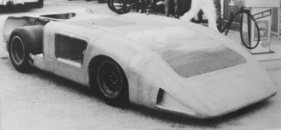
Technology in race cars (28): Chaparral 2H - The whale of agony


You have only
1 out of 18
images seen in high resolution
Summary
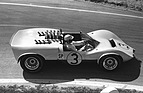
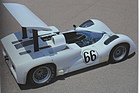
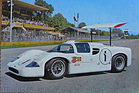
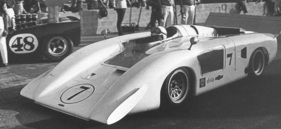
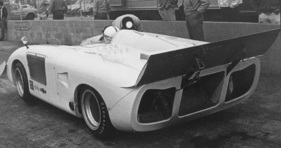
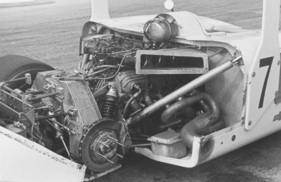
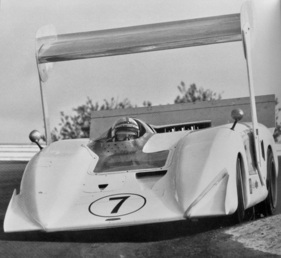
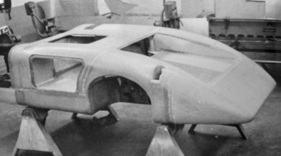
Considering that Jim Hall was constantly trying out new and daring ideas for his Chaparral racing cars, he had surprisingly few failures to his name. One project, however, was a complete flop: the Chaparral 2H, with its special body shape, was supposed to generate little drag on the straights and a lot of downforce in the corners. The result was almost exactly the opposite. This article from the series "Technology in racing cars" is dedicated to the clumsily shaped catamaran with the short wheelbase.
This article contains the following chapters
- Using old technology to achieve new successes
- Unclear and unstable
- Unsuccessful for an unknown reason
- Epilogue
Estimated reading time: 6min
Preview (beginning of the article)
The years 1958-1978 were the two most creative decades in the history of racing technology. This series portrays the most innovative, pioneering and exotic designs of Formula 1, Indy cars, sports cars and Can-Am, and at the same time traces the major lines of development that still have an impact today. The series started with Lotus, one of the most important innovation drivers of these two decades. And the series will also finish with Lotus. This time we look at the only design failure of Chaparral and Jim Hall. Although Jim Hall was the pioneer of the high-mounted wings, which acted directly on the suspension, he wanted to take a fundamentally different, more radical approach for 1969. Perhaps also because he suspected that these wings could soon be banned - even in the Can-Am, which had very liberal regulations.
Continue reading this article for free?
Images of this article