Technology in race cars (36): Brabham BT44 - trapeze artist


You have only
1 out of 22
images seen in high resolution


Summary
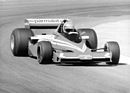
The characteristic cross-section of the chassis makes the Brabham BT44 instantly recognizable. Thanks to the unusually wide underbody, it generated a lot of downforce without sacrificing top speed. But while the designer was convinced by his car, the team boss took a different direction. This episode of the series "Technology in the racing car" is dedicated to the Brabham BT44
This article contains the following chapters
- The 1973-1975 races
- New with Alfa Romeo
Estimated reading time: 5min
Preview (beginning of the article)
The years 1958-1978 were the two most creative decades in the history of racing technology. This series portrays the most advanced, pioneering and exotic designs of Formula 1, Indy Cars, sports cars and Can-Am, tracing the major lines of development that still have an impact today. This episode is dedicated to the promising Brabham BT44, which was replaced before it could show its full potential. In 1971, a certain Bernie Ecclestone bought the Brabham team. The traditional racing team had been founded in 1962 by three-time world champion Jack Brabham. At the end of 1972, the new owner dismissed the entire technical office - with the exception of one, 26-year-old South African Gordon Murray - and entrusted him with the development of a completely new car. This was the BT42, which, with a few modifications, also formed the basis for the BT44. Like Colin Chapman (Lotus), Mauro Forghieri (Ferrari), Derek Gardner (Tyrrell), Eric Broadley (Lola) and Jim Hall (Chaparral), Gordon Murray was one of the fascinating engineers of the sixties and seventies who had the urge to constantly reinvent the racing car.
Continue reading this article for free?
Images of this article