Technology in race cars (49): Brabham BT 49 C - hydropneumatic revolution


You have only
1 out of 18
images seen in high resolution


Summary
With the Brabham BT 49 with Cosworth engine, Gordon Murrey built a progressive and fast Formula 1 racing car. But it was only with the hydropneumatics introduced in the BT 49 C that the monoposto became truly superior ... when it worked.
This article contains the following chapters
- Flashback
- The BT49 from 1980
- BT49B version from 1980
- BT49C version in 1981
- On the way to the BMW turbo engine
- Epilogue: What ground effect has to do with suspension hydraulics
Estimated reading time: 6min
Preview (beginning of the article)
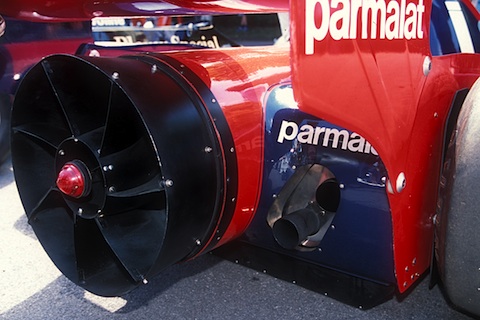
The years 1958-1981 were the most creative in the history of racing technology. This series portrayed the most innovative, pioneering and exotic designs of Formula 1, Indy Cars, sports cars and Can-Am, tracing the major lines of development that still have an impact today. For 1976, team boss Bernie Ecclestone had signed a contract with Alfa Romeo to bring their 180-degree V12 from the two-seaters into Formula 1, under the impression of the successful Ferrari twelve-cylinder "boxer". Chief designer Murray was anything but happy about this. This engine required larger radiators, bigger tanks and a subframe at the rear - all things that contradicted his "reduce-to-the-max" philosophy. On the other hand, it was this engine that would indirectly lead the designer to his legendary " vacuum cleaner", the Brabham BT46B and its sensational debut victory in Sweden in 1978.
Continue reading this article for free?
Images of this article