Technology in race cars (43): Epilogue - The 42 most innovative race cars 1958-1981


You have only
1 out of 20
images seen in high resolution


Summary
The epilogue provides an overview of the enormous evolution of racing car technology between 1958 and 1981, divided into the nine most important areas. The great successes and dramatic setbacks from these 23 years characterize almost all current racing cars.
This article contains the following chapters
- 1. central engine
- 2. monocoque chassis
- 3. carbon technology
- 4. independent suspension
- 5. disk brakes
- 6. side radiators, rear radiator
- 7. downforce-oriented aerodynamics:
- 7.1 Spoiler
- 7.2 Wings
- 7.3 Wedge shape
- 7.4 Floor effect
- 8. turbo engine
- 9. wide tires
- Added after 1981 were:
Estimated reading time: 3min
Preview (beginning of the article)
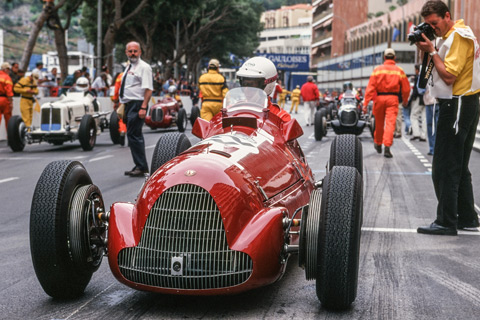
The years 1958-1981 were the most creative in the history of racing technology. This series portrayed the most innovative, forward-looking and exotic designs of Formula 1, Indy cars, sports cars and Can-Am, and at the same time traced the major lines of development that still have an impact today. With the Lotus 88 (TIR 42) , our series "Technology in racing cars 1958-1981", which also began with a Lotus (Lotus 16, TiR 1) , has reached the home straight. For some readers, the series provided a reunion with unforgettable racing cars from their younger years, while others made new discoveries. The articles focused on the most advanced racing cars between 1958 and 1981, and it is no exaggeration to say that practically everything that has characterized a single or two-seater racing car since then has been developed in these 23 years. Here are the nine most important areas:
Continue reading this article for free?
Images of this article