Test ride with racing quartet - Bugatti 35, Cisitalia D46, Cooper Type 51, Chevron B43 in comparison


You have only
1 out of 8
images seen in high resolution


Summary
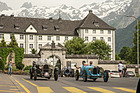
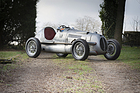
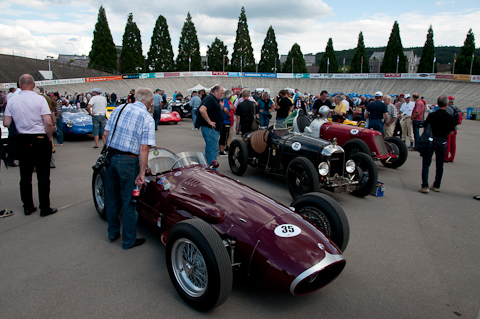
We were able to experience over half a century of racing car construction technology, concentrated in four models, directly from the cockpit on the small circuit of Lignières NE. The Bugatti from 1925, the Cisitalia from 1946, the Cooper from 1959 and the Chevron from 1978. Each individual member of this thoroughbred quartet embodied an era, each design was fundamentally different, each vehicle was a fascinating experience. The article describes the driving impressions (from the perspective of the late 1970s, but also the history of the four actually incomparable cars.
This article contains the following chapters
- Bugatti Type 35
- Cisitalia D 46
- Cooper-Climax Type 51 F2
- Chevron B 43 - Toyota F3
Estimated reading time: 18min
Preview (beginning of the article)
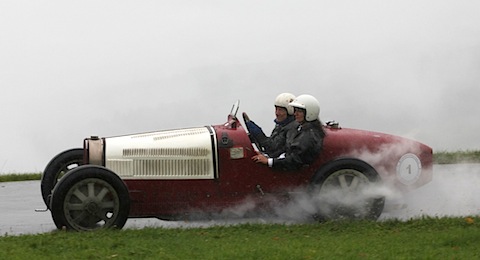
We were able to experience over half a century of racing car construction technology, concentrated in four models, directly from the cockpit on the small circuit of Lignières NE. The Bugatti from 1925, the Cisitalia from 1946, the Cooper from 1959 and the Chevron from 1978. Each individual member of this thoroughbred quartet embodied an era, each design was fundamentally different, each vehicle was a fascinating experience. Which racer was our favorite to drive? All of them. One of the most desirable gems among the historic competition cars is the Bugatti 35. The two-seater we drove has belonged to Paul Waldner from Neuenhof since 1960, who spent two thousand hours of his free time restoring the car, which was badly run-down at the time and had become very "worn out" over the years, to its perfect original condition. The first drive took place in the summer of 1965, and since then the blue rigid-axle car has appeared at numerous rallies throughout Europe and has competed in races for historic cars, covering no less than 40,000 kilometers without a hitch. The famous Bugatti Type 35 with an eight-cylinder, two-liter in-line engine (without supercharger, the supercharged version was the Type 35 B) made its debut in August 1924 at the Grand Prix de l'Automobile Club de France in Lyon. "Our" example, with chassis number 4699, was imported in April 1925 by the well-known Zurich sports driver and Swiss champion Dr. Karrer and entered in the famous Klausen race the following August. After the war, no. 4699 belonged to Heini Walter from Aesch, who later became a multiple Swiss and European champion. In December 1947, he drove it in the winter mountain race from Sierre to Montana, with snow chains on the rear wheels.
Continue reading this article for free?
Images of this article