Borderline experience - Porsche 917 in (historic) test


You have only
1 out of 13
images seen in high resolution


Summary
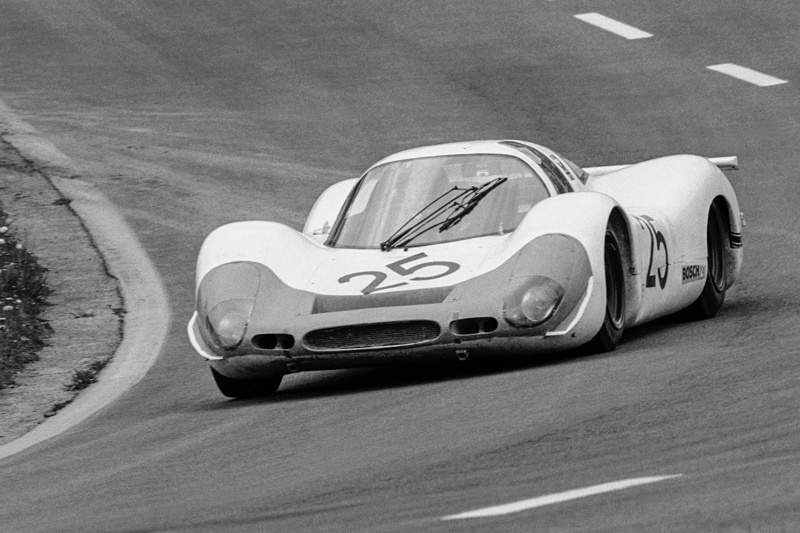
Few things are as impractical as a test report on a thoroughbred racing prototype. But it is the only way to satisfy the curiosity of all those mere mortals who will probably never sit behind the wheel. José Rosinski was allowed to test the Gesipa team's Porsche 917 on the southern loop of the Nürburgring in 1970 and discovered that his own abilities are finite, but those of the Porsche 917 are not.
This article contains the following chapters
- Technology
- At the wheel
- On the track
- Summary
Estimated reading time: 13min
Preview (beginning of the article)
For the 1967 one-make world championship races, the engine capacity was limited to 3 liters for prototypes and 5 liters for sports cars, but the sports cars had to be produced in 25 units. Only the Ford GT 40 and Lola-Chevrolets were homologated in this category, while Porsche and Ferrari continued to modify the prototypes, where they hoped to gain more from the more favorable power-to-weight ratio. However, the balance between sports cars and prototypes only lasted until some constructors had enough money and experience to build 25 prototypes with 5-liter engines, which then became sports cars according to the homologation. While the Italians lamented the absurdity of the new regulations, the Stuttgart-based company developed the future sports car from the Porsche 908-3-liter, which was presented to the public at the Geneva Motor Show in March 1969.
Continue reading this article for free?
Images of this article