Technology in race cars (9): Porsche 804 - Aero number


You have only
1 out of 27
images seen in high resolution


Summary
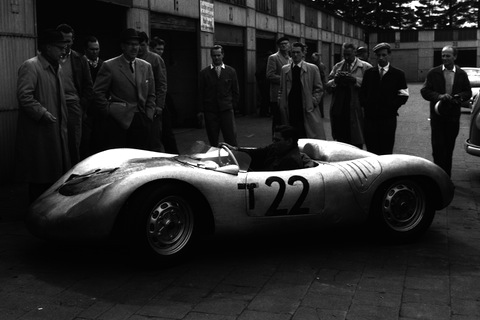
After the successes in Formula 2, it was a logical next step for Porsche to move up to the more prestigious Formula 1. A new car was built for this purpose, the Porsche 804, and a new engine, which, true to previous experience, was an air-cooled boxer engine. Although successful, the Formula 1 project was soon stopped again, and with good reason. This article from the series "Technology in racing cars from 1958 to 1978" describes the design of the Porsche 804 from 1962.
This article contains the following chapters
- New Formula 1 target
- High engine complexity
- Engine successfully used in sports car racing
- Proven chassis design
- Retrofitted in the wind tunnel
- Innovative brakes
- Two victories
Estimated reading time: 6min
Preview (beginning of the article)
The years 1958-1978 were the two most creative decades in the history of racing technology. This series portrays the most innovative, pioneering and exotic designs of Formula 1, Indy cars, sports cars and CanAm, and at the same time traces the major lines of development that still have an impact today. The series started with Lotus, one of the most important innovation drivers of these two decades. And the series will also finish with Lotus: With the first ground-effect Formula 1 to win a world championship in 1978, the Type 79. The air-cooled Porsche 804 is an example of an innovative project that, despite winning the French Grand Prix in Rouen in 1962, was withdrawn prematurely and thus failed before it could really show what it was made of.
Continue reading this article for free?
Images of this article