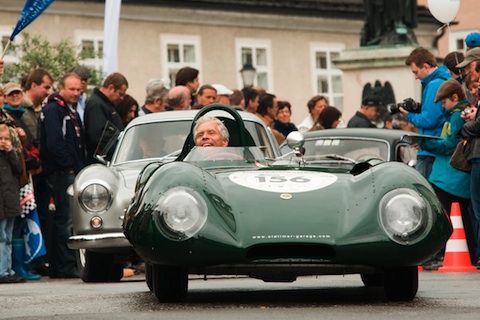
After the classic car GP 2021 had to be canceled like so many other events due to coronavirus, the old iron once again delighted the numerous visitors for the fifth time on 2 July 2022. In hot temperatures, the open-air light show celebrated its comeback on the beautiful Aare island from 9:00 am to 5:00 pm.
Eight starting fields alternated three times and were only interrupted by the one-hour lunch break. Otherwise, there was plenty of action. The many shady trees around the 960-metre-long velodrome created a wonderful interplay of light and shade. The sound and scent alone, which filled the hot air and were immediately filtered out again in a CO2-neutral way by the numerous healthy trees, were worth the trip to Brugg in the canton of Aargau.

The vehicles were divided into eight main starting fields:
1. Classic cars and sports cars
2. Historic sports and racing cars
3. Racing tricycles and sidecars
4. Motorcycles solo machines, field 1
5. Pre-war sports cars and historic sports cars
6. Motorcycles solo machines, field 2
7. Historic racing cars
8. Formula and racing sports cars
In addition, there was an additional field that was independent of brand and type under the designation FABAM (friends of old sheet metal of all brands).

Like Nascar, only different
Behind three current Porsches, which played the role of safety cars, the historic vehicles were then able to let off steam. Unfortunately, due to the design, there was not a single left-hand bend, which was probably more boring for the motorcyclists than for the car drivers. As in sand track or ice speedway races for motorcycles or in the big American superspeedways for cars, you only ever drove on the oval, but here in a clockwise direction.

The fields were called up for three "stints", each lasting 15 minutes and allowing around five to ten laps to be completed behind a lead car. The speed of the safety car was adapted to the field and delayed slightly at the start and finish to bring the field back together.

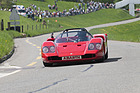
As far as the cars are concerned, the Cegga F1 with Georges Gachnang himself in the cockpit should perhaps be mentioned in particular. The "Etablissement Cegga" from Aigle built two Formula 1 racing cars in the 1960s. One of them competed in two Grand Prix races in 1962. The racing car, equipped with a 1.5-liter four-cylinder engine from Maserati, was to compete in a non-championship race in Pau in 1962. However, the Swiss racing driver Maurice Caillet was unable to qualify with the car. They later tried their luck again at the Gran Premio di Napoli, but again failed to qualify, which put an end to the Gachnang brothers' Formula 1 project.

Like Le Mans, only smaller
There was a hint of Le Mans when the Ford GT40 Mk I in the classic Gulf livery of the John Wyer team drove up to the start. This made the spectators feel a little like they were at the Sarthe, especially as the "Le Mans Classic" was also taking place on the same weekend.

Of course, everything was a little smaller in Brugger Schachen than at Le Mans, even though there were three Porsche safety cars spread around the track. The stints were shorter, as were the laps. Even the change from light to dark is faster in Brugg - and even several times during a single lap.

Among the motorcycles, it was perhaps the Honda CR350 with start number 619 that caused a stir; perhaps less because of the motorcycle than because of the long braid under the helmet. The rider, Erika Elsener, let it rip lap after lap among all the men.

Overall, the organization can certainly be proud of the result. The very well-organized event meant that there were hardly any waiting times and there were no accidents apart from two minor slip-ups. For the fifth time, both participants and spectators were once again thrilled.