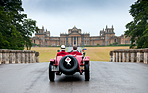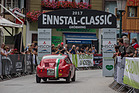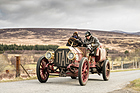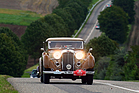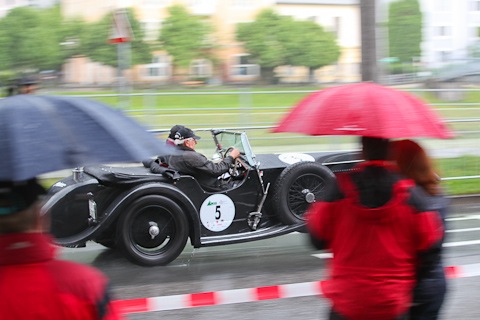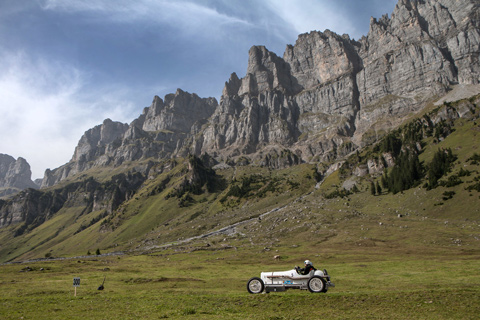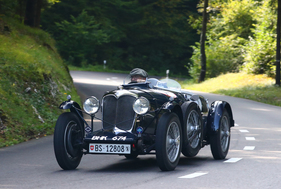


The Gempen Memorial continues the tradition of the original event from 1911. Back then, the "fastest" driving time from Oberdornach to Gempen was determined using a complex correction formula among the very differently motorized vehicles in an exciting hill climb. Against the impressive backdrop of over 10,000 spectators, a number of real hill climbs followed in the 1920s, in which the top drivers competed with vehicles from Bugatti, Amilcar or Martini.

After the last event for the time being in 1947, the Classic Group of the ACS beider Basel revived the myth of the "hill climb" in 2011 to mark the 100th anniversary of the first competition.
Precision at the center
The Memorial is also intended to ignite the spirit of competition. However, instead of aiming for the best time, the riders are measured against the time they set themselves in training, which they must adhere to as precisely as possible.
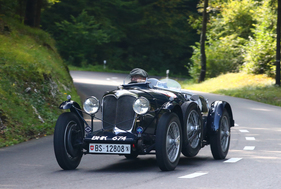
The average speed is limited to 49.9 km/h, but that didn't stop the participants from riding fast on the winding (30 bends) and 5.2-kilometer route.
With transponders for the first time
On September 23, 2017, the times were measured for the first time using modern transponders, and the technology proved its worth except for one passage when the control signal from a video drone interfered with the timekeeping, or vice versa. In any case, the drone crashed, but thank goodness there was still the reassurance of conventional tube timing.
Pre-war car as the winner
The drivers of the pre-war cars showed the post-war fraction who was the champion. The top four, who competed with cars before 1949, all came in under one second overall difference after adding up the best four individual times or deviations. Lorenz Imhof and co-driver Adrian Bleiser in the 1937 Lagonda LG 45 DHC were the most accurate, with an overall difference of second place, followed by Urs and Susanne Müller in the 1937 Lagonda LG 45 Rapide, followed by J. Valentin Andrea and Manke André in the 1944 Willys Jeep.

In the post-war vehicles, Roger and Rosa Maria Hermkes in a 1965 Porsche 356 SC came out on top, with an overall difference of just over one second. Steffen Pawelzik and Rolf Banholer came second in a Triumph TR6, while Daniel and Gabrielle Gresly came third in a 1954 Porsche 356 Speedster.
An unlucky prize was also awarded to a Bugatti driver whose car suffered a broken chassis in the practice run. Overall, however, the race day was accident-free.
Best conditions, lots of interest
Around 3000 to 4000 spectators attended, according to the organization. Of course, the glorious late summer weather also helped. They got to see a complete starting field of around 120 cars, with the early eras of the automobile particularly well represented. At the end of the event, almost everyone was enthusiastic about the success of the event, so nothing stands in the way of another edition in three years' time (or sooner?).

The complete ranking list and start list can be found on the event website .