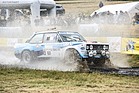
The winter of 2013/14 was short and mild. And yet during this time, people were busy in garages and workshops tinkering, improving, tuning and painting. Some couldn't wait for spring or were among the really tough ones and drove winter rallies. For most, however, the 2014 classic car season only kicked off on May 4.

Lots of visitors in beautiful weather
An impressive cross-section of 100 years of racing history was presented to the large audience in perfect weather conditions. Around 300 drivers had entered their names on the start list for the season opener.
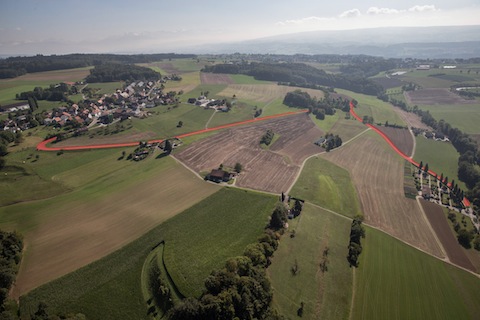
Although the track from Rudolfstetten to Friedlisberg is only 1.6 km long and has only two tight bends, it should not be underestimated. The formula cars in particular reach impressive speeds. And courage is required in the upper section, as the last bends lead directly past the slope.
Eight racing fields in four races
Let's get this out of the way: No, there was no time trial, even if one or two drivers did race their cars or motorcycles up the hill with sporting ambition. After a field of pre-war motorcycles had opened the demo runs, the post-war touring cars followed.

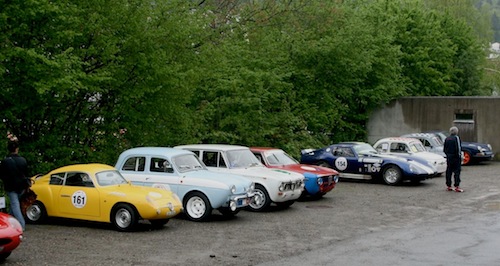
A field that brought back childhood memories for many. NSU TT, Simca Rally 3, BMW 2002 or Alfa Romeo Giulia have long been a familiar sight on Swiss roads and at hill climbs. But there were also one-offs on the grid, such as Christian Mees' Schindler Spyder.
Interesting field of pre-war cars

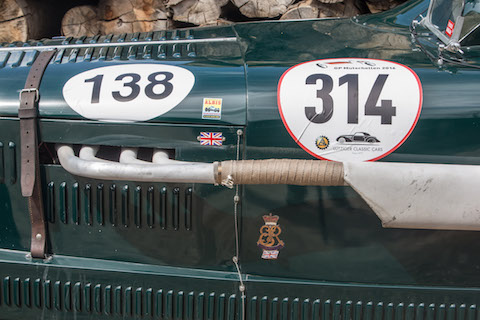
Over 30 cars were entered in the pre-war category. Engine capacity giants such as the American La France with 9500 cc and 14500 cc "battled" against small but fine cars such as the 1934 Austin Seven with 750 cc from Bruno Hürlimann.

Jürg Schiffmann was at the start with his Bugatti T59/50B. The 8-cylinder in-line engine produces 420 hp from a displacement of 4.5 liters. This car is the only surviving example of this type. It was built from original parts.
Franz Schumacher's Buick C8 Racing Car from 1939 is also impressive.
Popular racing touring cars and sports cars
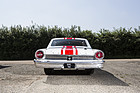
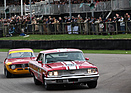
After the solo motorcycles after the war until 1969, another field of racing touring cars took to the starting line. Again, well-known makes such as the Porsche 356, Ford Capri, Ford Escort and exotic cars such as a Lamborghini LP 400 S and two thundering Ford Galaxies.

The brute Galaxies with 550 hp from 7 liters were used in the NASCAR series in the USA. In 1963, one of these touring cars won a race in Europe (Silverstone) for the first time. The huge vehicle more than earned its nickname "Detroit Iron", as it weighs 1700 kg.
Elegance and sportiness combined
Field 7 united elegant shapes and fast cars, such as Rolf Buccella's 1950 Healey Silverstone and Andy Siegenthaler's Jaguar XK 120 OTS. The racing history of the early sixties was revived by the Lister Jaguar Knobbly of Christian Jenny and the Jaguar E Type Lightweight Low Drag of Remo Thalmann.

Marc Widmer's Porsche 917 Replica then recalled the great successes of the sports and endurance cars from Zuffenhausen.
Exclusive Quattro starting field
Another highlight was the race of the Swiss Audi Urqauttro Club. In the 1980s, these vehicles were a permanent fixture on the rally scene. Twelve Quattros brought this time back to life.

A field of VW Beetles and micro cars such as the BMW Isetta, Zündapp Janus and Messerschmitt drove through, delighting the audience.

Two speakers provided interesting details and background information on the vehicles and their drivers. Visitors interested in technology had ample opportunity to visit the distributed paddock and talk shop with participants.
The consensus was that it was a successful event!