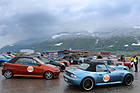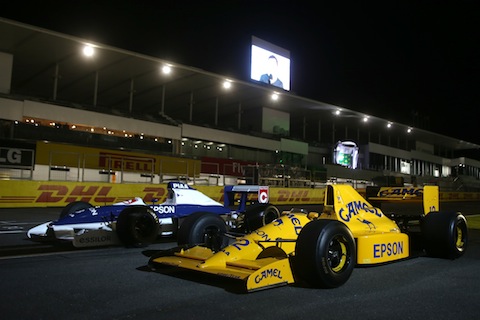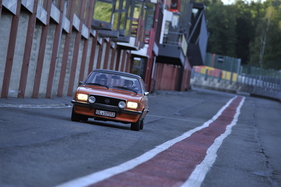
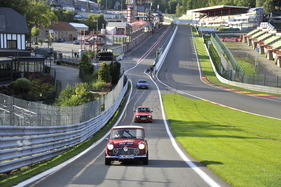
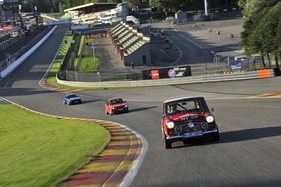
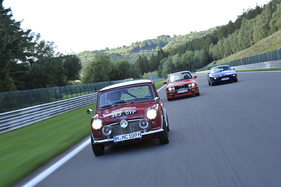
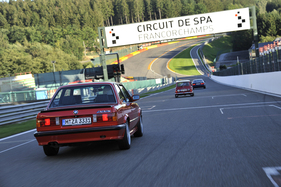
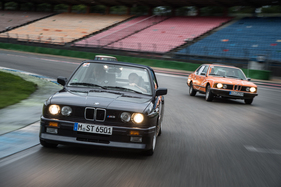
"Half Cannonball Race, half children's birthday party": this is how one repeat offender among the participants sums up this event. He is referring to the speedy driving style on the long country road stages, but also the special stages in between with sometimes deliberately prepubescent games.
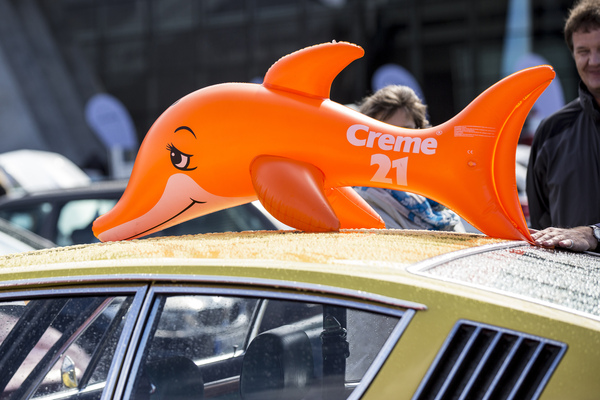
That's exactly what the Creme 21 Youngtimer Rally is all about. However, to reduce the classic among Germany's classic car events for self-confessed non-conformists to this simple formula would be as incomplete as it would be unfair. The 14th edition, which recently - on September 20, 2015 - crossed the finish line in Leipzig after four exciting days of driving, once again proved this impressively.
When Creme 21 was still a main cream
Creme 21 - wasn't that...? Yes, that was the iconic skin care emulsion in the orange tin that was advertised as so refreshingly youthful and free-skinned in the brightly colored seventies. And which was so quickly ousted from German supermarket shelves by the next fashion wave that it has since become synonymous with a short, wild cultural era.
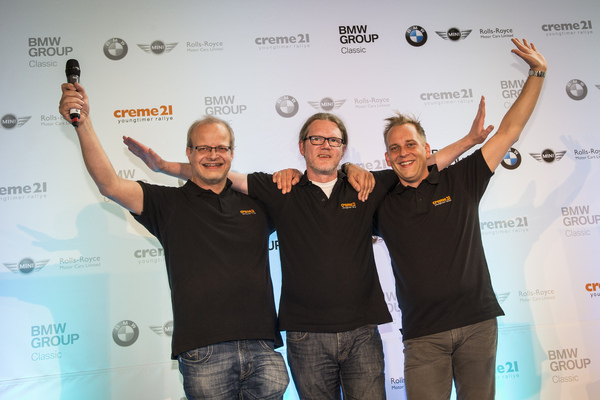
The idea of naming a classic car rally after the cosmetic softener dates back 15 years. In 2000 in Oldenburg, top left on the map of Germany, roughly between Bremen and the North Sea: Alexander Mrozek, Martin Vorwahl and Oliver Borgmann work at the same petrol station. To finance their student lives - and their passion for old cars.
When the traditional "2000 kilometers through Germany" rally passes near them, they sign up for the night test. But neither the university students nor their mundane Alfa Romeo Bertone GT feel at home in the large array of chrome-plated radiator grilles, polished wire wheels and waxed raincoat carriers. The sympathies are no more pronounced in the opposite direction either: for the establishment of veteran drivers, the participation of the three with their "longest-yet-no-oldie" is a real affront. And so they quickly decide to design a long-distance pleasure drive for those cars that are somewhere between used cars and classic cars - those that are no longer loved by the masses, but not yet loved again either. And not least for their passionate owners.
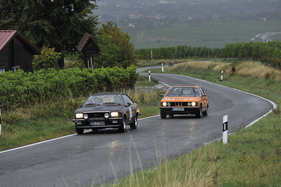
Started for the first time 13 years ago
The first big rally for youngtimers - the unfamiliar generic term at the time - took place in 2002, with 37 teams of two, who were not at all embarrassed to criss-cross Germany, a country accustomed to classic cars, in vehicles such as the Simca 1308 or Skoda 120 LS, Ford Granada Turnier or Renault Fuego Turbodiesel. The following year, 2003, 60 intrepid teams entered the race in their colorful semi-classics, and in 2005 the field reached triple digits and has remained so ever since.
Logistical challenge
The organizational upper limit of 200 teams has been reached for several years now. The three from the petrol station - no longer students, but still cream-fed - have long had to deliver masterpieces of logistics. Especially as the entire Creme 21 caravan that pushes its way through the Teutonic hills every late summer, including marshals and helpers, press people and sponsor representatives, has more than 500 heads. And all these heads have to feed and bed down somewhere after 250 to 400 kilometers a day.
Because there are naturally no cozy country inns with this kind of capacity, the entourage usually stays where it's big and cheap. Namely in inner-city XXL hotels whose best days were two to three decades ago. This is unproblematic as long as the average Creme 21 competitor is neither wasteful nor addicted to luxury - and has retained a bit of a heart for, let's say, the somewhat improvable nature of hospitality aesthetics. And so it has long been part of the overall cultural image of the used car chase, the slightly morbid mustiness of the large hostelries from the 1980s.
Amusement in the ugliest cities in Germany
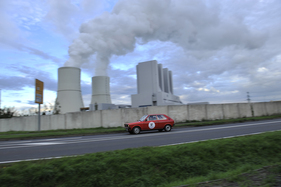
Just like the one or other city crossing through the ugliest metropolises that the reunified Federal Republic would rather not have to offer. From A for Aachen to Z for Zwickau, the cream makers have no fear of touching the spots that the national tourism marketers shamefully hide. At this party, everyone can - or rather should - find out why it is said that "God created Paderborn in anger". This reflects the event's claim to authenticity as precisely as the sites that lie along the annually changing routes of Creme 21 and invite you to enjoy an educational diversion. Whether it's the Ruhr coal mine or the inner-German border crossing at Helmstedt-Marienborn, no other rally presents Germany with such openness, which is clearly appreciated by the increasing number of participants from abroad: in 2015, 30 teams from eight countries took part, from Switzerland and Austria, of course, but also from Italy and India.
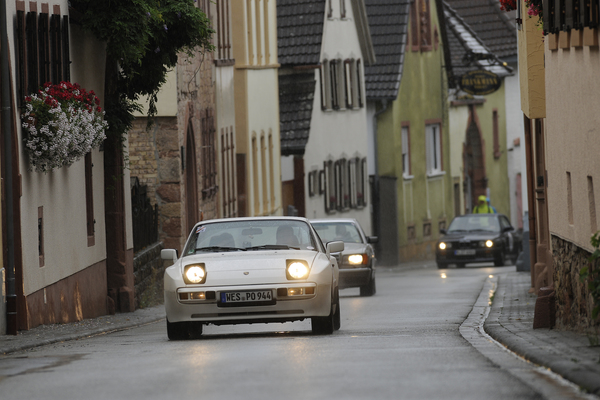
To be fair, it should be said that the passages through the lovely German countryside dominate by far in terms of distance. Freeways are taboo for the organizers, but fans of speedy driving will still get their money's worth - connoisseurs of the German federal highways and motorways, which run through the valleys and over the ridges of the magnificent low mountain ranges with speed limits of 100 and 120 respectively, are happy to forgo the really big free ride.
The very special special stages
The special stages, on the other hand, are indispensable for connoisseurs of Creme 21 and their fathers - which brings us back to the children's birthday party, the keyword from the beginning of the text. Sack races, can throwing, egg races: To the casual observer, such competitions may seem infantile to ridiculous. For the habitual creamer, however, these renitences against growing up are rather whimsical diversions from the automotive and zeitgeist-specific games of skill and knowledge. Examples include the starter motor toss and movie car or terrorist guessing games.
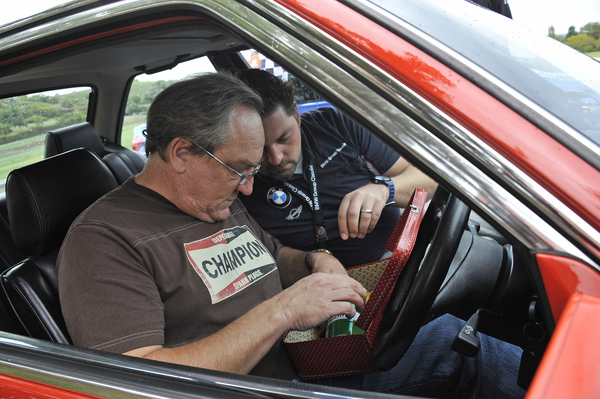
The so-called suitcase question has become a classic at all Creme 21 competition days. At the first checkpoint of the day, each team is shown a child's suitcase for 21 seconds, the contents of which consist of contemporary utensils. A few driving hours and checkpoints later, the previously unknown quiz question is asked. For example: How many of the toy cars in the suitcase had a sunroof? Or: Which car brand was represented twice? Or: How many rivets are used to fasten the suitcase hinges?
Practical prizes for special tests
In view of such competition criteria, it is understandable that neither the fastest nor the cleverest nor the most skillful will win the day, let alone the overall victory. And the prizes are also far removed from any kind of conformity. Every evening, the stage winners receive useful items from the sponsors' ranges - an umbrella here, a hand truck there. After all, the teams with the highest scores at the end of all four days of the competition do not take home any trophies, but only orange-coloured junk from the era they are paying homage to, which the three organizers have previously dug up at flea markets. It could be a hairdryer. Or a warming pot. A desk lamp. Perhaps an earthenware vase. A Bonanza wheel. Or the legendarily inferior Calor Waschboy washing machine.
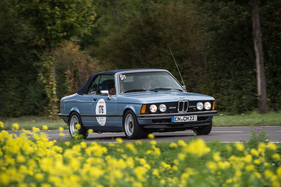
Whatever is fun is allowed - especially for the viewers, whose derision follows on their heels. In any case, in 2015, Team Jünger won in a BMW 323i Cabriolet E21, with the Zechs in a Pininfarina 124 Spider in second place and the Henkelmann/Kremer pairing in an Austin Mini 35 in third.
Speaking of sponsors: it is logical that such a large event with constantly changing venues cannot do without the generous support of industry-related companies. It remains remarkable, however, that the marketing people of image-conscious corporations have no fear of contact with a horde of freaked-out used car gurus, in whose microcosm a new car of the 21st century obviously has no right to exist between bell-bottoms and metal yokes, between wooden chains, crocheted toilet paper rolls and platform soles. It is therefore respectable that Opel has been the main sponsor of Creme 21 for years.
New with BMW as primary partner
In 2015, BMW Group Classic flew the flag as primary partner for the first time, representing the Group brands BMW, Mini and Rolls-Royce. This initially caused consternation among some participants in the run-up to the event. Some even feared that the Bavarians might drown the freaky party in their blue and white marketing sauce and thus be the spoilsport.
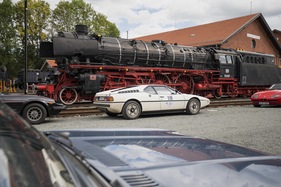
But afterwards, everyone agreed that the spirited and heart-warming commitment of the BMW people had made the Creme 21 Youngtimer Rally even smoother. So it's a good thing that they will once again be driving the flashiest lantern parade on the German classic car scene in 2016.
Also colorful next year
The route of next year's edition (September 7 to 11, 2016) is still a secret. But other things are certain. It will be colorful again, with the color orange dominating. Once again, the Daf 55, which arrives on its own wheels, will have more fans than the Porsche 911 delivered by trailer. Once again, there will be four days of driving and a good 1000 kilometers in total through Germany, which is not always aseptic in terms of tourism. As before, the two-man team will only have to pay 1221 euros for participation and overnight stays including full board. Once again, the tasty borderline will win the favor. What is allowed here is what stands out rather than what pleases.
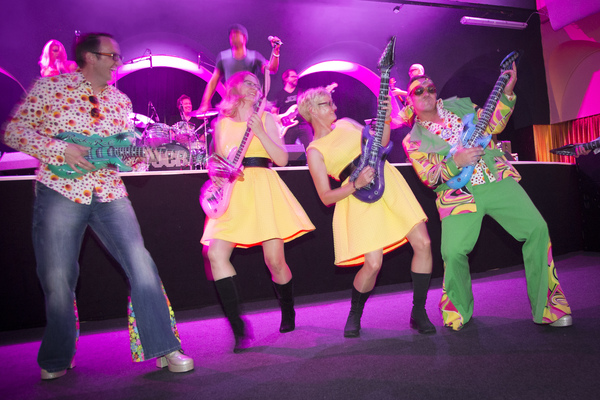
In any case, Creme 21 is only genuine and unspoiled "without all those Nivea noses", says another Creme 21 repeat offender. When asked to elaborate on the cliché of the contemporaries he doesn't want to see in the field of his favorite event: "Guys in Mercedes 190 SLs who sneak off their steeplechase rallies at politically correct revs and lock their wind deflector away in the trunk in the evening." A pretty apt image of the enemy - when viewed through orange-colored glasses.