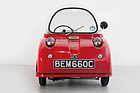
Peel Trident - almost cheaper than going


You have only
1 out of 27
images seen in high resolution


Summary
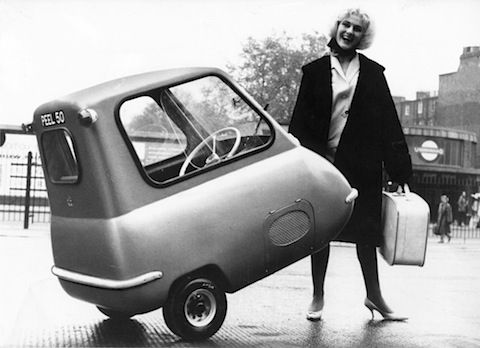
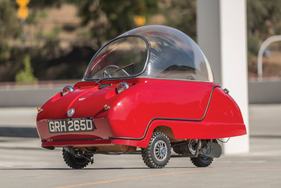
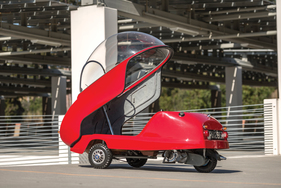
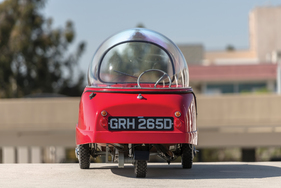
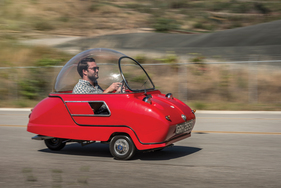
Back in 1962, Briton Cyril Cannel surprised the public with the world's smallest passenger car, the Peel P50. He followed up the one-person miniature car with a two-person version, which almost looked like a spaceship from the future, but would also have fitted in very well with the Flintstone family's fleet of vehicles. This vehicle report tells the short history of the Peel Trident and shows the miniature car in many pictures, supplemented by photos of its predecessor, the Peel P50.
This article contains the following chapters
- Smaller, lighter, more economical
- An air bubble on wheels
- Significantly larger
- Cheaper than running
- Rarely remained, but ...
- An original - E185
- Further information
Estimated reading time: 4min
Preview (beginning of the article)
Back in 1962, Briton Cyril Cannel surprised the public with the world's smallest passenger car, called the Peel P50. He followed up the one-person miniature car with a two-person version that almost looked like a spaceship from the future, but would also have fitted in very well with the Flintstones' fleet of vehicles. Peel Engineering had already started to produce a plastic body for the Ford 8/10 in 1953, which stood out with its elegant design. Two years later, a small three-wheeled car called the Manxcar was developed, which was powered by a 250 cm3 Anzani engine, but did not go into series production. It was followed in 1962 by the forerunner to the Peel P50, which still had one wheel at the front and two wheels at the rear, but did not prove itself on the road.
Continue reading this article for free?
Images of this article

Brand Pages
More about this topic