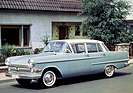
Reliable, comfortable, natural - Opel Kapitän 56 in the (historic) test


You have only
1 out of 11
images seen in high resolution


Summary
The Opel Kapitän 56 met all the criteria - comfortable, flexible handling and solid workmanship. But such a high standard also led to criticism at a high level. This article reproduces the wording of the 1955 Motor-Rundschau magazine test, in which the Kapitän was extensively tested for strengths and weaknesses.
This article contains the following chapters
- Rating
- Marking: Opel "Kapitän 56" 2.5 L
- test
Estimated reading time: 11min
Preview (beginning of the article)
The self-supporting all-steel body, which is almost a matter of course in European car manufacturing today, has the advantage of high stability with moderate weight and offers the possibility of a spacious design. Opel had already done pioneering work in this area some 20 years earlier, and the completely redesigned self-supporting body of the "Kapitän" in 1954 showed the results of its extensive experience. For 1956, this body was made particularly beautiful and "fluid" in its lines through changes to details and was given an even clearer field of vision for all occupants. The "Kapitän" is not only one of the most highly regarded and largest "Europeans" with the best use of interior space, but is also very fast and spirited thanks to the reliable and mature 2.5-liter six-cylinder OHV short-stroke engine and is roadworthy for a car of the usual design (with engine mounted far forward and rigid rear axle). The space-saving 13" wheels, which result in a low center of gravity, prove their worth here.
Continue reading this article for free?
Images of this article