Scale work - Ford Escort in (historical) test


You have only
1 out of 8
images seen in high resolution


Summary
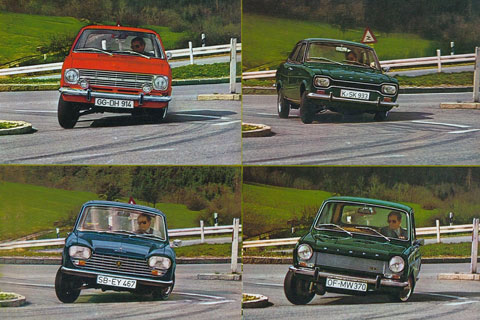
The factory's upfront investments - above all the extended warranty period and the fact that the basic model was already fully equipped - helped the new Ford Escort 1975 get off to an optimal start. Sales were as brisk as only the Taunus (1970) and the first Capri (1969) had been in the Ford range. This test report from back then reveals what the Escort base models 1.1 and 1.3 offered in terms of progress under the new bodywork.
This article contains the following chapters
- Not too lean
- Concept advantages
- Concept disadvantages
- Engine choice
- Plus points
- Minus points
- Overall verdict
- Technical data & measured values
Estimated reading time: 12min
Preview (beginning of the article)
From January 1975, the new Escort was launched as quickly as only the Taunus (1970) and the first Capri (1969) had been in the Ford range - there are already delivery deadlines. The factory's advance payments - above all the extended warranty period and the fact that the basic model was already fully equipped - helped the Escort get off to a good start, which is also reflected in our readers' interest. We tested the Escort base models 1.1 and 1.3 for their practical value. What progress do they offer under the new bodywork? At a cost of around DM 50 million, Ford also had to adopt the technology and basic dimensions with regard to the existing production facilities. An alternative to in-line four-cylinder engines above the front axle and cardan drive to the rear wheels was never on the table - an even smaller Ford with front-wheel drive was not launched until 1976. The relatively small differences between the old and new Escort are demonstrated by the most important comparative dimensions (in cm in each case):
Continue reading this article for free?
Images of this article

Brand Pages
More about this topic