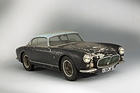
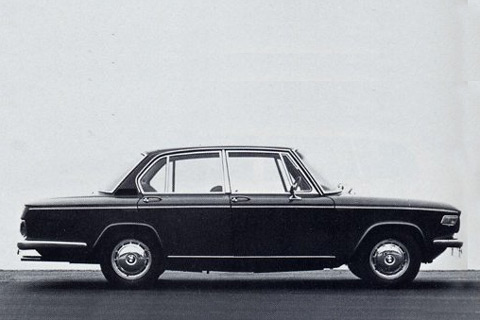
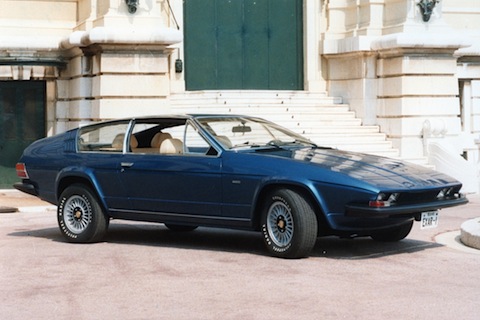
The mysterious other Maserati Mexico by Pietro Frua


You have only
1 out of 20
images seen in high resolution




Summary
485 units of the Maserati Mexico were built, with a 2+2-seater coupé body by Vignale. Pietro Frua created three special body variants, the most attractive in 1968. The almost lost car was restored in 2013 and has since been shown at various events. This vehicle report portrays the unique Maserati and shows it in old and new pictures.
This article contains the following chapters
- Modular technology
- The three alternatives from Pietro Frua
- Mysterious birth
- Almost disappeared from the scene
- Valuable show star
- Further information
Estimated reading time: 3min
Preview (beginning of the article)
In October 1966, Maserati presented the 2+2-seater Coupé Mexico in Paris. Technically, it was based on the Quattroporte chassis, which had been shortened by 11 cm. A 4.7-liter and a 4.2-liter version of the proven eight-cylinder engine were offered. The bodies of the Mexico were built by Vignale, with a total of around 485 units leaving production between 1966 and 1972. They all bore the body shape that largely corresponded to the prototype designed by Virginio Vairo for Carrozzeria Vignale, which had been shown at the Turin Motor Show in 1965. Like the Quattroporte, the Maserati Mexico used front trapezoidal wishbones with coil springs and a rear rigid axle with leaf springs for wheel guidance. Disc brakes were used all round. The engine was a V8 with a 90-degree angle, whose 16 valves were controlled by a total of four camshafts. With a displacement of 4.7 liters, the unit produced around 290 hp and accelerated the four-seater coupé, which weighed around 1650 kg, up to 255 km/h (according to the AR catalog).
Continue reading this article for free?
Images of this article