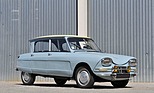
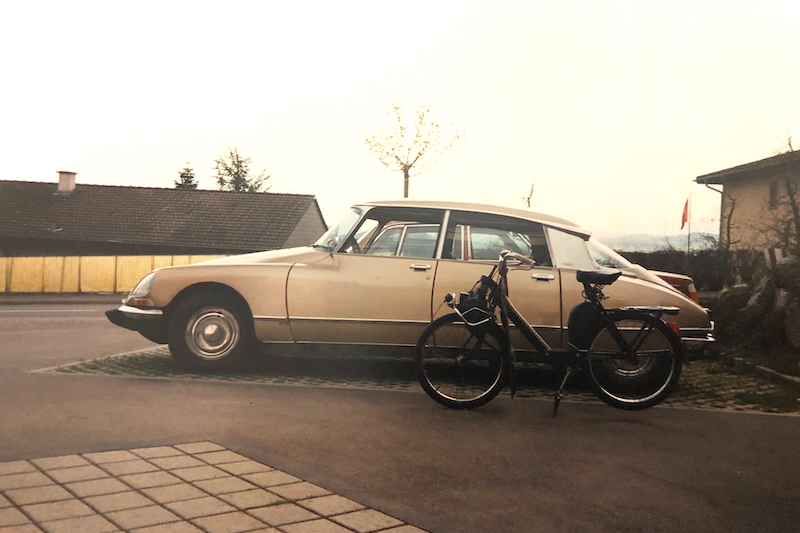
The little goddess? Citroën Ami 6 in the (historic) test


You have only
2 out of 16
images seen in high resolution


Summary
When Citroën's latest coup - the Ami 6 - was presented in 1961, opinions were divided on the beauty of the design. But this (non-) existing beauty was quickly forgotten when one considered the series of improvements and innovations, which reached not inconsiderable proportions.
This article contains the following chapters
- The goddess and the idea
- Beautiful or ugly?
- A purely functional design
- Real French suspension
- Numerous improvements with certain sacrifices
- The egg of Columbus
- Modernized all round and primitivities removed
- Underpowered despite low weight
- Horrendous price - but overall good performance for the money
Estimated reading time: 10min
Preview (beginning of the article)
The Citroën Ami 6 was a purely functional design without standing out from the crowd with its extraordinary beauty. At first, probably no potential buyer liked to hear that. For the Citroën Ami 6, however, these were the bare facts. However, the (non-existent) beauty was quickly forgotten when one considered the various improvements and innovations. It does make a difference when you tell people every day that their car is called "the goddess" or "the idea". This is what Citroën has done with the type designations of its large cars, where the DS19 is pronounced in French as "la deesse", "the goddess", and "ID" as "l'idee", "the idea". The number behind it (DS19 and ID19) still referred quite prosaically to the engine capacity, but in the new Ami 6 (6 = 600 cc) it was included in the linguistic trick. Ami is not an abbreviation, but the French word for friend, and the 6 gives it linguistic momentum in French; it is pronounced Ami-ßis, which is also an echo of the Latin plural of friend (amici), friendship (amicitia) in French pronunciation.
Continue reading this article for free?
Images of this article