90 years of Citroën Traction Avant - Avant-Garde


You have only
1 out of 35
images seen in high resolution




Summary
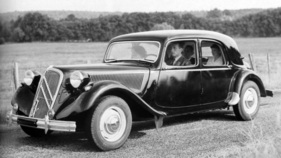
This year marks the 90th anniversary of the Citroën Traction Avant, a car that was even further ahead of its time than the famous DS when it made its debut. This article takes a holistic look at the revolutionary car and places it in the history of the automobile.
This article contains the following chapters
- André Lefèbvre - "The conductor who conducts his own score"
- Technology: a revolutionary overall package
- Bodywork
- Space concept
- Stability
- Distribution
- Epilogue
Estimated reading time: 11min
Preview (beginning of the article)
"Traction Avant", abbreviated to "Traction", is the French term for front-wheel drive. The word is derived from the Latin "trahere" for "to pull". The car is therefore pulled (at the front) and not pushed from behind, just as horse-drawn carriages were pulled in the past. (When Enzo Ferrari allegedly opposed the central engine design in racing car construction in the 1950s with the sentence: "The oxen belong in front of the car", he was not referring to the front-wheel drive, but to the position of the engine). In terms of driving dynamics, front-wheel drive tends to be the safest solution for mass-produced cars: when cornering too fast, the front of the car tends to push outwards, and this is instinctively corrected with more steering (with rear-wheel drive, on the other hand, the rear often pushes outwards in the same case, which requires counter-steering that is not intuitive for the everyday driver to correct). Further advantages: Directional stability on the straights and traction in winter.
Continue reading this article for free?
Images of this article