

"Design freeze" is what experts call the time when a car is completely finished before it is launched on the market. As a rule, this period lasts two and a half years. For at least as long, Audi has been accused of not developing new models and of lacking courage. No wonder, given all the success of the Audi models, who wants to be responsible for a flop just because they thought it was appropriate to turn the design rudder in Bangle style?
A year ago, Wolfgang Egger was succeeded by Marc Lichte as head of design at the Ingolstadt-based company. And with the A9 Prologue, he has shown how and where he wants to set the new accents. But if you want to know what Audi design was like 50 years ago, you can now read about it in the two-volume work "Audi Design" by Othmar Wickenheiser.
The new Audi design is now 50 years old
Just in time for the resurrection of the Audi brand in 1965, Audi Tradition, under the authorship of Othmar Wickenheiser, is presenting a review of Audi design over the last 50 years. The history is divided into two parts and two volumes. Volume 1 covers the years from 1965 to 2000 and Volume 2 covers the years up to 2013. Practical: Our verdict is also divided into two parts.
Welcome to the studio
The author, himself a car designer and formerly employed by Audi, knows the business. He knows what is and was important from the first stroke to the launch of a new model. The first volume impressively illustrates how and where the design developed, what detours lay in between and sometimes also what paths Ingolstadt was unwilling or unable to take. This gives the reader a much sought-after look behind the scenes of the design studio. The history of Audi design, its creators, some peculiarities and anecdotes are told chronologically. The birth of the Audi models thus extends beyond the first day of sales.

Hat-wearing image my ass
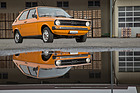
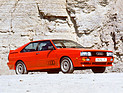
The older ones among us remember that in the 60s and 70s, Audi's image suffered from the stigma of being bourgeois... It took until well into the 80s for the company to break away from this perception. This makes it all the more exciting how the author tells us that there was always a certain revolutionary spirit of optimism, at least when it came to design, and that even the first 80 was a bit of a revolutionary, at least in terms of styling. With hindsight, this may even be understandable, as there were more radical concepts at the time, for example from Renault. But from the evolutionary point of view of the Audi brand and its design, the more exciting development story can be told and documented about Audi. Quattro, aerodynamics world champion, Spyder, Avus, RS 2 power station wagon - the revolution has indeed taken place.

Drafts, sketches and backgrounds
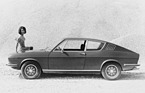
The first volume thus becomes a short journey through time and you begin to understand that there were probably ambitions in Ingolstadt very early on that were only allowed to take place on paper due to a lack of budget and/or skills, as VW was up to its neck in the crisis. If the designers had been allowed to do as they pleased, Audi would have been denied 10 years of image valley. This is underlined by the numerous designs and illustrations on the way to the first diversification of the model range into Audi 50, 80 and 100, which also included the best Italians such as Bertone or Giugiaro. And in the end, you can't shake off the feeling that they didn't do it all that wrong in Ingolstadt. On the way to the top, the design soon became a key differentiating feature alongside avant-garde technology such as quattro, turbo, aluminum or TDI in order to catch up with Mercedes and BMW.

Fashion, design and managers
A look behind the scenes is always a look into the respective era. White shirts and suits in the 60s, bell bottoms and colorful shirts in the 70s are replaced by sweatshirts and carrot jeans in the 80s. As diverse as fashion, the trapezoidal line is replaced by cube design and later by aero design. An Audi 100 from 1968 does not have much in common with the aerodynamic world champion from 1982. Only 14 years lie between the two models, but in purely external terms it is a quantum leap for the design and the brand, which then continues until the year 2000.

What does the second volume want to tell us
A company that claims the strategic field of design as Audi does can, of course, draw on the full potential of such a book project even after the year 2000. More and more model series, plus the derivatives in the S and RS series, the launch of the Q series. You'd think your eyes would glaze over in the second volume. Unfortunately, the two volumes are as different as night and day. Everything that speaks in favor of the 1st volume is swept away in the 2nd volume. Few or no designs, little look behind the scenes and at best a few pictures from the design studio reduce the equally strong volume from 2000 onwards to the level of a collection of marketing material and press kits. What in the first volume is almost like a family chronicle of Audi design from 1965 to 2000 under the four chief designers (almost 20 years of which under Hartmut Warkuss), evaporates in the next one and a half decades and six chief designers behind a cloak of selected press photos and statements from the marketing department. The creative proximity to Audi's corporate design also fits in with this. Instead of a bold implementation, it brings the books closer to the marketing material in the brochure stand of the nearest Audi Center.

One slipcase, two volumes, three opinions
A slipcase about Audi design is a challenge, no doubt about it, the first volume has succeeded in presenting the history of Audi design, its creators and the models in a comprehensive, clear and readable way. The second volume can only be seen as a chronological supplement, which may well have made it into print for strategic marketing reasons. It lacks everything that made the first volume so desirable. Instead of the 2nd volume, it would have been exciting to supplement the first volume with the expansion of the design locations in Munich, California and Barcelona and their influences. In this context, it would also have been possible to present some developments that never made it onto the market. For example, the two-door coupés as sister models to the Audi 100 saloons from 1976 or 1982. As it is, this first volume is well worth reading, but nevertheless provides an in-depth look at this aspect of Audi history and is illustrated with many pictures. At a price of € 98.00, however, the slipcase is too expensive. Premium prices, although in our view the second volume can only be regarded as a supplement.
Bibliographical information
- Title: Audi Design
- Author: Prof. Dr. Othmar Wickenheiser
- Language: German
- Publisher: Delius-Klasing, 1st edition 2014
- Format: 258 x 333 mm, hardcover in slipcase, 640 pages, 20 b/w and 450 color illustrations
- Price: € 98.00, € 100.00 (A); CHF 128.00 (CH)
- ISBN: 978-3-7688-3751-4
- Order at Delius-Klasing or online at amazon.de