Those were the days. If you wanted a large saloon with plenty of comfort, there was no getting around the large models from Ford. For decades, the Granada and the like were considered staid, solid and - especially in the six-cylinder versions compared to the models from Munich and Stuttgart - reasonably priced.

Having disappeared from the roadscape today, few people remember the large Ford models with which the managers on the Rhine wanted to carve out a slice of the luxury class cake. Motorbuch Verlag has now published a book commemorating the era in which Ford was once the largest manufacturer of six-cylinder engines in Europe.
From the rapid rise to the slow fall
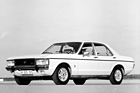
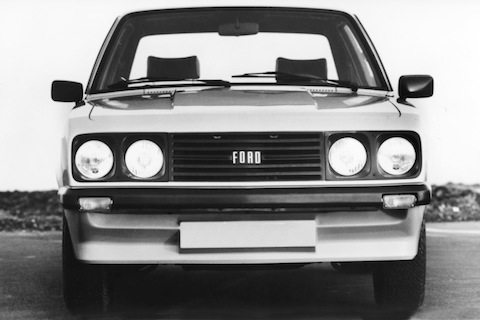
The book by author Alexander F. Storz covers over 220 pages on the four generations of Ford flagships that rolled off the production line between 1972 and 1998. In the beginning, there were the baroque twins Consul and Granada. With four different body variations, they marked the high point of the stately cars from Cologne. The 2nd generation of the Granda followed in a much more modern style, only to be replaced by the extravagant Scorpio models.

While Consul and Granda achieved an undreamt-of nimbus, the slow decline began thereafter. As competitors aligned their models perfectly with customer requirements, Ford's top brass failed to convince their clientele of the long-term charm of their luxury class. What began in 1972 with great success and perfectly expressed the lifestyle of the 70s for a decade, slowly but surely came to a halt with the Scorpio. 1998 was the end for Ford in the luxury class. All the more important to see what Storz has to tell us.
Clear structure
The author begins by pointing out the P7a models, which as small American road cruisers, the 17 M, 20 M and 26 M, marked Ford's first claim to the upper middle class as early as 1967. The 26 M in particular, with its V6 engine and GXL equipment, was a good all-round car with which you could definitely make an impression. After all, it was also used in motorsport and, similar to Opel, it provided an inexpensive entry into the cultivated world of six-cylinder engines.
The P7a was the next big thing. Somewhat baroque, stately American, a completely new design that only took over the engines from its predecessor. A model that, like the Capri, Transit and Taunus, had two parents and was developed for series production in both Germany and the UK.
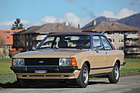
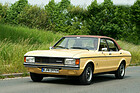
The Granada 2 followed in 1977. After just five years, the first generation was already looking too pompous and the design had to face pressure from the competition.

From 1985, there was suddenly a complete departure from predictable design. With the first Scorpio, Ford wanted to use bold design to disguise its technical blandness. Or was it rather suicidal, asks the author at the beginning of the Scorpio article. A hatchback in the luxury class, plus the omission of a turntable model, when the proportion of estate cars in the predecessor was 25%? In desperation, dealers imported the American Ford Taurus Wagon to keep customers in line. It wasn't until 1990 that the Scorpio was also available as a classic notchback saloon and finally, a year later, also as a turnier. But by then, Mercedes in particular, and later BMW with its T and Touring models, already knew how to meet completely different customer demands.

The swan song then followed with the presentation of the 2nd generation Scorpio. "One like no other" was the slogan for the last big Ford from Europe. The new creation from Cologne was a cocky facelift that unfortunately lacked any real profile. Simply redesigning a ten-year-old model was no longer sufficient for market acceptance in the 1990s. Journalists didn't like the car right from the start, and potential customers were probably only to be found among the ever-shrinking Ford fan base. Even attractive prices couldn't change that. Ford no longer had anything to offer against Mercedes, BMW and now Audi.
A chapter of Ford
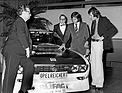
The author tells the story of the major Ford models in a light-hearted way. Quotes from specialist articles and a combination of press photos and photos from private albums bring to life the spirit of the times in which the Ford models competed for customers on the market. The aspirations and implementation of each individual model series are explained in an easily understandable way.
Without a profound insight into Ford's archives, the result is more of a casual narrative form, with sometimes subtle analyses of contemporary tastes, the market situation, buyer behavior and, above all, interesting speculations on Ford's sales intentions.
As a reader, you can shake your head with the author when the question arises as to why such a radical change in design to the Scorpio is suddenly on the cards, but a highly successful body version such as the Turnier is simply taken out of the range. While Mercedes is successful with the first Estate, Audi is launching a new Avant and even BMW is playing on the lifestyle combination theme with the 5 Series Touring.
You can nod in amazement when Storz presents the derivatives, special models and special versions of all the models. German customers could only dream of the V8 Granada from South Africa; the Granda S turbo from the Stuttgart-based Schwabengarage had enough steam and understatement in 1976 to combine the six-cylinder running culture with more power for less than DM 20,000.

The view of Ford UK does not remain unobstructed either. Storz highlights the differences in technology, equipment, standards and sales. The Granada Ghia X Executive Turnier from 1980, for example, was built exclusively for the British market. In Cologne. You have to know something like that to convey it. The Granada was not only built in Germany and Great Britain. The Granada also rolled off the production line in Portugal and Korea, we learn. And we are informed about special models, their equipment and value.
Finally a book on the Granada & Co.
The big Ford models have never left a niche existence in the classic car scene. What was big and came from Cologne either rusted away or was only too gladly brought to the Bosporus as a cheap used car by Turks living in Germany every summer vacation and handed over to the family there. There is probably a bigger scene there than here. So the Granada and Scorpio were quickly forgotten.

It is therefore all the more pleasing that this era of Ford can now be revived in a book. Storz tells the story of Ford's foray into higher spheres in a light and light-hearted manner. This book is not about technology, for which, in the author's opinion, mechanic literature is required. Rather, it is a historical and sociological look back at a time when Ford wanted to launch a luxury car on the market with great ambition. And to this end, four body variants were rolled out to dealers. Superlatives were associated with this. The Granada Turnier was initially the estate car with the largest load compartment in Germany, and the long-lasting 6-cylinder engines were at times the most produced in Europe. Ford had a 15% market share.

Peu à peu Storz describes Ford's rebellion against the decline. But neither facelift nor special models could help to build on the initial successes. Ford suffered repeated losses in the late seventies. This also had an impact on the Detroit managers' willingness to invest. The successor models could only be developed with compromises. Basically, they were always based on the same floor assembly and for many years only with moderately new engines. Too little to earn money in the long term. The 1.6 million Granadas produced between 1972 and 1985 were offset by only 800,000 Scorpio units sold between 1985 and 1998. The Scorpio 2 did not even break the 100,000 mark in four years.
Storz has dedicated an important and well-written book to this period. Interestingly written, comprehensively illustrated.
In 1998, the large Ford models were discontinued. The Mondeo was now over. Ford had absorbed Jaguar and thus had completely new ambitions in the luxury class. But that is a completely different story.

Bibliographical information
- Title: The great Fords - Comfort from the Rhine
- Author: Alexander F. Storz
- Language: German
- Publisher: Motorbuch Verlag
- Edition: 1st edition January 2021
- Format: 265 x 230 mm, hardcover
- Scope: 224 pages, 300 illustrations
- ISBN: 978-3-613-04369-5
- Price: EUR 29,90
- Order/buy: Online at amazon.de, at Motorbuch-Verlag or in a well-assorted bookstore