Do you know Frank Rinderknecht? This is the serious businessman and visionary who presents pioneering mobility concepts every year at the CES in Las Vegas and the Geneva Motor Show. Dressed in a suit and tie (sometimes without), he likes to explain his ideas and visions.

But Rinderknecht could also do things differently, as the picture on page 33 of the newly published book "Rinspeed - Concept Cars - In your wildest dreams" shows. Frank is posing in front of a BSA 250, his shirt open and his hair at hippie length.
Rinderknecht founded his own garage back in 1977 and had already imported sunroofs from the USA during his studies.
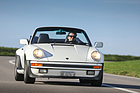
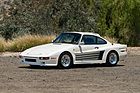
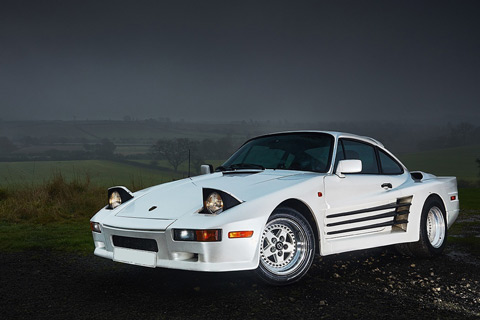
The Rinspeed Garage became famous for tuning, and the extra-wide Porsche models of the 1980s, the gullwing-door Golf Aliporta and the Bugatti Cyan based on the EB110 are unforgotten.

This entire creative phase is only worth eight pages in Bernd Ostmann's visit. Unfortunately. But understandable, because the main focus is on the 24 show cars that Rinderknecht developed between 1995 and 2018.
From sports car to mobility concept
It all started with the Rinspeed Roadster in 1995, also known as the Rinspeed R. Panos provided the basis, while Rinderknecht ensured that the Roadster received the local blessing and appealed to even the most discerning of natures, both inside and out.

The Roadster was followed by the Yello Talbo, a homage to the teardrop-shaped Talbot with Figoni&Falaschi bodywork, inspired by friend and pop musician Dieter Meier (band Yello). This modern version of a classic cost CHF 179,800 at the time.

The Mono Ego from 1997 was even more extreme because it was designed strictly for one person and had (almost) uncovered wheels.
The following E-Go Rocket, which had the motor behind the driver, also remained true to the single-seater concept.

Rinderknecht went much further with the X-Trem, combining various vehicles - hovercraft, scooter, jet ski and pickup. The Tattoo also followed this path, with an underwater scooter on the loading area.
The R-One, on the other hand, was completely different, in the truest sense of the word. In the gas-powered sports car, the cockpit area including the driver leaned into the bend.

And so other fun cars and mobility concepts followed, which were also extendable in length (Presto) or, like James Bond's Lotus Esprit S1, could drive under water (Scuba), but unlike the movie car, not only made it onto celluloid, but also in reality and with two people on board (with diving suits).
Bernd Ostmann devotes several pages to each of these and the following mobility concepts, drawing on reports from Auto Motor und Sport at the time and showing the vehicles in many pictures.
Fun and entertainment value may be
While Rinderknecht's latest creations are rather sober and purpose-oriented mobility concepts, the earlier show cars were much more fun-oriented. For example, the Bedouin, based on the Porsche 996, could be transformed from a sports car into an all-terrain pickup thanks to its variable roof. The Splash could be a hydrofoil motorboat in the water, while the zaZen had a transparent glass roof that turned milky at the touch of a button.

Rinderknecht did not build his cars alone and in a vacuum; his collaboration with external companies was a key component of his success. Rinspeed was also a marketing platform for these partner companies.
Each of the 24 show cars is comprehensively described and portrayed in the book. This allows the reader to observe how Frank Rinderknecht's visions changed and adapted to the times. Why the order of the studies was printed upside down, with the newest at the front and the oldest at the back, remains Bernd Ostmann's secret. In any case, many readers will prefer to read the book from back to front, as the changes to the show cars simply make more sense along the normal timeline.
Generously designed
Large and attractive pictures and informative texts together make up the appeal of this book. At EUR 79.90, however, it is quite expensive, especially as the "payload" was less than one might expect with 228 pages due to the bilingual version (German/English).

Ostmann's work is not a classic car book, as Rinderknecht's early and interesting creations are given far too little attention. It is a book about a visionary and inventor who managed to turn his ideas into reality and who contributed to many modern developments.
The illustrated book could have been a little clearer, and a tabular compilation of the show cars would have been valuable, as would the unfortunately missing index. On the other hand, the extensive list of partner companies, which makes the book look a bit like a Rinspeed image brochure, could have been dispensed with.
However, the Rinspeed book is interesting despite the criticism expressed and some people who read it may even become Rinderknecht fans.

Bibliographical information
- Title: Rinspeed - Concept Cars - In your wildest dreams
- Author: Bernd Ostmann
- Language: German/English
- Publisher: Motorbuch Verlag
- Edition: 1st edition October 2018
- Format: Hardcover, 30.5 x 24.0 cm
- Scope: 224 pages, 210 color images (and one black and white image and various drawings)
- ISBN: 978-3-613-04171-4
- Buy/order: Online at amazon.de, online at Motorbuch Verlag or in relevant bookstores