How can knowledge acquired over decades be used and passed on? Nicolai Jäggi investigated the question of knowledge transfer in the classic car industry in his bachelor's thesis at the Bern University of Applied Sciences.
The newly qualified business economist presented his findings at the latest IgFS workshop on November 11 in Baden. "Knowledge identification, knowledge development and knowledge transfer are of central importance for the industry," Jäggi stated in front of around 80 industry representatives. Implicit knowledge and experience are particularly relevant, as this experiential knowledge is usually essential for the continued existence of companies.
Preparing the ground
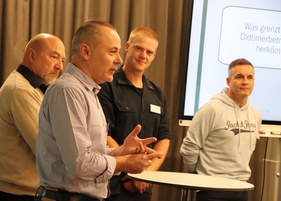
A panel of IgFS members and company owners confirmed the great importance of documentation and knowledge transfer. Young professionals should dare to ask questions, get involved and use the network, emphasized Simon Jau, a vehicle restorer who recently took over a classic car business in Spiez.
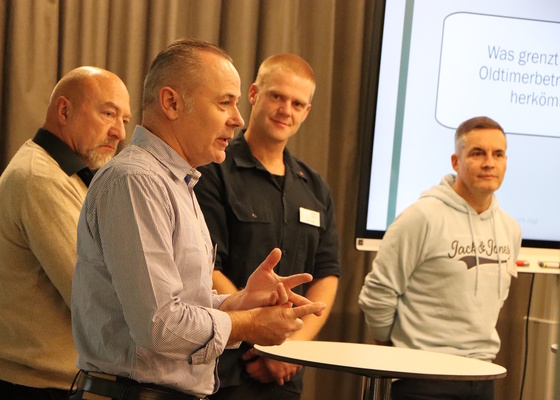
Heini Schneebeli, Porsche restorer from Klingnau AG, made it clear that older business owners who wanted to pass on their garages would have to prepare the ground for the next generation. IgFS President and garage owner Christian Ackermann from Dotzigen BE pleaded for a sensible timeline. What is important, he said, is the fire for the industry and specialists who want to pour out the jug with their knowledge.
Using the association's enormous knowledge
Knowledge should not only be gathered and documented in the classic car sector, but also increasingly in the youngtimer sector, added Patrice Walter, business owner from Bachenbülach ZH and responsible for German-speaking Switzerland in the IgFS. Above all, garage owners should learn to involve the next generation more and hand over the lead.
After all, there is an enormous amount of knowledge in the IgFS association. Many have not yet properly recognized this strength. The opportunities to share knowledge with each other need to be expanded. "That's what will take us forward," Walter appealed.
Reconstructing components, additive manufacturing
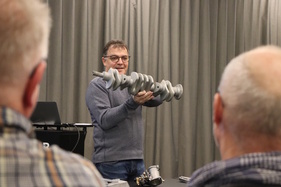
Practical experience and possibilities in spare parts design and production were a second focus of the IgFS workshop. Mechanical engineer Frederic Landert from Wald ZH, who has experience in the motorsport and space sectors, demonstrated the steps involved in the "reverse engineering" process to reconstruct components using scanning techniques and CAD.
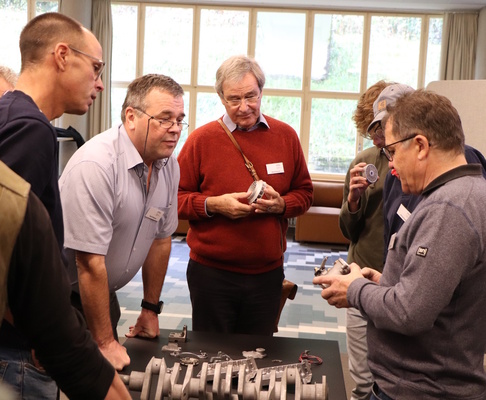
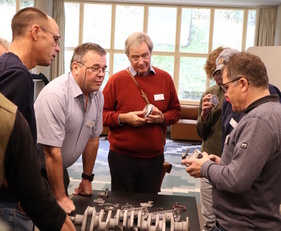
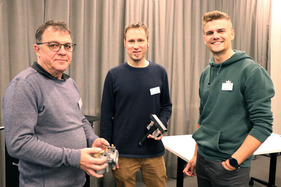
Edy Schorno, who has been looking after historic vehicles in his company in Küssnacht am Rigi LU since 1990, described how 3D printing (additive manufacturing) can be used in the classic car sector. The range extends from prototyping to 3D printing with various metals. Almost anything is possible in small quantities, from small parts to entire engines. Schorno presented the lamp holder for a Bugatti, door latches for an Aston Martin and a complete Weber carburetor as concrete examples of his work. "We are only at the beginning of the possibilities".
Information on IgFS can be found on the association network's website.