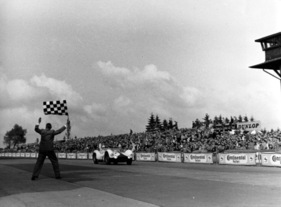
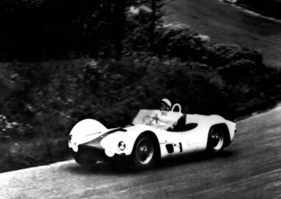
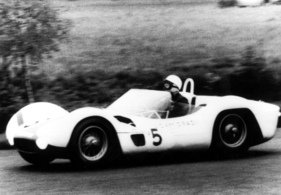
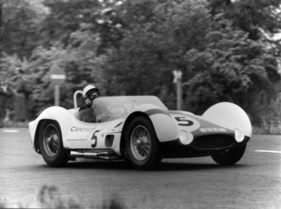
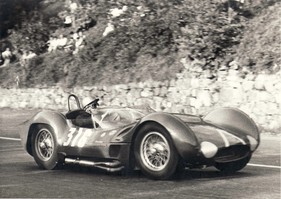
Exactly 60 years ago, Maserati celebrated one of the greatest successes in its international motorsport history: on May 28, 1961, the Tipo 61 achieved a remarkable victory in the 1000-kilometre race on the Nürburgring. The endurance classic on the famous Nordschleife was only in its seventh edition at the time, but had already reached maximum popularity. Back then, more than a quarter of a million spectators attended the race.
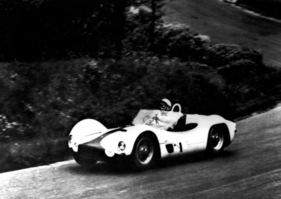
The victorious Tipo 61 was driven by the two US-Americans Masten Gregory and Lloyd Casner. In extremely difficult weather conditions, they repeated their success from the previous year, after Stirling Moss (GB) and Dan Gurney (USA) had already won the 1000-kilometer race for Maserati at the wheel of the Tipo 61 in 1960.
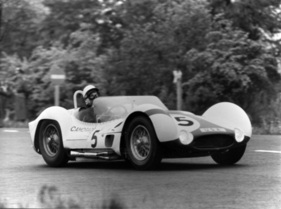
The Tipo 61 was the most famous of five racing cars designed by Giulio Alfieri. They were each characterized by their unusual chassis. It consisted of a complicated structure with around 200 lattice tubes and resembled a birdcage. This earned the vehicles the nickname Birdcage. The design provided a stiffer chassis, which was also lighter than the other racing cars of the time. This made the two-seaters the ultimate driving machines among racing cars with a front engine and rear-wheel drive.
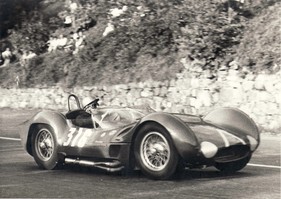
Maserati began building the Tipo 60 in March 1959, and by November of the same year it had already been upgraded to the Tipo 61 in order to meet the technical requirements for participation in the 24 Hours of Le Mans. The displacement of the four-cylinder engine increased to 2.9 liters. Its output was 250 hp at 7,000 rpm. Otherwise, the car retained the layout and solutions of the Tipo 60. In this configuration, the weight increased from 570 to 600 kilograms and the top speed from 270 to 285 km/h. Despite its enormous performance, fuel consumption was still comparatively low. This was an important advantage in long-distance races, as the number of refueling stops could be reduced.
In the three years of production from 1959 to 1961, the Tipo 60 and Tipo 61 were leaders on the international racing scene. Their performance led to a series of extraordinary victories and continued Maserati's racing tradition. In future, this tradition will be continued by the new MC20 super sports car.
Technical data Maserati Tipo 60 / Tipo 61
Engine: Four-cylinder in-line engine
Displacement: 1,990 / 2,890 cm³
Power: 200 / 250 hp
Transmission: Five-speed manual plus reverse gear
Chassis: lattice tube frame (birdcage)
Weight: 570 / 600 kg
Top speed: 270 / 285 km/h