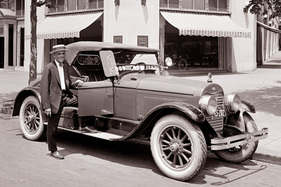
Henry Martyn Leland (1843-1932) was a true entrepreneur and a good salesman to boot. He began his career in the defense industry, building and developing weapons at a young age. He then founded a machine factory for gears and engines and finally, in 1902, the Cadillac Motor Company. He sold this to General Motors for USD 4.5 million, but remained in the management of the company until 1917.
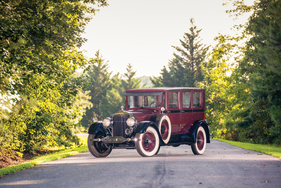
Leland then fell out with the Lincoln Motor Company (named after President Abraham Lincoln) and began building aircraft engines until the end of the First World War. The decision was made to switch production to automobiles and on September 14, 1920, the first Lincoln passenger car left the factory. 833 followed in the same year, equipped with a 5.8-liter V8 engine with 81 hp.

The focus was on quality and precision, but the Lincoln Motor Company soon ran into financial difficulties because production costs were too high and sales were too low.
Henry Ford finally took over the car manufacturer in February 1922 for around eight million American dollars, which was about half the actual value of the company.
Unlike Henry Leland and his son Wilfred (1869-1958), however, Edsel Ford, who was entrusted with the supervision of the luxury car manufacturer, managed to trim the company to profitability.
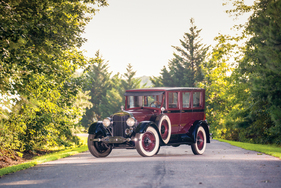
Within a few years, Lincoln had become a serious competitor to other top-class car manufacturers, namely Cadillac. No wonder, many American presidents drove Lincoln limousines.
Lincoln is one of the few early American car brands to have survived to this day.