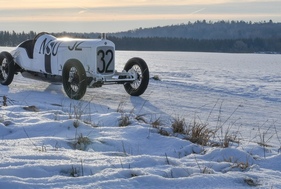
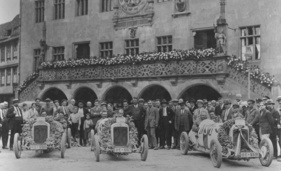
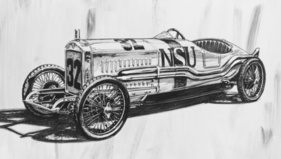
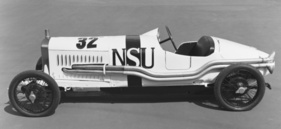
The NSU brand and motorsport: a connection with tradition, with many highlights and, above all, emotions. An outstanding moment in NSU's racing history between the two world wars is the quadruple victory of the white six-cylinder compressor cars in their class at the first German Grand Prix on the AVUS circuit in Berlin in 1926. Audi Tradition presents the pre-war NSU Type 6/60 PS racing car in this ninth installment of the NSU anniversary series celebrating the 150th anniversary of the brand.
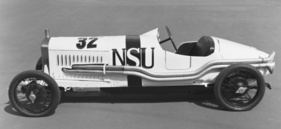
NSU takes part in international automobile races as early as 1908. The 1909 Prinz-Heinrich-Fahrt is a great success for the company, as is its participation in many long-distance and reliability races. After the First World War, the "Automobil-Verkehrs- und Übungsstraße" - AVUS for short - is opened in Berlin in 1921. It is closed to public traffic until 1940 and serves as the first race and test track in Germany to demonstrate the competitiveness of the domestic automotive industry. A "small" NSU, the NSU 8/24 PS, wins its class at the inaugural AVUS race in September 1921. The basic design of the racing version was the same as the production model; the Neckarsulm-based company only modified the car slightly compared to the open-top two-seater.
Premiere in the engine compartment
The then "Neckarsulmer Fahrzeugwerke Aktiengesellschaft" developed the NSU Type 6/60 PS from scratch and specifically for racing. This racing car is the first six-cylinder model from NSU - the 6 stands for the tax horsepower, important for the classification in the tax class. The open-top two-seater produced 60 hp, weighed 830 kilograms and reached a top speed of 175 kilometers per hour. It was built in 1925 and 1926 - in accordance with the regulations of the time, it was only available in the German racing color white.
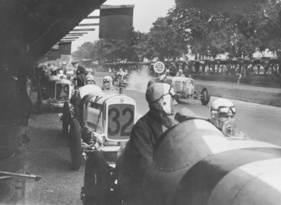
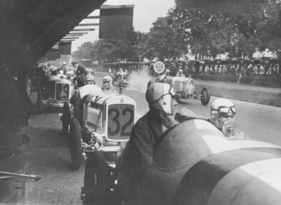
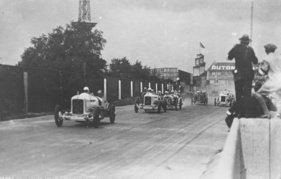
In 1925, the Neckarsulm-based company takes part in the International Taunus Race with one of the new six-cylinder supercharged racing cars and immediately wins the 450-kilometer race. The following year, NSU celebrated a highly acclaimed quadruple victory with the NSU Type 6/60 PS at the first "Grand Prix of Germany 1926" in the 1.5-liter class at the AVUS on July 11 and took fifth place overall. This Grand Prix - organized by the AvD, the Automobile Club of Germany - is the motorsport event of the year 1926, with around a quarter of a million spectators making the pilgrimage to the AVUS. They witness a race that is hard to beat in terms of drama and tragedy: there is already a fatal accident during training. During the race itself, heavy continuous rain sets in, the track becomes increasingly slippery lap after lap, the number of retirements increases and in the end only 17 cars make it to the finish line.
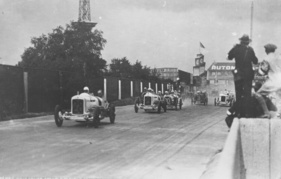
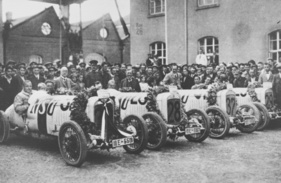
The strength of the NSU racing cars is the new in-line six-cylinder engine: the engine is robust and reliable over the entire distance of more than 400 kilometers and so the first four places in the so-called class F, the class up to 1,500 cubic centimeters, go to NSU. Back home in Neckarsulm, the successful racing team received a frenetic welcome at the NSU factory: Employees and the then directors Fritz Gehr and Georg Schwarz congratulate the drivers, who then take their racing cars on a "publicity tour" to Heilbronn and Stuttgart. The success of the NSU Type 6/60 PS on the racetrack led to the decision in Neckarsulm to develop a new car that would fit into the then popular 6 hp tax class: the NSU 6/30 PS. The six-cylinder engine derived directly from the racing engine was a novelty. The new car was presented to dealers at the end of 1927. However, it is only built in the course of 1928; NSU ends production and concentrates on the production of the technically closely related successor, the NSU Type 7/34 PS.
NSU Type 6/60 PS one of the rarest vehicles in the Audi collection
"It is a great stroke of luck and a story in itself that we now have one of these rare Grand Prix vehicles from 1926 in Audi's historic vehicle collection," says Timo Witt, responsible for this collection at Audi Tradition. One of the NSU 6/60 PS racing cars came to Berlin by unknown means, where a car enthusiast bought it for 150 Reichsmarks in 1931.
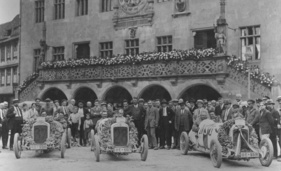
On June 4, 1932, the Berliner received permission to drive the former racing car on public roads - according to the original tax card. However, this permit was revoked in 1937; apparently the car was too loud, according to the authorities. And so the owner of the rarity set to work: he wanted to overhaul the NSU 6/60 PS and dismantled it into its individual parts.
The project came to a standstill when the Second World War broke out. In 1945, Russian soldiers inspected the parts package and actually wanted to confiscate the car. However, they quickly realized that they were unable to assemble the complex vehicle. And so the NSU 6/60 PS remained in Germany in a dismantled state. The owner of the rarity continues the restoration, but is no longer able to obtain a road traffic license.
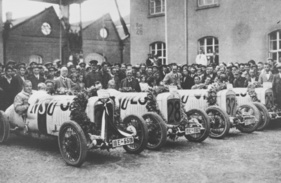
For many years, the Berliner looked after the former racing car in his garage until he decided to sell it in 1965. He writes to NSU, as he is keen to return the former racing car to the factory. A swap is quickly agreed: The savior of the unique car, which is so valuable to NSU racing history, receives a brand-new NSU Type 110. Back at the factory, apprentices spend five months restoring the supercharged racing car. They remove the mudguards and lights and the bodywork, which had been painted red in the meantime, is returned to its original racing color of white
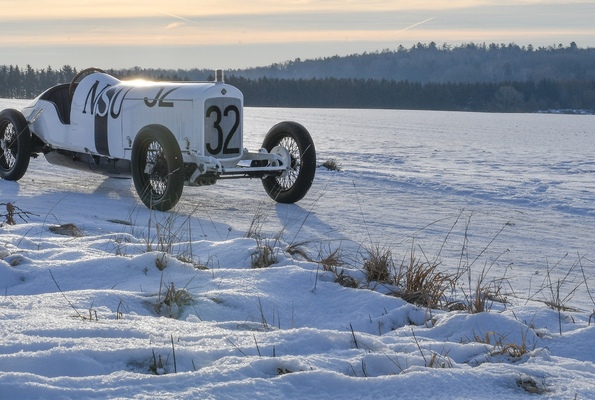
Today, this NSU Type 6/60 PS is one of the oldest and rarest cars in Audi's historic vehicle collection.