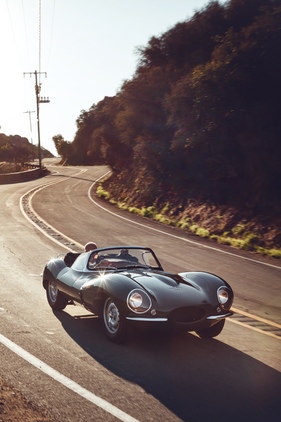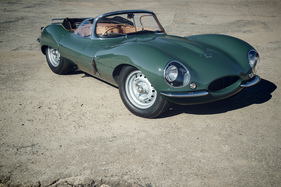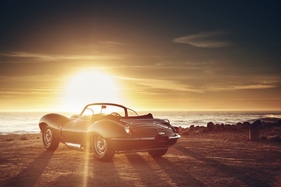
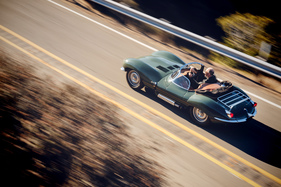
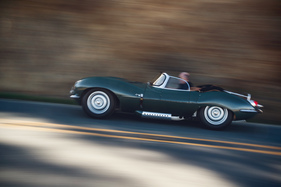
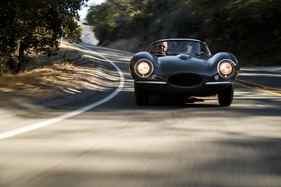
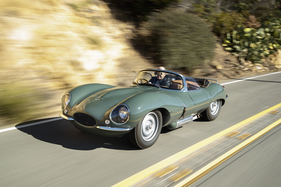
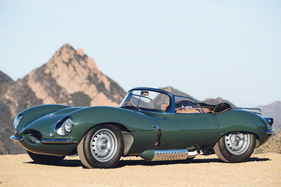
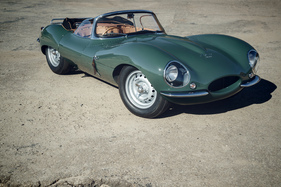
On November 17, 2016, Jaguar Classic unveiled the first newly built Jaguar XKSS in almost 60 years at the Petersen Museum in Los Angeles. Painted in Sherwood Green, the model is the forerunner ("Car Zero") built by the Jaguar Classic team of a series of nine vehicles that will be delivered to a worldwide clientele in 2017.
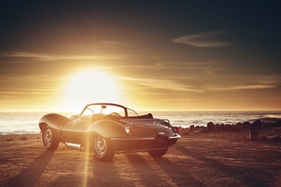
The XKSS, reborn in skilled craftsmanship and according to original plans, closes a "missing link" in the brand's history. Considered the first super sports car in automotive history, the XKSS was originally conceived as a road-going version of the Le Mans-winning D-Type. However, after a fire at Jaguar's main factory at Browns Lane in 1957, Jaguar had to discontinue the series, which was designed for 25 units, after just 16 vehicles. With the identical specifications of the original and consecutive chassis numbers, the nine "missing" XKSS will go on sale to existing Jaguar customers and collectors for around £1 million from the beginning of next year.
10,000 hours of work per vehicle
Back in March 2016, Jaguar announced that it would recreate the nine "missing" XKSS models based on the original drawings and documents and offer them for sale to established collectors and customers. The first "new" XKSS now presented in Los Angeles is the product of 16 months of development and construction - and in a way serves as a blueprint for the following models.
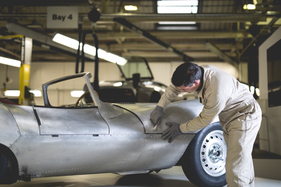
According to Jaguar Classic's calculations, it takes 10,000 hours to complete a vehicle.
The second stroke
The XKSS is the second iconic model to be given a new lease of life by Jaguar Classic, following the six E-Type Lightweight recreations built in 2014/15. The E-Type project taught the engineers a lot about how to faithfully recreate a classic while retaining its original specifications. The experience gained from rebuilding the E-Type Lightweight is now being incorporated into the XKSS project.
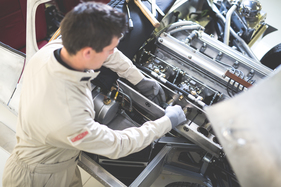
The XKSS shown for the first time in Los Angeles presented itself as a historically accurate heir to the series that remained unfinished due to the fire. In addition to newly built parts based on original factory drawings, modern production technology is also used. For example, the Jaguar Classic team used state-of-the-art scanning technology to produce a digital image of a 1957 XKSS in advance. The detailed scanning covered the entire model - from the body to the chassis and all individual parts.
Wooden molds reconstructed
As in 1957, the body of the first "new" XKSS is made of a magnesium alloy. As the original wooden molds over which the sheet metal was beaten into shape by hand no longer exist, Jaguar Classic reconstructed them with the help of original bodies from the 1950s. The body panels are now formed over the new molds by an expert hand, just as in the past.
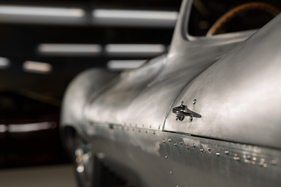
With regard to the frame construction, the Jaguar Classic experts started with original frames and then used CAD programs to further optimize the assembly. The company Reynolds - famous for its "531" steel tubes - was commissioned to produce new and special frame parts according to imperial instead of metric measurements. The components of the frame were then joined together with bronze, true to the welding process used for the original frame.
Also authentic: the Dunlop disc brakes on all four wheels plus Plessey pump. And Dunlop tires, mounted on riveted two-piece rims made of a magnesium/aluminum alloy.
True to the original
Under the hood, the 3.4-liter in-line six-cylinder engine from the three-time Le Mans winner Jaguar D-Type provides powerful propulsion. The 262 hp engine comes with a completely new block and cylinder heads made of cast iron as well as three Weber DCO3 carburetors. In 1957, Jaguar announced a top speed of 230 km/h for the original version of the XKSS, which was primarily intended for North American customers.
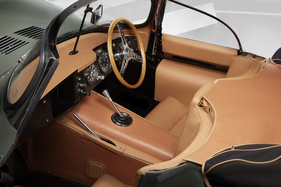
The Jaguar Classic craftsmen also did everything in the interior to create the most contemporary cockpit feeling possible. From the wood for the steering wheel to the grain of the leather seats and the brass buttons on the dashboard to the beautiful Smiths round instruments, everything is exactly as it was almost 60 years ago.
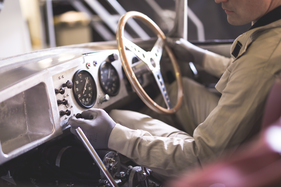
There were deviations from the historical model where safety for the driver and passengers could be increased. For example, the fuel tank, which is made from a more modern and robust material.
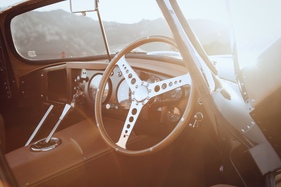
Kev Riches, Technical Director, Jaguar Classic, said: "The XKSS is one of the most important models in Jaguar's history. As such, we are committed to making the 'new original version' strictly faithful to the 1957 model in every way.
From the number, type and position of the over 2000 rivets to the Smiths clocks, everything is identical to the original cars - and that's exactly how it should be."
Tim Hannig, Director Jaguar Land Rover Classic, says: "The continuation program for the XKSS is testament to the world-class expertise accumulated at Jaguar Land Rover Classic. It reaffirms our promise to continue to build enthusiasm for Jaguar's glorious past by offering exceptional vehicles, services, parts and experiences.
Jaguar Land Rover Classic is responding to the growing enthusiasm for classic cars with further investment. Most notably with the new £7.5 million (€8.4 million) global headquarters opening near Coventry in 2017. We look forward to growing our classic business, supporting our existing customers and connecting with a whole new generation of global enthusiasts."