


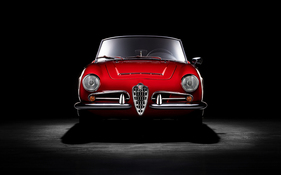
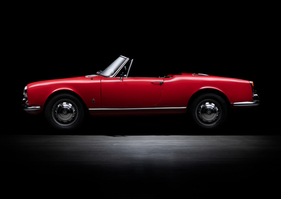
Sinsheim. On Thursday, September 19, 2019, the Technik Museum Sinsheim opens a new chapter and opens the doors to the new 3,000 square meter Hall 3. The first special exhibition is dedicated to the traditional brand Alfa Romeo. Thanks to the Alfa Romeo factory museum "La Macchina del Tempo" and private lenders, "Mythos Alfa Romeo" presents the unique 109-year history through legendary racing cars, impressive production vehicles and technical equipment.
The museum president on the purpose of the exhibition
"There are changing special exhibitions every year, which keeps the museum up-to-date and attractive for our visitors. We have to offer young people and those interested in historic vehicles a platform. Many classic cars are growing up. The plan is to make a one-off visit to the museum a must for fans, because there is something new to see every year," says Museum President Hermann Layher.

More than just an automobile exhibition
The high display windows in Hall 3 provide a view of the current exhibition. Events and functions can also be held within the exhibition. The Sinsheim platform was built from elements of the historic platform of Sinsheim station, a landmark of the city. From this platform, you can look out over the entire city. "This is the first time that a leisure facility has incorporated the city of Sinsheim into its construction and architecture," says Hermann Layher. Mayor Albrecht will hoist the Sinsheim flag.

Alfa Romeo as a traditional manufacturer and important hub
Since 1910, Alfa Romeo has been the epitome of outstanding technology, groundbreaking innovations and breathtaking design. The special exhibition "Myth of Alfa Romeo" takes museum visitors into the world of what is probably the most traditional car manufacturer of all time. The car with the mysterious brand logo has always been a point of contact and a hub for important personalities of the past century: designers such as Pininfarina created timeless classics for the company; racing drivers such as Tazio Nuvolari, Enzo Ferrari and Jean Alesi, as well as engineers and designers, developed the brand further and brought it to life. Legendary racing victories, "Made in Italy" engineering and an eye-catching design helped the sleek Milanese to achieve cult status. At Alfa Romeo, the focus was not just on the car, but on an entire attitude to life. After all, the cars were not built, but created, according to Alfa Romeo Germany. "In our exhibition, together with Alfa Romeo, we will present an overview of the history of the company in both motorsport and design. This begins in the pre-war period with top models such as a 6c Mille Miglia and continues with design icons such as a Montreal, through to cars with rarity value such as an Alfa Romeo Matta," comments exhibition curator Moritz Dressel on the content of the new special exhibition.

Varied exhibition divided into themed areas
Anyone familiar with the Technik Museum Sinsheim knows how colorful and varied it is. There is something new to discover in every corner. Bugattis surround the Concorde engines, a huge submarine engine stands among countless classic vintage cars. In Hall 3, visitors can look forward to a completely different and thoroughly impressive design. The minimalist design draws attention to the essentials: the cars. Only the typical Alfa Romeo and Italian colors dominate the otherwise cool white-grey Hall 3, while banners hanging from the ceiling and fixed panels tell the story of the "Meccanica delle Emozioni". The exhibition itself is divided into themed areas. The timeless classics are presented in the best light and at their best on pedestals of different heights. One such example is the Alfa Romeo Matta AR 52 from 1952, where the AR stands for "Autovetture da Ricognizione" - in German: scout car. Originally intended for the Italian military, there are only 154 civilian versions of this vehicle in existence. Or an Alfa Romeo RL from 1922, which was the car that won the Targa Florio endurance race in 1923. For a while, a winner's wreath adorned the logo on all Alfa vehicles. Another highlight is the Junior Zagato from 1972. This two-door hatchback sports coupé, designed by Ercole Spada and produced by Italian coachbuilder Zagato, was clearly ahead of its time in terms of design when it made its debut in 1969. From then on, the smooth and unadorned surfaces and the large glazed tailgate were to be found.

Further information
Further information, as well as opening times and a map, can be found on the website of the Technik-Museum Sinsheim.
